Category: Marketing

  • Why Remarketing Is Important For A Business?

    Why Remarketing Is Important For A Business?

    If your website can attract a lot of visitors, that is great. But, most of them will leave your site without buying your product, that is a reality you have to accept. You can try and get their views to improve your site and offer, and voila! You can approach them for remarketing your product!

    Great opportunity, isn’t it? You get both the potential buyers and glimpses of their choices that you can retarget. But it’s challenging too, as statistics reveal around 97% of visitors that leave a website never return. The use of remarketing techniques can help you turn this challenge into an opportunity. Your brand stays on top of customers’ minds.

    What is remarketing in digital marketing?

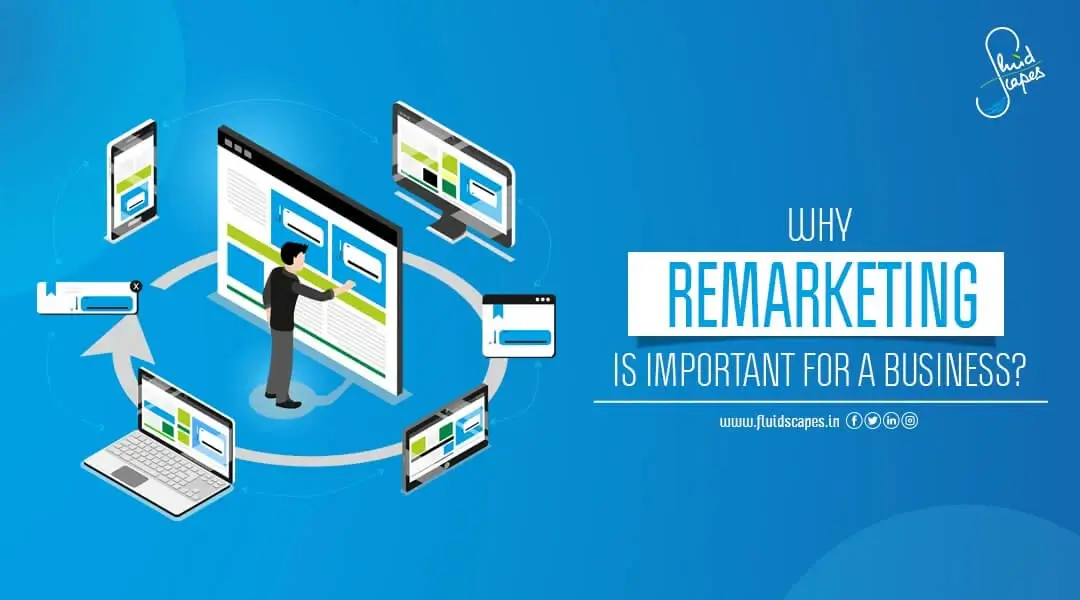
    Remarketing can be an important part of your digital marketing suite. It involves presenting customized ads to people who have visited your website in the past or downloaded your mobile app. Because you’re reaching back to prospects who have previously shown an interest in your products or services, this method is a very cost-effective way to enhance sales conversions.

    Companies employ cookie consent on their websites, which tracks users after they leave and then displays an ad for their company on a completely unrelated website, or other platforms.

    For instance, suppose you went to a website in search of a sports shoe, stayed for a while but didn’t buy anything, and then departed.

    However, you may have observed ads for a variety of sports shoes and other shoes from the same website on search engines, email, social media, and other places after that. Remarketing is exactly what it sounds like.

    Remarketing can be carried out using a variety of platforms, including Google, Microsoft, Facebook, Instagram, Email, Whatsapp, SMS, and others.

    Benefits of remarketing

    Remarketing is one of the most effective techniques to boost your sales. Some of its primary benefits are as follows:

    • Low-cost strategy ( no cost involved in identifying customers).
    • Allows you to maintain contact with your target demographic.
    • Higher Return on Investment (Return on Investment)
    • Helps you with improved Ad relevance.
    • Provides you with target audiences.
    • Greatly helps in brand recalling by the potential clients

    Remarketing Google ads

    You can use a large range of Google Ads that are placed on Google Display and Google Search Networks in your remarketing campaign. The list involves static images, animated images, video, responsive advertisements, and text ads, etc. What distinguishes remarketing from traditional Display and Search advertising is targeting.

    This involves placing cookies on the browsers of visitors to your website using a special tracking code, and then serving adverts to individuals who have that cookie on the Display and Search networks. It has the potential to be a very effective part of a PPC campaign.

    Types of remarketing allowed in Google Adwords include:

    Standard remarketing — With this functionality, you can show ads to previous visitors as they browse the Display Network’s websites and apps.

    Dynamic remarketing – A Google Ad tool that allows you to show ads to previous visitors for any products or services they saw on your site.

    Remarketing for mobile apps – If someone has used your mobile app or website, Google Ads will allow you to show them ads even when they are on other mobile apps or websites.

    Remarketing List For Search Ads (RLSA) – RLSA is the acronym for this Google Ads function. You can use the Search Network to target past visitors when they are search through Google or Google’s partner sites.

    Video Remarketing — You can target past visitors who have seen your YouTube channel or other videos with ads on YouTube or through the Display Network’s videos and websites.

    Email list remarketing – You can upload a list of emails from your clients to Google Ads using email list remarketing. This is known as Customer Match. If they’re signed in to Google Search, Gmail, or YouTube, you can show your ads to them.

    Wrap up

    Remarketing is particularly effective because it allows marketers to engage with the prospects through detailed and extended chats. When a potential customer visits a small business’s website, the initial impression may not be sufficient to make a decision. But a series of conversations, the strength of the product and the company become visible to the customers. This is where remarketing can help.

    Source- Fluidscapes
    We are one of the best digital marketing companies in India that provides online reputation management services to all types of organizations. We assist businesses to stay on top of the game by leveraging the latest technologies and breakthroughs in marketing strategies and business processes. Want to grow your business, even more, get in touch with us and we’ll tell you how.
  • What Is Omnichannel Marketing? What Are Its Benefits?

    What Is Omnichannel Marketing? What Are Its Benefits?

    Retail business is getting new life using technologies to find new customers. While creating new markets and learning more about consumers are becoming easier for the retailers, consumers are able to obtain substantial information about the products and businesses without much headache.

    It’s a bidirectional communication. Consumers move across several social networking sites, websites, and communication channels on a normal day and gather valuable information about products and businesses. And retailers take this opportunity to popularize their brands by having presences at every touch-point of a consumer’s journey.

    But is it good enough to just display your brand on different platforms? No, it’s not. It’ll not give you the desired result unless it’s a concerted campaign that provides a seamless brand experience and shopping experience for consumers, no matter what platform they are on. Here comes the concept of Omnichannel marketing, which is among the fastest-growing trends for both retailers and consumers.

    What is Omnichannel marketing?

    Omnichannel Marketing is about creating a unified brand experience for the consumers across all offline and online channels, platforms and brick-and-mortar outlets. The main idea of omnichannel marketing is to

    • Provide customers with a uniform brand message on whichever platform they are now or will visit,
    • Meaningfully engage with customers at any time and through any device or channel they are using,
    • Build a cohesive and satisfying experience that drives customers to take action, whether they are using a mobile device, desktop computer, or at a brick-and-mortar shop. Add a call-to-action to each message and ad

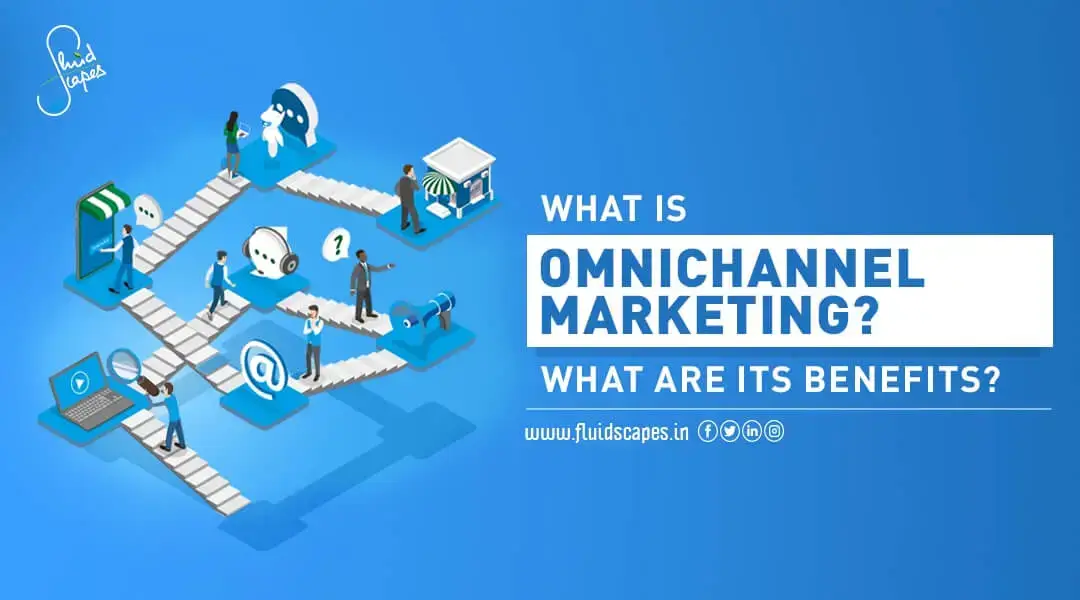
    Customers’ journey to purchase no longer follows a straight line. A desire to purchase triggered by a social media post most likely takes the path of laptop/desktop Internet research before ending up on a tablet or in a physical store.

    Omnichannel vs. Multichannel marketing

    Both omnichannel and multichannel marketing belong to the same genre in the sense that both types aim to tap customers across the channels and platforms. Nonetheless, there are two major differences between them – in nature and in approach. Let’s take a closer look at both.

    Multichannel marketing

    This is a brandcentric approach that puts the brand at the heart of different campaigns across the channels. Its goal is to reach clients over two or more channels, offering them the option of interacting with the company via a website, social media, or phone. A clothing company, for example, may operate various marketing campaigns simultaneously across multiple channels, such as in-store-only discounts, a social media flash sale, an email promotion, a paid search engine advertising, etc. The effort is to drive sales separately on individual channels. This may result in different content and messaging being delivered to different channels to achieve individual sales goals. But the problem is that the consumers are likely to receive incoherent messages across channels.

    Omnichannel marketing –

    This is a customer centric approach that puts consumers at the center of its activities and strives to improve the customer’s cross-channel experience. Despite the fact that various channels are employed, the goal is to create a uniform experience across all of them.

    For instance, the customers of an entertainment park can buy tickets online (from a PC, tablet, or mobile device), use their app to locate attractions or monitor wait times, and utilize a smart wristband as a FastPass or hotel room key. Look at the integrated services that can be made available across different devices and channels.

    By providing a consistent message across numerous platforms, omnichannel marketing strives to increase brand familiarity and make purchasing easier. Omnichannel marketing boosts the potential for high customer retention and sales by focusing on the consumer but is a more complicated and costlier solution than multichannel marketing.

    Benefits of omnichannel marketing

    #1. Increase the lifetime value of your customers

    An omnichannel experience puts customers on the top, and it’s no surprise that customers will love to do business with companies that give them priority. It’s also not surprising that retail executives place a premium on long-term objectives. According to surveys, boosting lifetime customer value is a motivation for pursuing an omnichannel strategy for 53% of major European retailers.

    #2 Utilization of marketing analytics and cross-channel insights

    While in multichannel marketing the analytics from each channel are held in silos with little interaction or influence with data from other channels, data from each channel is treated as a whole in omnichannel marketing. 67 percent of all retail clients start their shopping on one gadget and end it on another, or even in the store.

    Omnichannel analytics makes it easy to connect with customer data and see which channels are most effective in driving sales; this can lead to a more transparent marketing approach and, in turn, lower marketing expenditures. Companies may better meet consumer requests and estimate inventories by having a comprehensive view of channel data.

    #3. Boost your sales

    For retailers in need of a revenue boost, increased sales is a significant benefit. According to a Harvard Business Review research, omnichannel clients spend 10% more online than single-channel customers. However, many retailers aren’t aware of this fact. As a retailer if you prioritize long-term growth, you should view omnichannel marketing as strategic and structural.

    #4. Self-Service for Customers

    Self-service is an important element of the omnichannel experience, with 67 percent of customers preferring it to conversing with a company employee. A digital assistant or chat allows you to maintain an open line of communication with your customers and obtain feedback on their experience.

    #5 Better inventory turnover

    The days of retailers losing money because of out-of-stock items may be coming to an end. Businesses benefit from an omnichannel strategy because it gives them a better picture of their inventory and the ability to fulfill orders from anywhere. Businesses can use an omnichannel strategy to optimise stock levels and build smarter replenishment methods.

    #6. Reach out to new customer groups

    Retailers profit from an omnichannel approach because it allows them to access new client segments. This benefit is virtually equal for both major businesses and others, but both figures should be higher because reaching new customers is critical for growth.

    Source- Fluidscapes
    We are one of the best digital marketing companies in India that provides online reputation management services to all types of organizations. We assist businesses to stay on top of the game by leveraging the latest technologies and breakthroughs in marketing strategies and business processes. Want to grow your business, even more, get in touch with us and we’ll tell you how.
  • 5 Effective Paid Marketing Practices For A Successful Business

    5 Effective Paid Marketing Practices For A Successful Business

    There was no such category as paid marketing before the advent of digital marketing, because the concept of free marketing never existed. But the competition between the channels to increase subscribers and also to monetise the increased subscriber base, led to the development of two distinctive marketing strategies – organic or free marketing and paid marketing.

    While both types have unique advantages and are actually used in combinations to achieve the business goals, each has a different set of strategies. In this article, we’ll take a closer look at paid marketing and the various strategies that revolve around it.

    What is Paid Marketing?

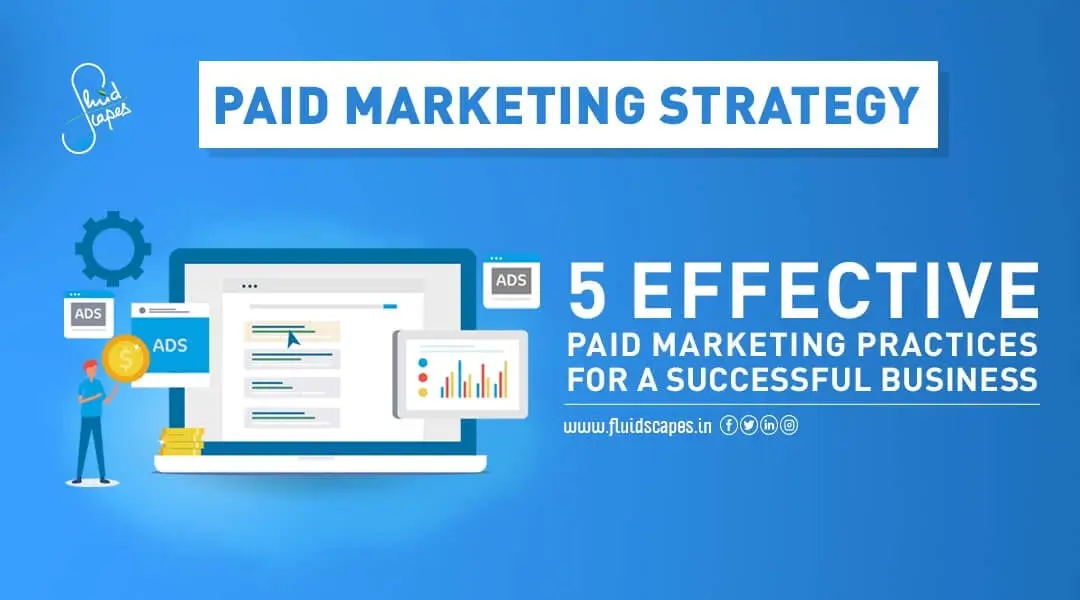
    Paid marketing is buying privilege for faster and more effective marketing results. There are millions of subscribers of a digital marketing channel, but you want to target one or a few specific demographic groups that are most likely to have maximum appeal for your product. So, it’ll be better for you to go for a paid marketing strategy to ensure that your product ad comes to the sight of your target audience.

    Paid marketing campaigns are largely based on advertisements that can grab the attention easily, and are targeted at potential customers who qualify certain criteria, such as income, age, sex, etc. and those who have earlier interacted with the brand or shown interests, intent.

    However, paid marketing can also take the form of sponsored social posts and guest blogs in addition to the display advertisements you’ve most likely seen in SERPs and web pages. And paid campaigns can use a variety of digital channels, including as search engine results pages (SERPs), social media platforms, and websites.

    How Paid Marketing works

    Paid marketing is most commonly seen on search engine results pages (SERPs) and social media platforms. When developing paid marketing advertising, you first choose a channel, such as Google Ads or Facebook, and then define your target customer using data such as geography, search keywords, interests, demographics, prior purchases, and other pages visited.

    Both of these paid marketing methods are pay-per-click, which means you only pay when someone clicks on your ad. Typically, you select a package for 1/6/12 months offered by a channel where you set a maximum budget, and the ad plays until the budget is used up.

    Paid marketing provides one of the highest returns on investment (ROI). According to the Google Economic Impact Report, businesses in the United States earn an average of $2 in income for every $1 spent on Google Ads.

    Local businesses, in particular, receive a strong return on investment from location-specific queries, with top-ranking websites seeing the biggest rise in click-through rate. Businesses who take to paid marketing can maintain a huge strategic advantage and exposure to new clients because 76 percent of marketers do not use behavior data and granular characteristics for online targeting.

    Paid Marketing strategies

    If you are a beginner in online marketing and are struggling to rank well through organic means, paid marketing can provide you with a shot in the arm. You may quickly see results by creating a paid campaign that targets the right demographic groups. Here are the five paid marketing strategies that you may consider adopting for your campaign:

    Social Media Advertising

    Because of the prevalence of social media, social media ads have emerged as a highly effective and viable advertising strategy. Detailed demographic information can be used to customize your social media ads and to provide relevant ad content to your targeted buyers.

    For example, Facebook Audience Insights gives you information on people who are linked to your Page and on Facebook, allowing you to create content that resonates and simply locate new people who are similar to those currently in your audience.

    Consumers love to respond to social media marketing, with 57% of Millennials saying they’ve noticed an increase in social media ads that speak to them.

    Banner advertising

    One of the most tried-and-true marketing solutions adopted by many businesses is banner advertising. This technique has been used for decades and is still a highly effective marketing strategy. Following are the different formats in which Banner ads normally appear:

    • Static
    • Animated
    • Interactive
    • Video
    • Expanding ads

    Banner advertisements are square or rectangular in general and come in a variety of sizes. They are displayed in specific spots on a website, usually at the top of the page or in the sidebar, and are compatible with PCs, smartphones, and tablets.

    Do you want to get the most bang for your buck with this paid marketing strategy? Make sure your ads are visually appealing, clear to understand, promote a certain product or service, and that they are displayed on websites with similar content.

    Pay-per-click advertising

    Pay-per-click advertising, like banner ads, has been around for decades. It’s an approach that’s proven to work. PPC advertising has a high rate of success because people who click on them generally end up buying the product.

    PPC advertising converts leads better than organic traffic when used as a paid search approach. Studies reveal that PPC advertising, on average, receives 65 percent click-throughs compared to 35 percent for organic visitors. You can also tailor your campaigns to match your budget.

    Retargeting

    Ad retargeting is a relatively new paid advertising tactic that converts website traffic extremely well. Many times customers interact organically with your company but leave your site without making a purchase. Paid marketing can be used to display personalized messages to these customers.

    The usage of cookies, which track old visitors’ activity, is the key to retargeting’s efficacy. Cookies collect important personal data that helps to ensure that old visitors only see advertisements that are relevant to them. This method, however, is most effective for sites with at least 5,000 monthly visitors.

    Influencer Marketing

    Paid marketing has a weak point, consumers may block your ad, which makes it more difficult to connect your target audience with paid ads. Influencer marketing is one approach to get around this.

    Influencers are people who have a lot of clout with your target audience. High-profile industry gurus, celebrities, or social media rock stars are among them. Influencers typically have large followings and the capacity to persuade others to make purchases.

    You should discover and cultivate relationships with the influencers in your market. Influencers are paid by companies for promoting their brands, products, or services to their followers. For a lot of product categories, an influencer’s glowing recommendations might result in constant flow of orders and income. But remember that influencers are frequently compensated by companies.

    Every paid marketing strategy serves a different purpose depending on where the buyer is in the buying process. Although not all brands need to go for all types of paid promotion strategies, it is considered best practice to use a variety of them. This ensures that your communications are seen by users across several channels.

    Source- Fluidscapes
    We are one of the best digital marketing companies in India that provides online reputation management services to all types of organizations. We assist businesses to stay on top of the game by leveraging the latest technologies and breakthroughs in marketing strategies and business processes. Want to grow your business, even more, get in touch with us and we’ll tell you how.
  • Video Marketing For Lead Generation? How Does It Works?

    Video Marketing For Lead Generation? How Does It Works?

    Videos are just another form of content that has given content marketing an extra dimension and made branding affordable to even small business startups.

    Videos are an automatic attention grabber, and now powered by smart formatting and advanced controls, they have become the central point of customer engagement. Of course, the rapid improvement in smartphone technology and massive growth in its use are the other factors that made videos so phenomenally popular today.

    Why videos are so effective

    Unlike text or images, videos offer multiple learning channels to the viewers, such as tone, expressions, texts, body language, and other visual signals. Together, they make the most powerful appeal to the human brain. Science says the human brain processes videos 60,000 times faster than text.

    Google search bots give more preference to video-rich content because videos ensure a higher level of audience engagement. According to Forrester, websites with videos are around 54 times more likely to rank better on Google SERPs. And according to Brightcove, videos enhance organic traffic by 157 percent.

    Social media platforms are the ideal place to feel the trend, where videos have become the most productive component of the promotional artillery. A study reveals social videos attract 1200% more shares than text and images. Even Instagram reported over 25% of its ads are single video ads.

    These statistics are very encouraging for marketers. However, if you’ve been using video content as part of your marketing tactics but aren’t seeing the intended results, it’s possible that you’re not applying the lead generation tactics in your video marketing.

    If you’re a beginner and wondering what lead generation is in digital marketing, here is a quick lead for you – Lead generation is identifying, enticing, and converting online users into potential customers for a firm in digital marketing. The strategy may employ many methods and channels, but here we’ll discuss the ambit of video marketing for lead generation.

    Lead generation in video marketing typically involves three steps:

    • Content strategy- coming up with content that addresses the people’s needs.
    • Promotion of video – using different platforms to attract large numbers of visitors
    • Acquisition – converting a sizable portion of these visitors into leads.

    Content strategy

    Your video content strategy should take the cues from your text content strategy, where the purpose of the content is most important. There can be multiple types of videos to address different purposes. Following are some popular types of video marketing:

    • VLOG – Also known as a video blog that shares the feelings, thoughts of an influencer about a product or a topic.
    • Unboxing – It’s a product review type of video that captures the initial reaction with a description of the product as it gets unboxed for the first time.
    • How To/Tutorial – Teaches viewers to solve a problem or to make something through instruction and examples.
    • Favorite/Best of – Shares the favorite product/service or experience of the YouTuber within a specific category.
    • Q&A – Answering questions from the viewers.

    Apart from making the video interesting and informative to the viewers, try to make it adequately SEO friendly. YouTube is currently the 2nd largest search engine online. Here are some simple steps to make your videos easily searchable on YouTube.

    • Give a title that is brief and informative – Titles are the most effective technique for capturing people’s attention. On YouTube videos, the first 60 characters or less will be displayed. Also use appropriate keywords. Use the SE Ranking keyword recommendation tool or the YouTube keyword tool.
    • Write a crisp video description – This is to help users understand the topic of your video at a glance. Keep it to a maximum of 70 ch., use keywords, and add a link to your website.
    • Use tags with various keyword variations – Consider all the many things that people who watch your video might look for.
    • Apply link-building – The more the number of links lead to your video from other sites, the higher will be your ranking in search.
    • Create high-quality, catchy, colorful Thumbnails – Thumbnails are extremely important as they hook your viewers’ attention and drive them to watch your video.
    • Optimize your video for mobile viewing – Mobiles or smartphones are the primary devices to watch videos these days. Do everything to provide a smooth watching experience for your smartphone viewers.
    • Create a site-map for your video – A site-map helps your video rank high as it provides the details about your video content to the search engines.

    Promotion of the video

    Promotion of the video is the second step in the lead generation process. Your promotion strategies should be chosen based on your content and digital marketing strategy. A viral video, for example, requires a social media marketing strategy. An infomercial, on the other hand, would work effectively as a sponsored advertisement or through influencers.

    Also, you must think about your marketing budget. Is there enough money in your organization’s budget to execute a PPC or social media campaign? Organic marketing initiatives are resource intensive and time-consuming to execute, but they may be less expensive than a PPC campaign.

    Furthermore, certain programmes (such as viral marketing) cause marketers investing their entire projected budget upfront, but others (such as PPC) cause a consistent expenditure. Such aspects may need to be considered while deciding on a strategy.

    So, how do you go about selecting the best promotional materials for your company? Aside from the content type, marketers may consider a few other strategies.

    For instance, you don’t have to limit your video content to your website or landing pages; you can also share your video on different social media platforms. On social media, videos produce 12 times the number of shares as text and photos combined.

    You may also use Video Testimonials. Testimonials are an excellent type of word-of-mouth advertising. They are positive and convincing statements from prospects who have used your product or service.

    Lead acquisition and conversions

    This entails the techniques employed to generate/capture leads and convert them into sales. After all, that is the main aim of the whole exercise. There are some smart processes to generate leads, such as:

    Gating your video content – This can help you get the details of the viewers of your video and contact them through other channels to generate leads. Gating figuratively means a gate where the visitors have to produce their identity details in order to access your video.

    Webinars and industry research reports are the two examples of video content that are known to make good use of gating since viewers have a pressing desire to access content that cannot be available elsewhere. Companies demand visitors to provide their credentials in order to access the video. Currently, near about 80% B2B videos are gated.

    End Cards/ Annotation

    YouTube End Cards (YT replaced Annotations with End Cards) are quite handy if you want to generate leads by encouraging your viewers to do anything, such as subscribe, watch another video, or visit a related website, etc. This way the businesses can direct their viewers to external websites from within their YouTube videos.

    Shopify, for example, included an end-card in their YouTube channel to direct users to a landing page where they can input their email address to sign up for a free trial or download an eBook.

    However, keep in mind that you have to be a member of the YouTube Partner programme to be able to link out. You may also use the YouTube description section to direct viewers to lead magnets or your free trial page, where they can convert into leads.

    Source- Fluidscapes
    We are one of the best digital marketing companies in India that provides online reputation management services to all types of organizations. We assist businesses to stay on top of the game by leveraging the latest technologies and breakthroughs in marketing strategies and business processes. Want to grow your business, even more, get in touch with us and we’ll tell you how.
  • Top 5 Social Media Marketing Experts In India

    Top 5 Social Media Marketing Experts In India

    December 2021. All indications suggest that the country has reined in Covid. The air is filled with optimism. We haven’t done too badly. Thanks to our rapid adoption of digital technologies that came to our rescue in a big way and helped us bounce back.

    Social media is playing an important role in the bounce back of the economy as the channels are increasingly opening up for business communications and financial transactions. With social media user population in India rising at a phenomenal rate, no wonder that the brands and advertisers are racing to cultivate the various channels and establish their presences.

    But social media is a different playground. It’s an enormous canvas of an intricate collage of human emotions that can be navigated with the help of a handful of people called social media experts. Many brands often use their popularity and skill for marketing through social media. Following are the top 5 social media marketing experts in India, as per our latest study, that a brand might want to rope in:

    #1. Ananthanarayana V – Anantha has an amazing list of awards and accomplishments in his bag from 18+ years of corporate and entrepreneurial background. An alumnus of IIM Indore and founder/CEO of Techdivine Creative Services, Anantha is 4 times CMO ASIA and World Marketing Congress award winner and has delivered direct sales worth over $100 million through social media and other digital marketing ROI strategies for clients across 12 countries. His LinkedIn profile describes him as a Harvard Business Review Contributor, Visiting Faculty, Corporate Trainer, Speaker, Author, Social Media Brand influencer, Digital ROI strategist & C-suite ROI Coach and furnishes an endless list of awards and accolades received by him. He is also known as a social media influencer, blogger, brand strategist for client brand partner campaigns and has served a number of brands such as TATA, HONDA, Edelweiss Tokio Life, HUL, SKODA, Pantaloons, Micromax, Airtel etc

    #2. Deepak Kankaraju – Deepak Kanakaraju, a.k.a. DigitalDeepak, is the Co-founder & CEO of LearnToday.com, which is an edtech platform for students and digital mentors. He also runs the world’s largest Digital Marketing group on Facebook called “ Learn Digital Marketing.” A TEDx speaker, author, trainer, and a consultant on digital marketing trends, Deepak has penned a book titled ‘Edge of Sanity’ that gives us rich insights into entrepreneurship. This strong entrepreneurial acumen helped him secure his place as one of the best digital marketers in India. Razorpay, Instamojo, Practo, MoEngage, etc. are among the notable companies that Deepak has worked with as a consultant for digital marketing promotion. Earlier, Deepak founded PixelTrack, a digital marketing firm that had many Fortune 500 companies as clients. He is also a co-founder of OptinChat.com, another startup. His interests include motorcycles and playing the guitar.

    #3. Anup Mishra – If you search about Anup Mishra on Google you’ll come across multiple sites underlining his multiple facets, such as an entrepreneur, a digital media strategist, a startup mentor, a keynote speaker, and more. Together, they percolate down to form a profile that depicts him as a thought leader, a thorough professional, and an expert campaigner on all digital media including social platforms. In his own words (taken from his own website) his primary focus areas are Authority Positioning, Social media PR, Online Reputation Management, and Strategic Marketing Communications. In the past 14+ years he has helped over 800 business people, from novices to CEOs. To complement his consulting works, Anoop Mishra founded popular sites, such as Publicity Mantra, OnlyForStartups, and Pratyashi .com

    #4. Pradeep Chopra – Pradeep Chopra has been involved in the Internet Industry since 2000 and is considered among the first ones who started digital marketing in India. Pradeep co-founded Digital Vidya, which contributed to the growth of the digital marketing industry in India. Pradeep, an IIT Delhi graduate, has trained and advised over 2500 professionals, including CEOs, across Asia in order to help them grow their businesses and resources through Digital Vidya’s hands-on Digital Marketing training. He has been a guest speaker at several national and global conferences, such as SES US, ad:tech, World Blogger & Social Media Summit Malaysia, NASSCOM India Leadership Forum, and also written for prestigious Wall Street Journal, Entrepreneur & Inc magazines.

    #5 Saurav Jain – Sorav Jain is one of the most promising young talents in the Indian digital marketing ecosystem. Sorav was named one of the Top Social Media Marketers under the age of 30 by Social Samosa and one of the ‘Top 25 Social Media Professionals of India’ by the Global Youth Marketing Forum. Sorav is a multi-faceted entrepreneur, digital marketing and social media expert, consultant, trainer, author, and speaker with a master’s degree in International Marketing Management from Leeds University Business School. He is the founder of one of the top Digital Marketing communities on Facebook, Digital Marketing Question and Answers, with over 45,000 members, and has written books such as “Social Media for Business” and “How to Build Your Personal Brand on Social Media.”

    Source- Fluidscapes
    We are one of the best digital marketing companies in India that provides online reputation management services to all types of organizations. We assist businesses to stay on top of the game by leveraging the latest technologies and breakthroughs in marketing strategies and business processes. Want to grow your business, even more, get in touch with us and we’ll tell you how.
  • 7 SMS Marketing Strategy Every Local Business Marketer Needs To Know

    7 SMS Marketing Strategy Every Local Business Marketer Needs To Know

    After the devastation of the economies by the pandemic that struck local businesses with heavy blows, SMS marketing is regaining its ground, not just as a channel but as an integral part of the marketing strategies.

    The reasons are obvious – cheap cost and very high reach. If one has to start afresh, SMS marketing can play a critical role in the revival strategy. Persistent lockdowns have changed the purchasing behavior of people in a big way. Fewer customers are ready to visit the brick-and-mortar stores and instead look up solutions on their mobile phones.

    Why SMS marketing is getting the spotlight.

    Mobile has become a mighty tool for doing business. With its enormous base of nearly 1200 million and increasing mobile users, India is leapfrogging in mobile marketing, as expected. SMS marketing aka Text marketing is a form of mobile marketing, which is popular among marketers because of its very high receptivity, high open rates, and low cost.

    Here are some direct advantages of SMS marketing

    • 98% of SMS messages received are opened and read.
    • SMS can be received on any type of mobile (smartphone or non-smartphone).
    • SMS service comes by default when mobile is purchased. No app download, etc.

    And some benefits from the marketing point of view:

    • High customer engagement
    • High brand exposure
    • Increased customer feedback
    • Increased online review
    • Easy monitoring of campaign

    What industries generally use SMS marketing and how?

    The SMS messages sent by businesses mainly fall into two categories – promotional and transactional. Promotional SMS messages are used for marketing and advertising, for example, informing people about a special discount, or a special dish on the menu, etc. Transactional SMS are sent by the businesses to send important messages such as order/booking confirmation, order status/update, delivery related information, etc. Following are the industries, known to use SMS marketing to their advantages:

    • Healthcare
    • Travel and tourism
    • Banking and financial
    • Retail shopping
    • Real Estate
    • Restaurant & catering

    Immediacy is the criterion that makes SMS marketing ideal for these industries. But other industries have also started using SMS marketing to communicate to millions and create brand awareness.

    SMS marketing works best when combined with voice, email, Facebook Messenger, and other channels, as no one method is a silver bullet. SMS stands out as one of the most reliable ways to reach your customers. Consider these 7 best practices to make your SMS marketing deliver superior results:

    #1. Always practise permission-based marketing

    You should only send text messages to people who have granted you permission to do so. It’s known as permission-based marketing, which is crucial to the success of text marketing initiatives. This proper digital etiquette saves you from offending local laws and CTIA recommendations, which protect customers from unwelcome solicitation. You can invite your consumers to opt-in to get text messages with special discounts, new product updates, or other essential information by asking them to fill out an online form, enter a contest, or text a certain keyword to a cell number or shortcode.

    #2. Know your customers

    Analyze purchase history and demographics depending on location to send the correct messages to the right people. If you’re a cosmetics company, don’t send a twenty-year-old an anti-wrinkle cream coupon.

    Use a CRM (Customer Relationship Management) tool to help yourself send the correct message to the right person and track the success of your messaging

    Segment your customers for more focused marketing. Send out mass communications for general sales and promotions that everybody can benefit from.

    #3. Think using shortcode to create brand recognition

    If you need mass SMSing for your product, using a shortcode will be the best option that will provide you with two strong benefits:

    • High throughput – You can send SMS @100 texts per sec at any given time.
    • Brand recognition – Recipients will visualize your brand by looking at the shortcode.

    Generally, shortcodes are meant for one-way communication to send messages such as promotional, notification, order confirmation, etc. but you may use a shortcode with keyword to allow customers to opt-in to text messaging in which customers will type a given keyword in reply to a shortcode message select, vote, confirm something.

    #4. Make your message clear and concise

    Go straight to the point. Write in plain English and avoid emojis, abstractions, and all-caps You only have 160 characters to say anything. If you can, try to do it in a shorter time. Make sure the message is stated in plain English and is clear and concise. Abstractions, emojis, and all-caps should be avoided.

    Open-ended messages should also be avoided at all costs. A message that welcomes customers to a sale but does not specify when the sale will end is an example of an open-ended communication. The client is unsure whether the arrangement is for a day or a month. Clients are more likely to act if you give them a specific date when a sale ends or put an expiration date on a coupon.

    #5. Timing of messaging holds the key

    The aim of text messaging is to extract immediate response. Clients’ responses to SMS-promoted sales, promotions, and events are driven by spur-of-the-moment impulses. Send the message Friday afternoon if you have a store opening event on Friday night. If your restaurant offers a supper promotion, send it at the end of the day rather than in the morning.

    Sending messages out too early in the morning or too late at night can put you on thin ice. Hours between 8 a.m. and 9 p.m. are acceptable.

    Take SMS timing to the next level by determining the optimum moment to send a message to a specific person based on their previous interactions with your texts. This ultra-targeting goes beyond area and demographics, tailoring your marketing to achieve the best possible results.

    #6. Provide Opt-in at every channel

    Your SMS campaign will be very effective if you enable clients to opt-in at every point of contact. Follow these suggestions for an improved response level:

    • Social media – Add an Opt-in button to your Facebook page to allow clients to sign on to your SMS campaign.
    • Website. Ensure that SMS opt-in is prominently displayed on your website.
    • Newsletter. Make the option to sign up for SMS visible in your newsletter.
    • Point-of-sale. Make sure personnel are asking clients if they want to receive promotional and sales SMS texts.

    #7. Measure the performance of your campaign

    Smart marketers always weigh return on investment to measure their performance. An advantage of text marketing is that it provides a direct, quantifiable, and trackable marketing channel provided you choose the correct SMS solution. It enables you to quickly assess which messages and promotions are effective and which are not, that in turn allows you to fine-tune your SMS campaigns and optimise your marketing messaging across all platforms. And the best part of it is that you can capture leads and all text-based responses and queries for sales follow-up.

    With its inherent strength of high open rate and high ROI, SMS marketing is repositioning itself as an essential component of the integrated marketing strategy for the local businesses to achieve higher customer engagement, brand exposure, social media followers, and online reviews. Want to know more about it and get started, contact us now at www.fluidscapes.in

    Source- Fluidscapes
    We are one of the best digital marketing companies in India that provides online reputation management services to all types of organizations. We assist businesses to stay on top of the game by leveraging the latest technologies and breakthroughs in marketing strategies and business processes. Want to grow your business, even more, get in touch with us and we’ll tell you how.
  • How Content Marketing Can Grow Your Business? Tips For The Content Marketing Strategy

    How Content Marketing Can Grow Your Business? Tips For The Content Marketing Strategy

    If you are owning a business and want it to grow fast, if you are dreaming of becoming a leader in your vertical, your most sensible approach would be to have a strong online presence and adopt a suitable branding strategy.

    Experts say your branding strategy should include methods for engaging your audience and developing a distinct brand identity. You have two options when it comes to internet or digital marketing, namely organic marketing and paid marketing. While each type has a variety of ways to employ, marketers weigh criteria like budget, timeline, and product/service type to determine the best mix.

    But whatever may be your strategy, the success of your branding and marketing primarily depends upon content. Content is the most important matter in digital marketing because, in a virtual world where buyers and sellers are not meeting in person, it’s the content that bridges them. Nothing can make a better bridge than sensible and powerful content.

    So then, what is content, and what is the concept of content marketing?

    In the realm of digital marketing, content is the communication of information, which comes in a large variety of forms and formats, such as articles, blogs, infographics, videos, and more.

    And content marketing is about creating bespoke content and presenting them to the right audience. It’s a part of your overall marketing strategy that uses high-quality, relevant, and authoritative content to create a positive, favourable impression.

    But content creation has a cost, and if you still wonder whether it’s worth spending an extra amount, we have put together the benefits of content marketing that can build a brand for your small business.

    • Builds trust
      It’s critical for businesses to work to develop trust with their leads and consumers in today’s dynamic digital marketplace. Building trust can aid in the development of a positive brand image for your company. Great content may aid in the development of trust among your leads and consumers. When customers read your material, they begin to form opinions about your company.
    • Builds reputation as a Thought Leader
      Why should customers select your company over a competitor’s? One reason is because you are an industry expert. This is why businesses have blogs, entrepreneurs guest post for major news outlets, and CEOs seek speaking engagements. All of these factors contribute to the person or firm being perceived as an expert, which leads to trust. Content marketing is an excellent technique to educate people while also demonstrating your expertise and ability to be trusted.
    • Helps create new leads
      Think of your content as a gigantic magnet that attracts new leads. It will begin to attract potential clients if it is written correctly. The relevance of your material is a crucial consideration. You’re wasting your time if your content is attracting the wrong leads.
    • Helps achieve a high rate of conversion
      If conversion becomes your marketing goal, following stats speak of the value of content marketing to increase website conversions: 
      • Conversion rates for content marketing are around 6 times greater than for other digital marketing approaches. (Source: ABG Essentials)
      • 61% of online shoppers in the United States made a purchase after reading blog recommendations. The Content Marketing Institute (CMI)
      • According to 74% of organisations polled, content marketing has enhanced the quantity of marketing leads. (Curata)
      • 72% of organisations polled opine that video content gives a fantastic ROI and considerably enhances conversions. (CrazyEgg)
      • Because of their content marketing efforts, inbound marketers have been able to double the typical site conversion rate (from 6 to 12 percent). (HubSpot)
       Make sure to include a clear call-to-action (CTA) in your content to increase conversions.
      Your CTA instructs the reader on what to do next, directing them to the next step of the conversion process, such as making a purchase, obtaining additional information, or contacting your sales team.
    • Increase followers on social media
      Social media and content marketing actually complement each other. You create your material and then disseminate it over social media. Hopefully, the prospects you generate through your content will start following you on social media. The advantage is obvious: when you submit new information to social media, people will continue to view it.
    • Improves your SEO
      Without a doubt, search engines play a significant part in your company’s online visibility. The technique of improving the visibility of a website or a web page in a search engine’s unpaid results is known as search engine optimization (SEO). When it comes to SEO, content marketing is crucial. By providing quality content pertinent to your industry, you boost your chance of getting promoted by the search engine, and attracting more traffic to your website.

    Tips for the success of your content marketing strategy

    • Understand your customers’ needs and address them in your writing: Present your product or service as a solution to improve your customers’ lives. Focus on crisp and clear writing. Research for appropriate keywords. Use keywords as much as possible but not at the cost of quality.
    • Repurposing content: If you are short on new and engaging content, try repurposing some of the old ones into new formats. It takes much less time and cost to repurpose a content and it works fine.
    • Find out which format works best: Experiment with different sorts of content to find what your audience responds to best. Though we encourage sharing a variety of content kinds (blogs, videos, photographs, and so on), it’s a good idea to figure out which format works best and produce 70% of your material in that format.
    • Try to get content created by your followers: Nothing works better than a piece of positive content from a customer on your product or service. Happy customers are the best medium of marketing. As a firm, you should encourage your consumers to tell others about their experiences with your product/service.

    Source- Fluidscapes
    We are one of the best digital marketing companies in India that provides online reputation management services to all types of organizations. We assist businesses to stay on top of the game by leveraging the latest technologies and breakthroughs in marketing strategies and business processes. Want to grow your business, even more, get in touch with us and we’ll tell you how.
  • History Of Digital Marketing In India

    History Of Digital Marketing In India

    The Internet brought in a new period to rewrite the history of the world with its colossal effects on human lives and all other aspects, so much so that the proliferation of the Internet has become a new yardstick for growth and development.

    Although started relatively late, India has become the third largest Internet user base in the world. This is a significant achievement that has opened the floodgate for e-commerce and other forms of digital marketing practices to achieve fast-track prosperity for the country.

    Digital marketing, also known as Internet marketing, is the lifeline of modern business and by all indications, will remain so in the future as well. Seeing the immense power of digital marketing channels like search engines, social media, etc. all traditional marketing methods are changing to digital either completely or partially to have a much higher reach, and to become more efficient and economical. Even our cable and satellite TVs are also changing fast to Internet TV aka OTT, making TV advertising a form of digital marketing only.

    Currently, India is a stable economy with a confident business class and a growing number of startup unicorns. The country is witnessing great enthusiasm and entrepreneurial drive among the youngsters. New ideas and products are shaping up, breaking many barriers. Without the surge of the Internet and digital marketing, this air of confidence would never be possible. But where did it all begin? How did the evolution of digital marketing take shape?

    The phrase “digital marketing” came to our attention in 1990 for the first time following the introduction of the internet and the Web 1.0 platform. The Web 1.0 platform allowed users to search and read information, but it did not allow them to distribute it across the internet. Marketers all around the world were still apprehensive about the digital platform during that time. They weren’t sure if their plans would work because the internet hadn’t been widely adopted yet.

    The first clickable banner was launched in 1993, initiating the start of the digital marketing era and ushering in new technologies to enrich the digital marketplace. In 1994, Yahoo was founded.

    The Indian Digital Marketing story

    The Internet services launched in India on August 15, 1995, by the VSNL. It didn’t take long for the Indian business community to explore the potential of Internet marketing in India. The very next year i.e.1996 saw the launch of IndiaMart B2B marketplace, and with that started the history of digital marketing in India.

    In the midst of this dot-com hysteria we saw the birth of Google search engine in 1998, which many experts consider as the prime mover of digital marketing. Yahoo web search and MSN from Microsoft also appeared around the same time. Two years later, the dot-com bubble burst, crashing the stock market and pulling the stock values of most of the dot-com entities to the ground. All the smaller search engines shut shop, leaving behind a vacuum only to be filled by the giant companies.

    The dot-com bubble burst created a long term down turn of confidence of the people on the Internet based commerce. Like in other countries, it caused fear and scepticism among common people in India about e-commerce. Although, Amazon.com started its operation in India in 2013 as an online store for books, movies, etc. and Bazee.com (later acquired by ebay.com), Indiatimes.com, Yahoo, Rediff, Sify and a few others had taken cautious steps into online shopping, it wasn’t before 2007 that the whole of India got a taste of e-commerce when Flipcart emerged with a bigbang to surprise India with wide varieties of products at the most competitive prices and rock solid software for hasslefree ordering and safe payment gateways.

    As a result, there came a huge surge in the use of smartphones, online purchasing, at-home delivery, and online brand promotions, which experienced a steady growth over many years now. Numerous logistics companies came up to ensure credible supply-chains that saw exponential growth of e-commerce in the country.

    Another thing that contributed to the growth of digital marketing significantly is the rapid increase in the digital payment gateways. There are multiple options of digital payment available with the people, which ensure that the majority of payment transactions are now done digitally.

    Other key reasons that jacked up digital marketing in India

    #1. Web 2.0

    Version of the web plays the most important role in determining the success of an Internet based service. While web 1.0 was a read-only web that allowed us to search for information and read it, Web 2.0 is a read-write web, which presents the power of interaction and creates the backbone of digital marketing by enabling us to contribute content and interact with other web users. Look at YouTube and the social media channels that thrive on users’ submissions. Since the time it was introduced, web 2.0 has caused dramatic improvement in e-commerce and other forms of digital marketing in India in a short time.

    #2. Digital India initiatives

    In 2015, The Government of India launched the Digital India campaign to encourage citizens to avail various Government services over the Internet. To achieve this objective, the Government improved the online infrastructure and strengthened internet services. Quality of mobile data constantly improved through upgradation to the latest generation of technology. As a result, the bulk of rural India got digitally connected and empowered to communicate and transact digitally, creating millions of new customers for e-commerce and digital marketing as a whole.

    #3. More online hours

    Digital marketing is all about influencing the audience online through various content mediums in order to boost a brand’s influence. The more time consumers spend on the Internet, the easier it will be for marketers to influence consumer behavior. The expanding market for gadgets such as smartphones, computers, tablets, and other similar devices has caused the average Indian to spend 4-5 hours everyday reading through social media, emails, and websites.

    With already about 70-80% of the Internet users in India making purchases online, e-commerce is fast becoming the default medium of purchase, and businesses are religiously making strong online presences, there is no room for doubt that as the infrastructure scales up to make more and more population have access to the Internet, digital marketing in India will continue to reach new and new heights of transaction volumes.

    Source- Fluidscapes
    We are one of the best digital marketing companies in India that provides online reputation management services to all types of organizations. We assist businesses to stay on top of the game by leveraging the latest technologies and breakthroughs in marketing strategies and business processes. Want to grow your business, even more, get in touch with us and we’ll tell you how.

  • What Is Integrated Digital Marketing? Learn Its Fundamentals

    What Is Integrated Digital Marketing? Learn Its Fundamentals

    Marketing is all about trust-building. Also, trust gets developed through integrity. So marketing is a function of integrity. Experienced marketers know that, which is why they want to make sure that a multifaceted marketing campaign speaks in the same voice and tone.

    Trust, confidence, loyalty – they take time to build but take no or little time to break. Your big-budget advertising may not yield the preferred result if you don’t have control over all channels. People’s perception of a brand may take a hit if the brand story isn’t consistent with different media.

    When it comes to digital marketing the risk is more, as new platforms keep coming frequently and people express their minds readily and freely. Average people have presences on multiple platforms and can pick up some elements of doubts from some source, only to disseminate them across different channels.

    This is a concern for marketers. These ambushes harm the brand equity and gift opportunities to the competitors. What’s the solution?

    Here comes the need for Integrated Digital Marketing that tells the same compelling story across the platforms in their specific formats to ensure unwavering branding. This works well to eliminate chances of doubts from the minds of potential customers.

    What is Integrated Digital Marketing?

    The whole of digital marketing can be broken down into three categories – paid, owned, and earned media strategies. Each method or tactic belongs to any one of these three categories. An integrated digital marketing campaign presents a holistic approach that essentially combines the paid, owned, and earned digital marketing strategies to ensure a seamless 360 degree branding.

    What are paid, owned, and earned digital strategies?

    While paid, owned, and earned digital channels differ from each other in nature and tactics, their end goal is the same – to meet the business objectives (branding and sales promotion) through rendering digital business transformation.

    Paid channels

    Paid digital channels are the digital marketing channels that promote inbound marketing, which is payable to businesses. There are multiple types of paid media such as PPC, display ads, social media ads, Search Engine marketing, offline ads, etc.

    Paid campaigns are aided by Google ads to find the right platforms (third-party platforms) to target potential customers.

    Owned channels

    Owned digital channels are all digital marketing activities that are fully under the control of the business enterprises. Examples of owned channels are company websites, content marketing, social media marketing, email marketing, remarketing, etc.

    Most owned channels are big facilitators for inbound marketing through organic search. Thanks to the power of social media platforms and content marketing, there is always a flow of inbound traffic to the company websites.

    Earned channels

    Earned channels in digital marketing include activities that lead to word-of-mouth marketing through mention of your brand during the conversations among other people. This is a powerful process of brand promotion that occurs naturally and gets traction by press releases, search engines results, social media marketing, review sites, new model or feature announcement, etc. that leads to inbound marketing.

    Benefits of Integrated Digital Marketing

    Greater visibility of the brand – Integrated digital marketing strategies by a good digital agency that fit perfectly with all channels enhance brand visibility and awareness.

    Brand familiarity across the channels – People often access digital media through multiple touchpoints. It’s a big positive if they find a brand at every channel they visit using different devices, but it’s also very very important to maintain consistency in voice and tone. Changes may occur from time to time but it’s not recommended to revamp your brand’s voice and tone too often. A good digital marketing agency with an integrated digital marketing approach will advise you to be consistent with the voice and tone of your brand.

    Less cost and increased efficiency – Instead of creating a different marketing mix for different channels you can simply repurpose the content. This saves you money and also maintains the same voice and tone across channels.

    Source- Fluidscapes
    We are one of the best digital marketing companies in India that provides online reputation management services to all types of organizations. We assist businesses to stay on top of the game by leveraging the latest technologies and breakthroughs in marketing strategies and business processes. Want to grow your business, even more, get in touch with us and we’ll tell you how.
  • 7 Reasons Why Your Brand Should Invest More In Digital Marketing

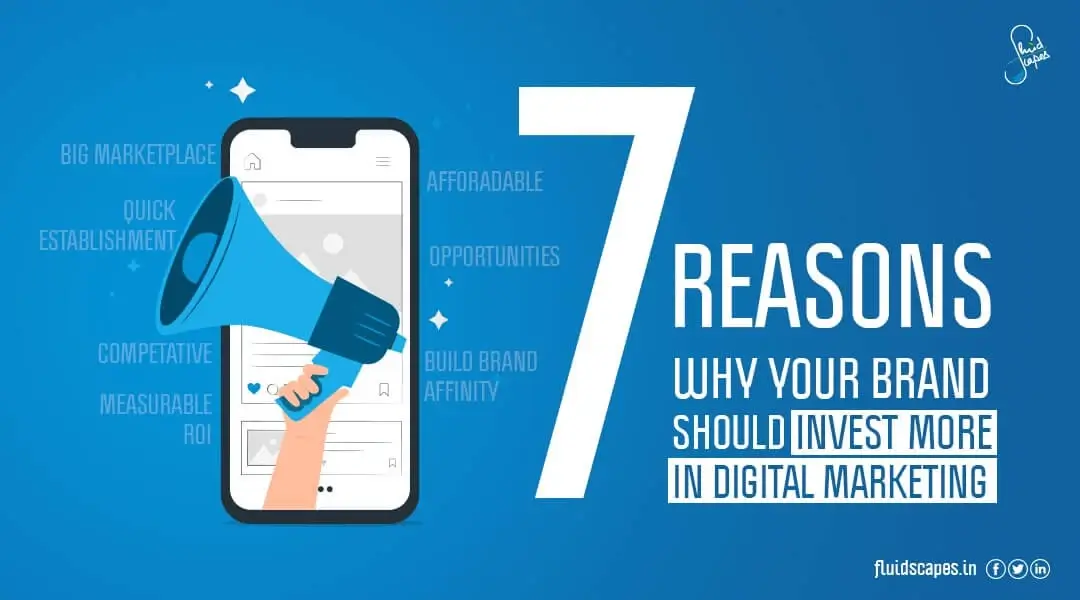
    7 Reasons Why Your Brand Should Invest More In Digital Marketing

    COVID-19 has pushed us to the edge. Consumption has hit an all-time low. The atmosphere is pressing down on the small businesses to fight for survival. A very grim situation, no doubt, but there is a ray of hope – the experts are forecasting a turnaround.

    And the vehicle of the turnaround will be digital technology. India is in an advantageous position due to its drive for digitization, which is manifested in the rise of digital payment and digital marketing. During the lockdown when everything was stopped, most of the households ran on digital marketing and digital payment systems, to a large extent.

    In the US, data shows that 87 percent of consumers search online to buy something. That’s a huge online shopping trend. I haven’t got similar statistics from an Indian perspective, but definitely, that should be a goal setter for us here. Small & medium business owners, if you are still not convinced, here are some compelling reasons why you should invest more in digital marketing in order to recuperate from this dire situation.

    #1. Online is the biggest marketplace. Every day it’s getting bigger.

    More people are online these days than ever before. That makes unlimited visibility and unlimited scope for your business. With sensible campaigning, you’ll be in the reckoning pretty fast.

    Being where your clients and your current customers are is one of the most important tenets of doing business. Everyone’s customers are online right now. Why lose out on grabbing this opportunity to reach out to them through digital marketing channels?

    #2. It’s so affordable!

    It’s affordable, but that doesn’t mean its efficacy and conversion rate is low. Traditional marketing channels such as TV, radio, print media ads, direct emails, etc. have high value outlays, but their outputs may not be as high. In comparison, the cost of digital marketing is much lower (a fraction of the cost of TV or newspaper ads) but its output is high and measurable. Investing more in digital marketing during the crisis time makes better business sense and a good return on investment.

    #3. Establish quickly as a brand

    There is a subtle difference between being known and becoming a brand. The advanced analytics says Ad campaigns can make you well-known, but unless you muster a sufficient amount of user experience, you are not a brand. Digital marketing scores much higher than traditional marketing to make your new product well-known as well as generate discussions, comments, reviews, etc. to convert it into a brand.

    #4. Stay competitive and gain market share

    The power of digital marketing is ever-increasing and provides you with unexpected opportunities. For example, it brings you useful information about your competitors and your position in the market, which helps you to stay competitive and increase your market share. However, this may require you to adopt some cost cutting strategies to inject some extra funds into operation without taking out a loan.

    #5. Ability to build a brand affinity

    Brand affinity is the bonding or loyalty of customers for a brand. It’s created when the customers feel that the brand shares common values with them. Several digital marketing strategies are built around trust and affinity building around the brand. You can identify potential loyal customers, say on social media, and start building friendship through honest and useful messaging and sharing common values. Building brand affinity helps spread brand awareness through words of mouth and personal networking to the wider audience.

    #6. A level playing field for the small businesses

    Many large enterprises run on high brand name, lack of competition, and lack of awareness of people. They also become slow in reacting to changes in the market situations. Small businesses can utilize digital marketing to find and exploit the weaknesses of large brands through creating a suitable marketing mix. Good knowledge of the product and the target audience can help them eat into the shares of larger companies.

    #7. You get a measurable ROI

    Digital marketing involves specific and targeted strategies that provide reliable metrics to determine what is working, how well it’s working, and what is not working. This makes a small business easily measure the result of its web marketing strategy and make changes time-to-time for more specific outcomes.

    The numerous opportunities in digital marketing are making it an integral part of any business. Although the MSMEs and startups reap the maximum benefits from it, even the large conglomerates are using digital marketing platforms for a variety of purposes.

    The best part of digital marketing is that you can begin with a small budget, say by creating a dedicated landing page. The purpose is to gather inbound internet traffic from a certain campaign.

    Then after, keep an eye on how many individuals are arriving at the landing page. You can also see how many people bounced (and at what point on the page), how many people engaged with the full page, and how many people became purchasers – all of these are ROI indicators that Google Analytics can measure.

    A/B tests can also be applied to determine which online marketing strategies, copy, calls-to-action, and page layouts are the most effective based on real-world customer interactions.

    The exams might help you figure out if you need to narrow your focus. Or if it’s preferable to make your landing page online content shorter in order to increase conversions. Or whether putting extra call-to-action buttons above the fold can assist increase conversions.

    Source- Fluidscapes
    We are one of the best digital marketing companies in India that provides online reputation management services to all types of organizations. We assist businesses to stay on top of the game by leveraging the latest technologies and breakthroughs in marketing strategies and business processes. Want to grow your business, even more, get in touch with us and we’ll tell you how.