Branding And Online Reputation Management For Corporates
Making an impression to create perception forms the basis of marketing. The underlying need for our conventional PR or publicity exercises has always been that, trying to impress customers through various methods so that they make a long-lasting and positive perception about the company and its products.
The effects of impression and perception have become more critical in the context of today’s business as the competition has increased many-fold and the customers are way smarter and way more informed now.
To catch up with this elevated awareness of the customers, our old school publicity has been reinvented as Image Building, which is more refined and targeted at specific audience groups.
Experts say that your corporate image is everything in today’s cutthroat business environment and 24/7 news and information cycle. Image of your business is like a virtual security deposit. The more you accumulate the stronger will be your position. The challenge is to create the right brand reputation and maintain it throughout.
Positive Image Building in the context of today’s business
Techniques of marketing are changing with time to make it more and more exhaustive. Deviating from its conventional sales-centric approach marketing is stressing more on online reputation. The advent of digital technology has made it sharper by adding to it two new dimensions called Branding and Online Reputation Management (ORM). Marketing Gurus agree that online reputation of a business is more productive when positive branding and online reputation management work in synergy. Contact inquiries@fluidscapes.in to learn more about online reputation management.
Branding – High brand reputation of the company is like a high ranking in a merit list that points to high standard and quality. So having a rock-solid and positive brand identity is of paramount importance to capture customers’ attention and beat the competition.
Trust and confidence of the customers are the most valuable assets of a company, set out on a long journey. Brand building is a holistic and long-term exercise to carve out a place in the minds of customers so that they are very clear about the company’s business, track record, capacity, policy, and commitment and whenever a need arises they will choose the company without any doubt.
There are many methods of digital marketing employed in the brand-building process but everything has got just one objective – making a strong connect with the actual customers and earn their loyalty. Below are some of the common techniques used to elevate the brand reputation.
Having an informative and engaging website
Search engine optimization (SEO)
Search engine marketing (SEM)
Content marketing.
Social Media Marketing (SMM)
Pay-per-click advertising (PPC)
Affiliate marketing.
Email marketing.
Online Reputation Management – In this digital age, no company can afford to not have a presence on the cyberspace, let alone corporates. Making business processes digitized help them to boost turnover by garnering a much bigger customer base at a much lower cost.
But along with the numerous benefits of cyber presence comes some disadvantages that may affect a business badly. Reputation damage is one of them, which is one of the major concerns for the businesses as it makes perforations on the image and chokes the revenue.
Imagine, you’re putting in your best effort to establish a high brand value. But if you don’t take care of the pain and grievances of the customers, old but unresolved issues relating to your products/services or the management may become vicious over time and can be used by your competitors to malign your brand image.
It is very natural that your day-to-day business may lead to some unhappy customers or incidents but, they need to be nipped in the bud. ORM or Online Reputation Management thus has also become an ongoing component of brand reputation, just like branding.
In a sense, branding is aimed at boosting sales while online reputation management(ORM) is an exercise that creates the atmosphere that helps branding and prevents loss due to various factors such as negative publicity by the competitors, negative feedback, negative reviews of products, negative remarks, management, and business decisions, etc. When they work in synergy it gives you the best value for your money.
Strategising an Online Reputation Management(ORM) process
Same as Branding, Online Reputation Management too needs to have a strategy in place that has to be maintained in a disciplined and arduous manner. Following are the building blocks of a comprehensive ORM strategy.
Checking flaws, errors, and weaknesses in your website – A weak website is the number one obstacle to your reputation.
Putting a rigorous web monitoring strategy in place – This may employ tools such as Google Alerts, to monitor the webspace for negative remarks, negative reviews or comments about you. Use of other softwares can also be employed for advanced filtering.
Engaging experts in social listening – This employs advanced technology (AI based tools) and social media specialists for scanning each and every mention of your name on all social media. This is of very high importance as this process can gauge your brand value, separating the negative comments/reviews for treating them professionally.
Employing social media engineering – If required embarrassing/demeaning tweets on Twitter or bad press can be suppressed at the search engine level, else, appropriate replies can be hurled. When your public statement is broadcast on the press channels, measures can be taken to ensure that your positive press suppresses the negative press on Google. Social media management for celebrities and influencers can be leveraged in your online reputation building process.
Responding to direct or indirect attacks – Matured and professional responses addressing the matter are posted. Many times these negative posts come from the common people under the influence of your detractors. The responses are aimed at converting an enemy into an ally. Witty and modest replies furnished with facts help win hearts. However, appropriate legal actions are also considered to deal with some special cases.
Acquiring and managing Online reviews – This service employs various tactics to encourage people to write positive reviews about your product/services. Good reviews are promoted on various platforms while negative reviews are sent to you for appropriate measures.
Competitor benchmarking – This involves monitoring your competitors’ websites and activities on various social network platforms to see your position in terms of local searching, social activities, online mentions, online presence, customer reviews, and so on.
There’ll be many theories on the web regarding online reputation but in the practical sense, the result comes only through a very methodical approach by seasoned professionals. Human minds are sophisticated and moulding them requires insight, techniques and patience. Write to inquiries@fluidscapes.in to learn more about reputation management services.
We at Fluidscapes always preach for a comprehensive branding cum ORM solution as we are powered with the superior digital marketing team that has many things in one body – a good repository of information, a high degree of creative talent with insight and humour, high expertise on Google analytics, good researchers, round-the-clock observers of multiple channels, and swift in action, among the essentials.
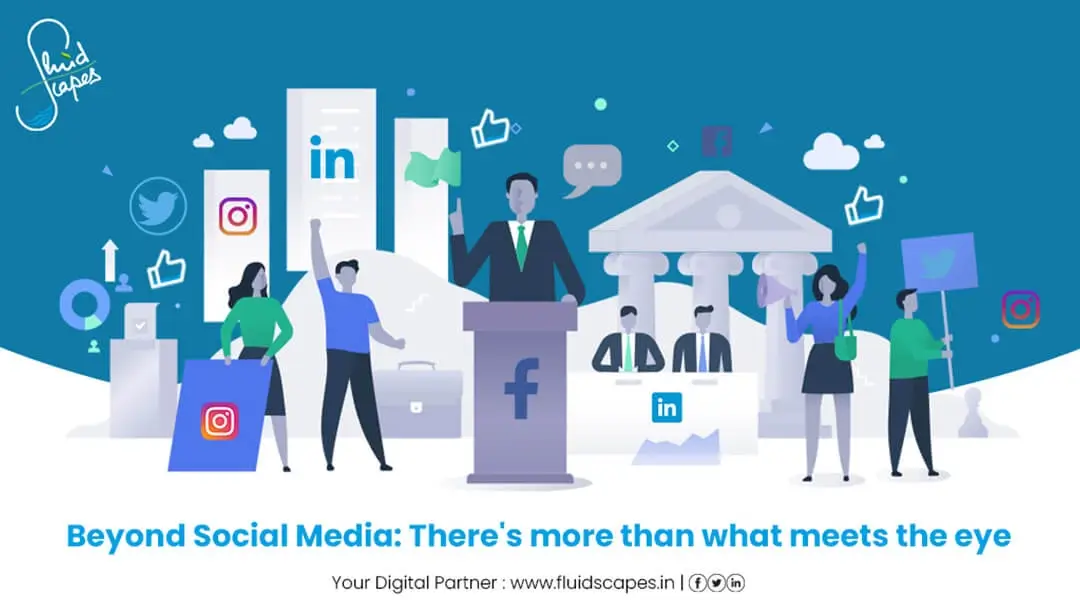
Politicians have always dominated the people but now people are dominating the fate of politicians. Sounds like an overstatement? At first, it may but if you are a regular on social media you’ll nod in agreement.
Social Media is expanding at a great speed. Twitter, Facebook, YouTube, Instagram, LinkedIn, and the list of channels goes on to depict how overwhelmingly they are capturing the mind space of the people, empowering them to express their views without fear and enabling them to create large communities (read ‘clans’) in a blink of an eye.
Millions of people are engaged in social media any time in a day – a delicious dish for the politicians who thrive on people. So easy to get known, remain relevant, create supporters and followers. One may not be a great speaker or an astute politician but even then he or she can earn popularity through clever handling of social media.
But that is one side of the coin. The picture is completely different on the other side. There you see dislikes, abuses, trolls, and free falls, all in the hands of the same people. The castle built over a long time and diligence may get destroyed overnight.
So, what it boils down to? The table has turned. Now the political career is subject to people’s approval.
The reputation capital
This is becoming the principal asset of a politician on his journey through uncertainties. It’s the amount of trust, confidence, and favour from your electorate that you are able to accumulate by maintaining a positive, undented image.
An undented image in politics, not possible man – you may be thinking. Wait, that’s the crux of this article. Your image can get plastic surgery done by a specialist ORM agency.
Reputation capital is built over time. Never expect it to be a short cut process. Being off guard or reckless not only creates immediate problems but also a permanent blot on your political career. They might be unearthed by your opponents at the most opportune moments.
Building and maintaining a good reputation capital is nothing less than walking on a rope. You must move forward but got to be extremely cautious.
It’s a battle on the cyberspace
Yes, it’s an ongoing battle you have to fight. Gone are the days when the politicians would be visible to their voters only during the run-up to an election. Now you need to be visible and communicable throughout the year. You can’t care less as your competitors are doing the same to win away your voters.
But this is a different type of a battle, a battle of perception and the battleground is cyberspace.
Briefly about the concept
Cyberspace is not just social media but other communication platforms too, such as Website, e-mail, Whatsapp, SMS, Video streaming, Podcasts, etc.
You got to be engaged with your electorate using all or most of the communication channels. It’s same as a brand-building process.
You need to be many things in one body – intellectually superior, a high skill set of website development, a good repository of information, a high degree of creative talent with insight and humour, high expertise on Google analytics, good researcher, an around-the-clock observer of multiple channels, and swift in action, among the essentials.
Can you manage these on your own
Your detractors are also active to find and use negative press against you, to demean you, to run direct or indirect campaigns against you.
It’s a tough world, you kill or get killed. You need to take a two-pronged approach – run a friendship campaign to impress your electorate and forge a strong counter-campaign to neutralise the attacks. Do you think it can be done by yourself?
This is intellectual warfare to build and protect your reputation that requires concerted efforts of high-level experts in different fields, over a long period of time. That’s how ORM (Online Reputation Management) is performed to benefit politicians, celebrities, and the corporate world.
A look into the mechanisms that the professional ORM companies adopt
Create a pleasing and engaging website for you – This results in your brand building.
Put a rigorous web monitoring strategy in place – This may employ tools such as Google Alerts, to monitor the webspace for negative reviews/comments about you. There can be uses of other software as well for advanced filtering.
Engage experts in social listening – This employs advanced technology (AI based tools) and social media specialists for scanning each and every mention of your name on all social media. This is of very high importance as this process can gauge your brand value, separating the negative comments/reviews for treating them professionally.
Employ social media engineering – If required embarrassing/demeaning tweets or bad press can be suppressed at the search engine level, else, appropriate replies can be hurled. When your public statement is broadcast on the press channels, measures can be taken to ensure that your positive press suppresses your negative press on Google. Social media management for celebrities and influencers can be leveraged in your reputation building process.
Respond to direct or indirect attacks – Matured and professional responses addressing the matter are posted. Many times these negative posts come from the common people under the influence of your detractors. The responses are aimed at converting an enemy into an ally. Witty and modest replies furnished with facts help win hearts. However, appropriate legal actions are also considered to deal with some special cases.
Acquire and manage Online reviews – This service employs various tactics to encourage people to write reviews about you. Good reviews are promoted on various platforms while negative reviews are sent to you for appropriate measures.
Competitor benchmarking – This involves monitoring your competitors websites and activities on various other platforms to see your position in terms of local searching, social activities, online mentions, reviews, and so on.
India is a big family of Resident Indians and the Non-Resident Indians; both are citizens of India and enjoy the same rights. Non-Resident Indians or simply NRIs are part of the Indian diaspora (over 21 million), the most widely spread and diverse diaspora in the world that maintain strong cultural and social linkages with India, besides engaging economically.
So the huge and increasing number of NRIs through their various types of financial transactions have become an integral part of the Indian economy and therefore, liable to pay income tax, just like Resident Indians.
However, while a Resident Indian is required to pay taxes on incomes from within or outside the country, an NRI is only required to pay taxes on incomes generated within the country. This difference in tax implications has necessitated clarity on their definitions to avoid their wrong uses.
This article talks about NRI taxation in India. We’ll first highlight the various conditions that help to identify an NRI in the eyes of the Income Tax authority and then look at the income tax criteria for them.
Let’s break down the whole matter into questions and answers. This’ll make it easier for you to relate to and understand the salient points.
Q1. How are a Resident Indian and a Non-Resident Indian defined?
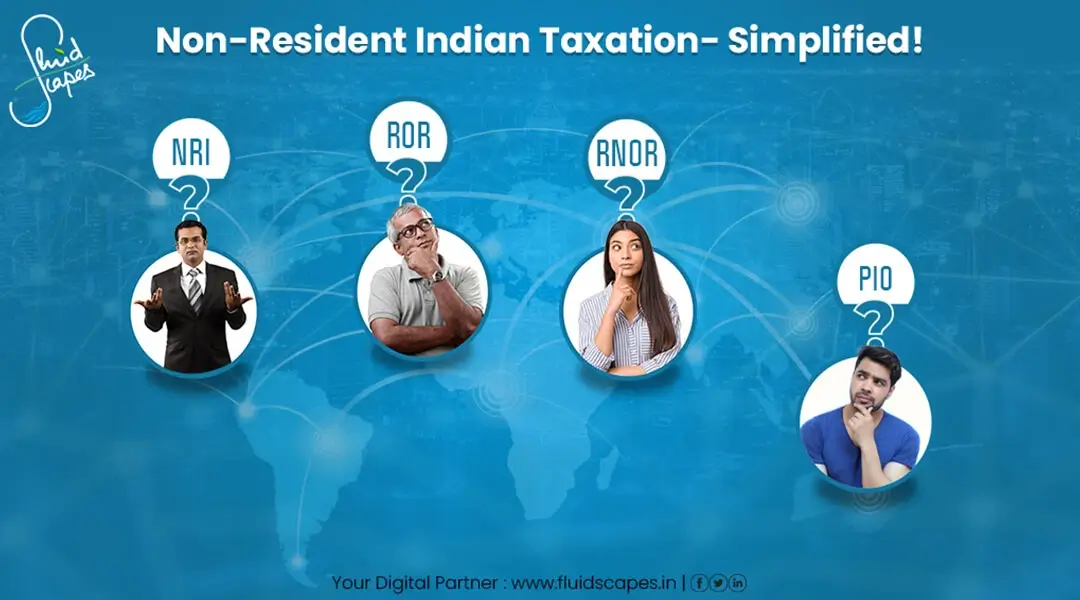
Your residential status is a key factor in determining your income tax liability in India. From Income Tax point of view, an Indian citizen can be either Resident Indian or Non-resident Indian. Resident Indian is further divided into two types – Ordinary resident(ROR) and Not Ordinary Resident(RNOR). The residential status can change each year.
You’ll be considered a Resident Indian if:
You are an Indian citizen who has stayed in India for more than 182 days during the financial year in question, or
You are an Indian citizen who has spent 60 days in India in the previous financial year and 365 days in the last four years cumulatively. However, an amendment has been introduced through the FA 2020(Finance Act 2020), which is applicable in the FY 20-21, that reduces the upper limit of stay in India from 182 days to 120 days, for an individual to be treated as an NRI in case his/her total income in India exceeds Rs.15 Lakh in a financial year. In other words, if your income in India during a given FY exceeds Rs.15 Lakh and your stay in India exceeds 120 days in that FY, your status will change from an NRI to Resident Indian. This has been done to curb tax evasion.
Also, if you are on the payroll of an Indian company but have been sent to a foreign country on an assignment, or as a crew member of an Indian ship, you’ll be considered a Resident Indian.
If you don’t satisfy any of the above conditions you will be considered a Non-Resident Indian (NRI).
Q2. How and why the status of a Resident Indian is further classified?
As said earlier, your tax liability is a factor of your residential status. Resident Indians are further divided into two classes – Resident And Ordinary Resident (ROR) and Resident But Not Ordinary Resident (RNOR).
You’ll be considered a ROR if:
You have lived in India for at least 2 complete years out of 10 years preceding the FY in question, or
You have spent 730 days or more in India, during the 7 FYs preceding the FY in question.
You’ll be considered an RNOR if your status doesn’t match with the above.
If you are a ROR, your income from activities outside India will be taxable in India. However, if you are considered an RNOR, you’ll be exempt from paying tax on income that is not accrued or arisen in India. But there is a caveat – if your income from outside India results from a business/professionally controlled set up in India, you’ll be liable to pay tax on that income.
There lies the advantage of an NRI over an RNOR. For the same condition mentioned above, an NRI would be exempt from paying tax on global income from business activities within India.
The eligibility for the RNOR status is further amended through the FA 2020 that now allows an Indian citizen or a PIO (person of Indian origin), who comes on a visit to India from outside in any FY shall be considered an RNOR if:
His/Her total income, accrued and arisen in India in that FY, exceeds Rs.15 Lakh, and
His/Her stay in India is 120 days or more but less than 182 days.
Q3. What is Deemed Residency?
This new status has resulted from an amendment provided through the FA 2020 to curb tax evasion. This says that an Indian citizen shall be deemed to be Resident of India(ROI), if:
His/Her total income in an FY, other than income from foreign sources, exceeds Rs.15 Lakh, and
He/She is not liable to pay tax in any country or territory due to domicile or residency in that country, or any other criteria of similar nature.
The residential status of an individual who is deemed Resident Of India will be the same as that of an RNOR.
Taxability at a glance based on Residential Status
Income
Ordinary Resident(ROR)
Not Ordinary Resident (RNOR)/ Deemed Resident
NRI
Income generated in India
Taxable
Taxable
Taxable
Foreign Income from the business set up in India
Taxable
Taxable
Non-Taxable
Foreign income from business activities outside India
N/A
Non-Taxable
Non-Taxable
NRI Tax liabilities at a glance
Nature of Income
Taxable to NRI
Income earned in India
Yes
Income deemed to accrue or arise in India
Yes
Income earned outside India but received in India
Yes
Income earned outside India but received outside India
No
Q4. What are the common types of taxable income for the NRIs?
NRIs are entitled to have incomes the same way a resident Indian has, such as:
Salary received in India
Capital gain on realty and other assets in India
Receipt of gifts
Income from interests in the resident accounts
Income from interests earned from NRO, NRE, and FCNR accounts
Interest from savings account/ Bank or non-Bank FDs
Income from rent in India.
Q5. What tax rebates are available to the NRIs?
Most of the Tax Rebates under section 80 are also applicable to the NRIs, such as:
80C
80D
80E
80G
80TTA
However, NRIs are not allowed to get deductions from the following schemes:
Investments in NSC, Post office schemes, PPFs and Senior Citizen schemes under section 80C
Investments under RGES scheme under Section 80CCG
Deductions for differently-abled under section 80DD, 80DDB, and 80U
Q6. Why should NRIs file Tax returns in India?
Irrespective of whether you are a Resident Indian or Non-Resident Indian if your income in India enters the tax slab, you should file tax returns. If you are an NRI, filing tax returns (mandatory in some cases) helps you in many ways such as:
Maintaining a clean image and financial accountability to continue to have incomes from India.
It helps if you ever decide to return to India and start a business.
Carry forward losses or claim a tax refund
Ownership of two or more house properties
Selling your only house property in India
Hope, this article helped you understand some of the essentials of NRI taxation, but there are much more in this realm. Kindly mail us to learn more at inquiries@fluidscapes.in. We are a virtual CFO service provider specialized in NRI taxation services. If you are an NRI and looking for an able partner to take care of your financial, legal, and tax requirements in India then you have come to the right page. Surely we can talk and take it forward.
Seven months into the pandemic and arrival of vaccines not in the close vicinity but, we are teeming with hope and enthusiasm. The AtmaNirbhar Bharat Abhiyan has transformed a brooding nation into a resurgent one.
It is the thrust on creating habitat for the MSMEs and Startups that has whetted the entrepreneuring appetite in the millions of Indians. In this article, we will restrict our attention to how Startups are redefined and incentivized in new-age India.
Many of us mix up Startups with MSMEs, but the two are not exactly the same. While the Government of India promotes both as budding businesses the fundamental difference between them is that an MSME is a micro, small, or medium-sized enterprise that can deal in any product or service but a Startup is essentially built around a novel idea or innovation. The concepts are further expanded as given below.
MSME
An MSME can be a manufacturing or a service business, usually of known products or services with limited employees, assets, and turnover (permissible as per its classification such as micro, small, or medium).
Startup
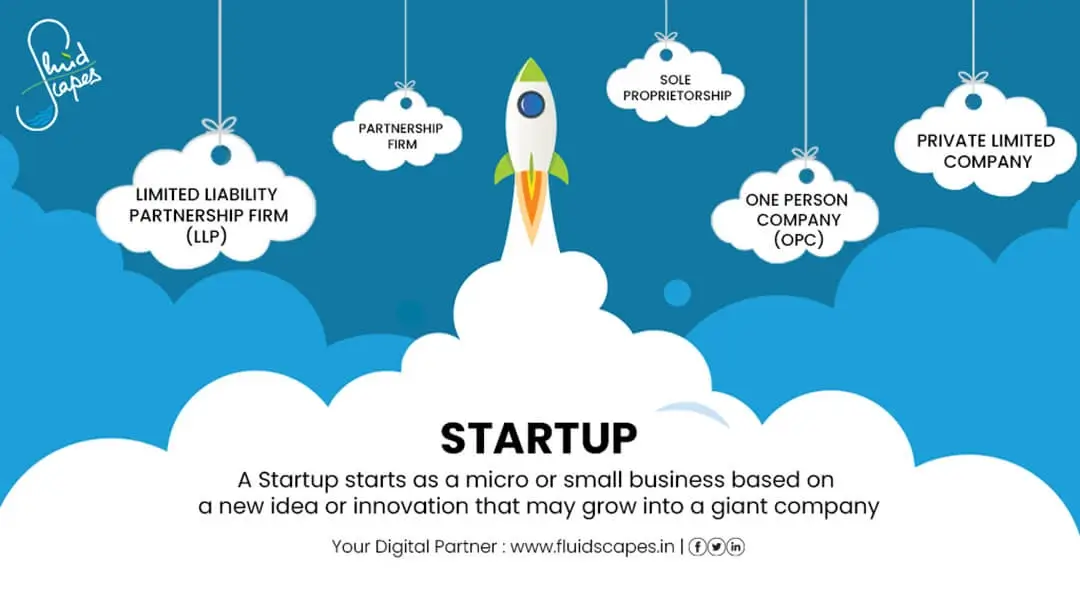
A Startup starts as a micro or small business based on a new idea or innovation that may grow into a giant company over the years to impact the economy by generating large employment and contributing to society in many ways.
Going by the last few years’ record growth in the number of Startup companies, this sector itself is expected to contribute $1Tn to India’s grand target of $5Tn economy by 2025. The Startup India initiative and similar organisations deserve big appreciations for creating this momentum.
However, as the economy slid into a deep gorge due to the pandemic, one of the most affected segments has been the fledgeling Startup community. Sensing this red alert, the Government of India has come up with financial and other assistance for the Startups.
The new policy says that despite the thin difference in the definition, a Startup is now allowed to be registered as an MSME to receive financial assistance through the AtmaNirbhar Bharat package.
Startups are enjoying special heed, due to the Make in India initiative by the government, which has created a special cell called Startup India initiative with a goal to make India the Startup capital of the world.
There are many types of help and guidance required by an aspiring entrepreneur. The Startup India initiative addresses them all, in an inclusive, professional and caring manner.
What is the role of the Startup India initiative?
In simple terms, it is responsible for building a strong ecosystem that is conducive for the growth of Startup businesses in the country. It’s much like an institution that works to empower the Startups and facilitates all that is needed for this cause.
How to start your Startup business
Any business needs to have a profitable business idea and a stable support system that takes care of the financial, accounting, and legal requirements.
Young Startup entrepreneurs are found to be focused more on using new technologies in their business but lacking exposure on other aspects to sustain their business.
If you have a good business idea but need funds and mentoring to implement that, then follow the below steps. These steps entail all that is required to start a Startup as an MSME and also enjoy the benefits under the Startup India scheme.
Incorporate your business as one of the below types:
a private limited company,
a partnership firm,
sole proprietorship,
a limited liability partnership firm(LLP),
a One Person Company(OPC).
Get your business registered using Udyog Aadhaar to get identified as an MSME.
Each has its own merits and demerits, for example, the rate of tax applicable to LLP is flat 30%, same as that for partnership firms, whereas the rate of tax applicable to a Pvt. Ltd. Co. is to the tune of 22%. OPC is much like a Pvt. Ltd. company with limited liabilities.
Choosing the best option requires help from a professional service because there are many factors to be considered. Write to us at inquiries@fluidscapes.in for more information.
Startup India scheme eligibility criteria to avail financial assistance as an MSME.
Particulars
Startup
Revenue upper limit
Up to INR 100 Cr
Investment in plant and machinery
Not applicable
Tenure of existence
Up to 10 years
Corporate structure
Pvt. Ltd. Company, LLP, General Partnership
Original Entity Test
1. Should not be formed from the split or reconstruction of an existing business. 2. Should apply technological innovation to develop/enhance new/existing products or services and generate employment.
How to utilize Startup India finance
Business loans help to realize your business project in a number of ways. Some of the common requirements are:
Starting the business using Seed Funding
Funding the business expansion
Investing in new tools, technology, equipment
Using for Working Capital requirements
Procuring raw material
Stocking up new inventory
Spending on marketing and promotion.
Startup India Registration benefits
New entrepreneurs need grooming and assistance that may be both financial and non-financial types. The Startup India registration benefits are available in two grades. The first grade will provide you with mainly non-financial benefits such as:
Various accelerator programmes,
Incubator/mentorship programmes,
Access to learning and development programmes
Information on Government schemes, State policies, and pro-bono services.
Benefits in the 2nd grade will be available to you if your business is also recognised by DIPP ( Department of Industrial Policy and Promotion). These are the ways and means to minimise your financial risk and burden, help in quick patenting and copyright protection, and provide easy winding up option. Some of these benefits are:
Self-Certification: Self-certify and comply under 3 Environmental & 6 Labour Laws
Tax Exemption: Income Tax exemption for a period of 3 consecutive years and exemption on capital and investments above Fair Market Value
Exemption from Angel Tax: Up to the total amount of paid-up share capital and share premium does not exceed Rs. 25 Crore after the proposed issue of share.
Easy Winding of Company: In 90 days under Insolvency & Bankruptcy Code, 2016
Startup Patent Application & IPR Protection: Fast track patent application with up to 80% rebate in filing patents
Easier Public Procurement Norms: Exemption from requirement of an earnest money deposit, prior turnover and experience requirements in government tenders
SIDBI Fund of Funds: Funds for investment into startups through Alternate Investment Funds
Directly register and sell on Government e-marketplace: With no requirement of turnover and experience criteria.
Preferential treatment at all Public Sector Undertakings.
Tax benefits for Startups in India
Here is how you can reduce your financial burden through the various Startup India Tax benefits.
Tax exemption under section 80 IAC: Tax holiday for three consecutive financial years out of the first ten years since incorporation.
Relief from Angel Tax under section 56(2) (VIIb)
Relief from Capital gains Tax under section 54EE
Relief for set off and carry forward of losses under section 79
Documents required for Startup India registration process
This is basic yet most important. Keep them ready before you opt for the registration.
Certificate of Incorporation or registration certificate
PAN card
MOA & AOA in case of company and Partnership deed for LLP & Partnership firm
List of all directors/members/partners along with their email id and photograph
URL link of a website and social profile of the entity
URL link of the social profile of directors/members/partners
Information related to IPR in the name of the entity If it has registered any IPR or it is in the process of registration
Information related to funds if the entity has availed any fund from investors
If the entity has received an award or certificate or recognition then such information needs to be provided
For more information about Virtual CFO services and assistance please contact inquiries@fluidscapes.in
Right moment has come to start your startup. A Virtual CFO can help you realise this dream.
The Atma Nirbhar Bharat Abhiyan or self-reliant India Mission package came at a time when the air was filled with only distressing news. Spiralling stress and anxiety started consuming the youths as the prolonged lockdown, mounting death toll, loss of livelihood were all pointing to a very gloomy time ahead.
But then, when the darkness spreads one has to turn on the light. Instead of announcing a mere relief package to mend the economy, the government chose to walk the harder path of revival through reform – if it works it’ll floodlight the economy.
Great opportunities knocking the door. MSMEs to see an upsurge.
And the revival will come through those who endeavour, who do not sit with despair but go out and try earnestly. The Atma Nirbhar Bharat package is aimed to stimulate entrepreneurship activities that will help grow the MSME sector, the throbbing homegrown ecosystem for the manufacturing and service industries.
The pivotal message that India wants to send out to its people is that the best way to deal with a challenge is to take it as an opportunity. COVID-19 has put a roadblock to the global supply chain that used to control our economy, so it’s time to develop our own supply chain which will be no less than the global standard.
Our large domestic market, which until now would majorly feed on the imported items, can be a big motivation for new MSME startups. On top of that, constant incentives and encouragement coming from the central government that has opened floodgates for entrepreneurship growth by taking all risks on its shoulders. Now the impetus is on the determined ones to grab the opportunity, build their startups, create jobs, and contribute to the GDP.
Virtual CFOs to make going easy for the MSMEs
For any business to grow, good financial discipline and legal knowledge are of paramount importance. Guidance of a financial expert helps a business in a big way to preempt many adverse situations and build good financial health. A CFO or the Chief Financial Officer plays that crucial role in a business to achieve sustainable growth.
However, having a full-time CFO accounts for a large amount of added cost. A Virtual CFO offers a cost-effective alternative with exactly the same services expected from a CFO. The reason this is termed as virtual is that this is entirely on the Internet or cloud offering prompt attention with 100% confidentiality and data secrecy.
However, having a full-time CFO accounts for a large amount of added cost. A Virtual CFO offers a cost-effective alternative with exactly the same services expected from a CFO. The reason this is termed as virtual is that this is entirely on the Internet or cloud offering prompt attention with 100% confidentiality and data secrecy.
The concept of virtual CFO or VCFO started in the US in the 1990s when many of today’s giant tech companies began sprouting in the silicon valley. Most of these new companies couldn’t afford the high cost of a full-time CFO, yet having high aspirations of reaching different markets with innovative solutions. VCFOs emerged to bridge this gap to help these companies in their budgeting, valuation, strategy development, sensitivity analysis, etc. Eventually, the trend caught on globally.
Much in the same manner, VCFOs have contributed to the growth of MSMEs in India. Volatility and regulatory changes are part of an emerging market like India. The VCFOs help to take correct financial decisions.
The companies realise that it’s not just cost reduction but also having the competitive advantage of experts on call. The MSMEs can concentrate on their core business activities and leave other matters such as legal, policy, compliance, investments, accounting, etc. to be handled by the VCFO.
Following are the key activities that an MSME business gets to undergo in order to maintain their growth trajectory:
Cash flow optimization and management
Budget planning
Accounting and bookkeeping
Payroll function
Banking transactions
Tax planning
Compliance management
Setting a financial direction
Clearly, these functional areas are better handled by a team of specialists, hence the need for Virtual CFO service.
Some promising industries for MSMEs
The MSME sector (consisting of the micro, small and medium enterprises) contributes to approximately 40% of the country’s GDP and is a major employment generator. The industries that are showing great prospects post-COVID are as follows:
Pharmaceutical API manufacturing:
APIs and its scarcity in India have made headlines in recent times in the context of disruption in the supply-chain for drug manufacturing in India against the world-wide lockdown. This led to the government’s decision of encouraging more API production in the country.
The Active Pharmaceutical Ingredient (API) is the actual component of a drug that causes the intended medicinal effects. Besides API a drug usually have another component called excipient that helps in proper delivery of the API in the body. Some drugs even have multiple APIs to treat different symptoms.
Although India was known for bulk API production in the past, it ceded this advantage to China, owing to the latter’s economy of scale. Currently, our drug manufacturers import the majority of the APIs from China.
But now that India has adopted the policy to become self-reliant, home production of APIs is expected to witness a jump. This sector alone can create a large number of MSME units to add to the existing ones, given the high demand for API in the domestic as well as international market.
Food Processing
India is a leading producer of a variety of food and grocery products. Production of the food grain itself is near to 245 million MT. And, in terms of consumption India constitutes the sixth-largest market in the world.
The above information simply points to the huge possibilities for the food processing industry in India where it has the advantages from both sides – the sourcing of raw materials is local and cheaper and the demand for the finished product is high.
But the irony is that the food processing industry hasn’t picked up well in India. While the fruit and vegetable processing in India remained as low as 12% or even less, in many western countries over 80% of their food is processed.
This prompted China to set up numerous food processing parks and capture a whopping 43% of the world’s processed food market. India is way behind with its tiny share of 3% of the world market; this points to the abundant scopes for the food processing companies in the domestic and international markets, especially when the world is shaky about China. The Atma Nirbhar Bharat package has astutely addressed this opportunity by triggering reforms to strengthen MSMEs to increase investments in food processing.
The Govt. of India recognises all food grains, fruits, vegetables, dairy, poultry & meat products, and fishery products as the sub-segments of food processing. And as a country with rich agricultural bases, animal husbandry, forest and marine resources, there is every possibility of witnessing a huge growth in the food processing industry in India and creating great job prospects in the rural areas.
Electrical and Electronics Industries
In the modern age, development is simply measured by the use of electrical and electronics equipment. Therefore high growth of this segment is natural in a development hungry country like India.
According to a recent report, the electrical and electronic equipment market in India will reach US$ 400 billion in 2022. Until now, the majority of demand in this market would have been met through import. Now that the import is restricted, the MSMEs are getting great encouragement to match the requirement and seize the market.
Country’s thrust on the urbanisation and civic development of remote villages accounts for a rapid increase in power generation & distribution. Besides conventional coal and hydro based power stations, the increasing focus on alternative and eco-friendly power generation such as solar power and wind power are expected to be big tractions for MSME growth in this segment.
An opportunity has also born out for the MSMEs to set up ancillary industries to feed the manufacturing of heavy electrical equipment. Earlier most of the ancillary parts would have to be imported. The total market size for the electrical equipment in India is expected to be US$ 100 billion by 2022. It is also important to note that the government has set up the Electrical Equipment Skill Development Council (EESDC) to improve critical manufacturing skill required for the electrical machinery industry.
Similarly, a robust scope is forthcoming in the electronics sector due to the massive consumption of industrial and consumer electronics, computers, communication and broadcasting equipment, strategic electronics and electronic components in the country.
The growth in the telecom sector deserves a special mention. With the country, all set to upgrade to 5G and the digital technology sweeping the Indian society the demand for smartphones is going through the roof. The Make in India initiative along with several policy liberalisations is about to attract big players into this sector and encourage MSMEs to create the right eco-system.
IT / ITeS
India is already a proven player in this segment with a turnover of around US$ 180 billion, majority of which accrued from the businesses with the US and Europe based clients. This makes its fortune to be linked with the performance of these market post-COVID-19.
However, as the present situation signalling towards the massive scale of economic recovery in all countries, cost-effective IT and ITeS solutions are expected to have a large demand from other markets as well.
This can bring great opportunities to the Indian IT industry that can offer their core value proposition at a competitive price point. Digital transformation is likely to take the leading role in these economic restructuring processes which will give the Indian IT service startup companies an extra advantage due to their high skillset and innovations.
Industrial reconstruction is also expected to see an upsurge to facilitate fast economic recovery in the post-COVID period. This will call for up-gradation to Industry 4.0 standard that is based on unification or integration of the individual processes.
Industry 4.0 is the new global standard that ensures a great deal of improvement in productivity and efficiency of a plant or factory, by employing several digital tools such as cloud computing, big data, augmented and virtual reality, artificial intelligence, deep learning, robotics, additive manufacturing, etc.
Rules for Annual Filing & Compliances for the MSMEs
All MSME companies registered in India such as private limited companies or one-person companies must file the MSME form 1, also known as MCA to submit annual return and income tax return each year.
The company must conduct an annual general meeting at the end of each financial year before filing the annual return.
The annual general meeting for the newly incorporated companies should be held within 18 months from the date of incorporation or 9 months from the date of closing of the financial year, whichever is earlier.
What is MSME Form 1 or MCA?
The MSME I Form is to provide information on a half-yearly basis in the context of the outstanding payments to Micro or Small Enterprises for a period exceeding 45 days with the Registrar of Companies (ROC).
Apart from the MCA annual return, income tax turn must also be filed every year, irrespective of income, profit or loss. This means even the dormant companies with no transaction will have to file income tax returns.
For the private limited companies, limited companies and one-person companies, the income tax return to be filed by submitting the Form ITR – 6. The due date for filing IT returns is on or before 30th September.
Late Filing Penalty for MSME Form 1 or MCA.
The section 405(4) which includes non-furnishing/incomplete/incorrect information penalty states a fine up to Rs.25000 (Co.,), Rs.25000/- (Min) & Rs.3 lacs (max) and imprisonment of 6 months for directors or both. Therefore it is mandatory for directors to file the MSME form 1.
Procedure for Filing MSME Form 1 (MCA)
The MSME Form 1 should be filed giving details of all the outstanding / dues against the micro or small enterprises suppliers that are existing on the date of notification of the related order within 30 days from the date of deployment of E-form MSME- 1 on the MSA portal.
The long economic shutdown due to COVID -19 has pushed us to an edge beyond which there is no road but a deep ravine. Now the question is that shall we stop there or try to overcome the barrier.
At this critical juncture, the Govt. of India rose to the occasion to reinforce our optimism and confidence with the INR 20 Lakh Crore Atma Nirbhar Bharat package. We needed a high dose of motivation, a booster of willpower to turn the tide. The Atma Nirbhar Bharat package has provided just that.
It’s the massive upheaval of the global economic order expected because of the pandemic, that has been sensed and utilised by the Govt. of India to formulate this array of reformative and incentivized measures to make the best of the situation.
MSMEs or the micro, small, and medium enterprises in the manufacturing and service sectors that account for a large part of the Indian economy have got a special focus. The post COVID period is expected to be the golden era of MSME in the country, as the government has opened all the level crossings for a speedy run of the MSME train.
Moreover, to provide assistance to all types of endeavours in the form of micro, small, and medium level entrepreneurship in the country, the government has redefined the scope and criteria of the term MSME and increased its canopy cover. See the new definition of MSME at the trailing end.
The age of Virtual services
As both the personal life and business are getting disrupted by the social distancing and home arrest, a new frontier has opened by the name of virtual services, thanks to the rapid development in digital technology in the recent days that came to our rescue in this trying time.
A virtual service is the same service (or even better) that used to be provided from a brick and mortar office earlier, now available remotely through an app. These apps have suddenly been the order of the day as people are finding them convenient, flexible, and comprehensive.
The conventional mindset and inertia are blown away by the storm of COVID and we are pushed into a new era in the journey of human development. Just as big an impediment the pandemic put before us to destroy our livelihood, our innovative brains came up with equally brilliant solutions to circumvent that. The age of virtual services has begun.
The advent of digital technology spurred the development of the virtual versions of a lot of services over the Internet which are just as effective and do away with the physical meetings between the client and the service providers. The virtual CFO is a good example of the same which offers a plethora of financial services on the cloud.
Virtual CFO and MSME
Virtual CFO takes care of the financial health of micro, small, and medium scale businesses, also known as MSMEs and allows them to concentrate on their main businesses. Let’s first understand the role of a CFO.
Good finance management is at the core of the growth of any professional body. From the phase of incorporation to the initial fledgeling stage and then to the advance stages of the business lifecycle, every decision the business takes affects its cash flow. And therefore, it is extremely important for the businesses to have a knowledgeable CFO on the management.
Thus the job of a CFO ( Chief Financial Officer ) is very challenging, which impacts the growth of a company through efficient handling of the financial aspects and accounting. The CFO is a part of the top management whose primary responsibility includes managing the financial risks, financial reporting and record-keeping.
A lot of micro and small businesses die at different stages, and many other companies do not see growth in spite of their high abilities – poor financial management being the root cause for both. While an in-house CFO can help these companies to navigate and become financially strong to withstand unforeseen blows, most of them cannot afford to appoint one.
A virtual CFO service addresses this problem of an MSME company effectively by providing the industry-specific financial and professional advice, analysis, and support to the management. By outsourcing all of its financial management responsibilities to a virtual CFO the company can focus on its core business.
A good virtual CFO service provider shall take care of the following services of a business such as:
Accounting and book-keeping
Cash flow forecasting and budgeting
Financial statement preparation and records management
Banking services
Tax services
Compliance
Corporate governance
Miscellaneous services
Let’s elaborate on the above services for a better understanding.
Accounting and book-keeping
For a business to run smoothly it is imperative to have a consulting lawyer at hand besides professionally managing the tax, accounting, and compliance requirements. While it is an option to have the in-house expertise to handle them, the other option (often appropriate for small and medium businesses) allows you to take the guidance of a Virtual CFO service to choose and conform with the correct corporate entity.
Your virtual CFO, with a long experience of work with small businesses, can tell you about the various financial indexes of your business and how to improve upon them in order to protect your bottom line.
Cash flow forecasting and budgeting
A better understanding of the cash position at a target period is key to take the right business decision. The cash flow forecasting by the virtual CFO informs you about how much extra fund will be required for a certain project and to make proper cash arrangements for timely execution.
Proper budgeting helps a company sail smoothly and sustain growth. Budgeting needs to be reviewed on a monthly or quarterly basis to be able to track the movement and make the necessary changes.
Financial statement preparation and records management
Financial statements are like health reports of various aspects of a business, which are referenced to make quick decisions by the management. They also help in getting loan or investments from outside.
After helping your small business to establish legally, the virtual CFO starts working to prepare sound financial statements and reports such as income statement, balance sheet, and cash flow statement.
The evaluation and preparation of the statements are conducted on a monthly, weekly, or even daily basis. By conducting these operations thoroughly your virtual CFO can weed out the issues that may harm your company in future.
Banking services
Any business has the peaks and the valleys in terms of sales and cash flow. But the convincing statements help the business get the loan from a bank even when there is a downturn. You can bank on your virtual CFO for the same.
Tax services
Small business owners are generally not aware that many of their daily decisions have direct or indirect impacts on their taxes. They often make the mistake of assuming that there won’t be taxes to be paid for a quarter or year in which they didn’t make any money.
Support from your virtual CFO can help grow your awareness in the matters relating to your current tax status and tax implications of your decisions. It is better to be aware and cautious in time rather than getting hit by the unexpected tax at the end of the year.
Compliance
This is one of the basic services provided by your virtual CFO, which enables your business to comply with the necessary requirements as per the latest provisions of Companies ACT, FEMA, Income Tax Act, IPR laws, Contract Act, etc.
Corporate Governance
Your virtual CFO defines the correct corporate entity for your business and advises you about the rules and regulations to be followed. This helps build confidence of the shareholders, clients, and institutional investors.
Miscellaneous services
Your virtual CFO also offers miscellaneous financial services such as cost management, break-even analysis, debt planning, audit support, MIS reporting, Internal controls, etc.
The renewed definition and scopes of MSMEs
The full form of MSME is Micro, small, and medium enterprises. An enterprise may be engaged in manufacturing or providing services. Manufacturing enterprises can be any industrial undertaking, Business concern or other establishment engaged in manufacturing or producing of any goods according to industry specified in 1st schedule of IDR Act. A service enterprise can be any business that provides physical, offline or online service. Enterprises may be of any constitution, be it proprietorship, partnership, LLP or company etc.
In the recent announcement by the Finance Minister dated 01.06.20 while giving the breakups of the Atma Nirbhar Bharat package, the definition of the MSME has been changed.
The below tables provide the earlier criteria for the micro, small, and medium enterprises and also the new criteria to understand the government’s intention of encouraging and supporting a large range of entrepreneurship in the country.
Earlier Criteria for classification
Nature of Industry
Type of Industry
Original Investment Value in Plant & Machinery or Equipment’s (for service sector)
Manufacturing
Micro
Up to 25 Lac
Small
From 25 Lac to 500 Lac
Medium
From 500 lac to 1000 Lac
Service
Micro
Up to 10 Lac
Small
From 10 Lac to 200 Lac
Medium
From 200 Lac to 500 Lac
New Criteria for Classification (Wef 01/07/2020)
Nature of Industry
Type of Industry
Original Investment Value in Plant & Machinery or Equipment’s (for service sector)
Manufacturing or Service Sector
Micro
Investment Less than 1 Crore Turnover Less than 5 Crore
Small
Investment Less than 10 Crore Turnover Less than 50 Crore
Medium
Investment Less than 50 Crore Turnover Less than 250 Crore
It is interesting to note that the criteria for manufacturing and service have merged together to keep it simpler. Also, the investment ranges have been increased to accommodate much more number of businesses under the Atma Nirbhar Bharat package.
In the calculation of the original value of plant & machinery, cost of the equipment such as tools, jigs, dies, etc. must be excluded. Other costs like Power generation set and its Installation cost, Bank charges, Gas Producing Plants, Charges paid to acquire technical know-how, Storage tanks, Firefighting Equipment are also required to be excluded while calculation of the original cost of plant & machinery. For the imported machinery various expenses incurred on import such as import duty, shipping, customs clearance, etc. must be added back.
The below box contains 38 types of industries the MSMEs are permitted to be engaged in
1. METALLURGICAL INDUSTRIES: A. Ferrous: (1) Iron and steel (Metal). (2) Ferro-alloys. (3) Iron and Steel castings and forgings. (4) Iron and Steel structurals. (5) Iron and Steel pipes. (6) Special steels (7) Other products of iron and steel. B. Non-ferrous: 2 [(1) Precious metals, including gold and silver, and their alloys; (1A) Other non-ferrous metals and their alloys.] (2) Semi-manufactures and manufactures.
2. FUELS: (1) Coal, lignite, coke and their derivatives. (2) Mineral oil (crude oil), motor and aviation spirit, diesel oil, kerosene oil, fuel oil, diverse hydrocarbon oils and their blends including synthetic fuels, lubricating oils and the like. (3) Fuel gases—(coal gas, natural gas and the like).
3. BOILERS AND STEAM GENERATING PLANTS: Boilers and steam generating plants.
4. PRIME MOVERS (OTHER THAN ELECTRICAL GENERATORS): (1) Steam engines and turbines. (2) Internal combustion engines.
5. ELECTRICAL EQUIPMENT: (1) Equipment for generation, transmission and distribution of electricity including transformers. (2) Electrical motors. (3) Electrical fans. (4) Electrical lamps. (5) Electrical furnaces. (6) Electrical cables and wires. (7) X-ray equipment. (8) Electronic equipment. (9) Household appliances such as electric irons, heaters and the like. (10) Storage batteries. (11) Dry cells.
6. TELECOMMUNICATIONS: (1) Telephones. (2) Telegraph equipment. (3) Wireless communication apparatus. (4) Radio receivers, including amplifying and public address equipment. (5) Television sets. (6) Teleprinters.
7. TRANSPORTATION: (1) Aircraft. (2) Ships and other vessels drawn by power. (3) Railway locomotives. (4) Railway rolling stock. (5) Automobiles (motor cars, buses, trucks, motorcycles, scooters and the like). (6) Bicycles. (7) Others, such as forklift trucks and the like.
8. INDUSTRIAL MACHINERY: A. Major items of specialised equipment used in specific industries:— (1) Textile machinery (such as spinning frames, carding machines, power looms and the like) including textile accessories. (2) Jute machinery. (3) Rayon machinery. (4) Sugar machinery. (5) Tea machinery. (6) Mining machinery. (7) Metallurgical machinery. (8) Cement machinery. (9) Chemical machinery. (10) Pharmaceuticals machinery. (11) Paper machinery. B. General items of machinery used in several industries, such as the equipment required for various ‘unit processes’: (1) Size reduction equipment—crushers, ball mills and the like. (2) Conveying equipment—bucket elevators, skip hoist, cranes, derricks and the like. (3) Size separation units—screens, classifiers and the like. 32 (4) Mixers and reactors—kneading mills, turbo mixers and the like. (5) Filtration equipment—filter presses, rotary filters and the like. (6) Centrifugal machines. (7) Evaporators. (8) Distillation equipment. (9) Crystallisers. (10) Driers. (11) Power driven pumps—reciprocating, centrifugal and the like. (12) Air and gas compressors and vacuum pipes (excluding electrical furnaces). (13) Refrigeration plants for industrial use. (14) Fire-fighting equipment and appliances including fire engines. C. Other items of Industrial Machinery: (1) Ball, roller and tapered bearings. (2) Speed reduction units. (3) Grinding wheels and abrasives.
9. MACHINE TOOLS: Machine Tools.
10. AGRICULTURAL MACHINERY: (1) Tractors, harvesters and the like. (2) Agricultural implements.
11. EARTH-MOVING MACHINERY: Bulldozers, dumpers, scrapers, loaders, shovels, drag lines, bucket wheel excavators, road rollers and the like.
12. MISCELLANEOUS MECHANICAL AND ENGINEERING INDUSTRIES: (1) Plastic moulded goods. (2) Hand tools, small tools and the like. (3) Razor blades. 1 [(4) Pressure Cookers. (5) Cutlery. (6) Steel furniture.]
13. COMMERCIAL, OFFICE AND HOUSEHOLD EQUIPMENT: (1) Typewriters. (2) Calculating machines. (3) Air conditioners and refrigerators. (4) Vacuum cleaners. (5) Sewing and knitting machines. (6) Hurricane lanterns.
14. MEDICAL AND SURGICAL APPLIANCES: Surgical instruments—sterilisers, incubators and the like.
15. INDUSTRIAL INSTRUMENTS: (1) Water meters, steam meters, electricity meters and the like. (2) Indicating, recording and regulating devices for pressure, temperature, rate of flow, weights, levels and the like. (3) Weighing machines.
19. CHEMICALS (OTHER THAN FERTILISERS): (1) Inorganic heavy chemicals. (2) Organic heavy chemicals. (3) Fine chemicals including photographic chemicals. (4) Synthetic resins and plastics. (5) Paints, varnishes and enamels. (6) Synthetic rubbers. (7) Man-made fibers including regenerated cellulose-rayon, nylon and the like. (8) Coke oven by-products. (9) Coal tar distillation products like naphthalene, anthracene and the like. (10) Explosives including gunpowder and safety fuses. (11) Insecticides, fungicides, weedicides and the like. (12) Textile auxiliaries. (13) Sizing materials including starch. (14) Miscellaneous chemicals.
20. PHOTOGRAPHIC RAW FILM AND PAPER: (1) Cinema film. (2) Photographic amateur film. (3) Photographic printing paper.
21. DYE-STUFFS: Dye-stuffs.
22. DRUGS AND PHARMACEUTICALS: Drugs and Pharmaceuticals.
23. TEXTILES (INCLUDING THOSE DYED, PRINTED OR OTHERWISE PROCESSED): (1) Made wholly or in part of cotton, including cotton yarn, hosiery and rope, (2) Made wholly or in part of jute, including jute twine and rope. (3) Made wholly or in part of wool, including wool tops, woollen yarn, hosiery, carpets and druggets; (4) Made wholly or in part of silk, including silk yarn and hosiery; (5) Made wholly or in part of synthetic, artificial (man-made) fibres, including yarn and hosiery of such fibres.
24. PAPER AND PULP INCLUDING PAPER PRODUCTS: (1) Paper—writing, printing and wrapping. (2) Newsprint. (3) Paper board and strawboard. (4) Paper for packaging (corrugated paper, Kraft paper), bags, paper containers and the like. (5) Pulpwood pulp, mechanical, chemical, including dissolving pulp.
25. SUGAR: Sugar.
26. FERMENTATION INDUSTRIES (OTHER THAN POTABLE ALCOHOL):] (1) Alcohol. (2) Other products of fermentation industries
27. FOOD PROCESSING INDUSTRIES: (1) Canned fruits and fruit products. (2) Milk foods. (3) Malted foods. (4) Flour. (5) Other processed foods.
28. VEGETABLE OILS AND VANASPATI: (1) Vegetable oils, including solvent extracted oils. (2) Vanaspati.
34. CERAMICS: (1) Fire bricks. (2) Refractories. (3) Furnace lining bricks—acidic, basic and neutral. (4) Chinaware and pottery. (5) Sanitary ware. (6) Insulators. (7) Tiles. 1 [8) Graphite Crucibles.]
35. CEMENT AND GYPSUM PRODUCTS: (1) Portland cement. (2) Asbestos cement. (3) Insulating boards. (4) Gypsum boards, wallboards and the like.
36. TIMBER PRODUCTS: (1) Plywood. (2) Hardboard, including fiber-board, chip-board and the like. (3) Matches. (4) Miscellaneous (furniture components, bobbins, shutters and the like).
37. DEFENCE INDUSTRIES: Arms and ammunition.
38. MISCELLANEOUS INDUSTRIES: 2 [(1)] Cigarettes. 3 [(2) Linoleum, whether felt based or jute based. (3) Zip fasteners (metallic and non-metallic). (4) Oil Stoves. (5) Printing, including litho printing industry.]
Sometimes at the beginning of 2019, I found a new app on my phone. I had no idea how it came but ran it anyway, only to be met with something that became a close companion of mine since that day. It’s a bouquet of podcasts on music and conversations, delightful by their content, audio quality, and the fascinating manner of hosting.
One may wonder how podcasting became a smashing hit almost overnight and led to the resurgence of audio to grab much of our attention from the clasp of YouTube. But to me, it’s easy and hassle-free audio streaming of enchanting content, the basics to make talk shows popular. It’s refreshing to see more people are absorbed in listening.
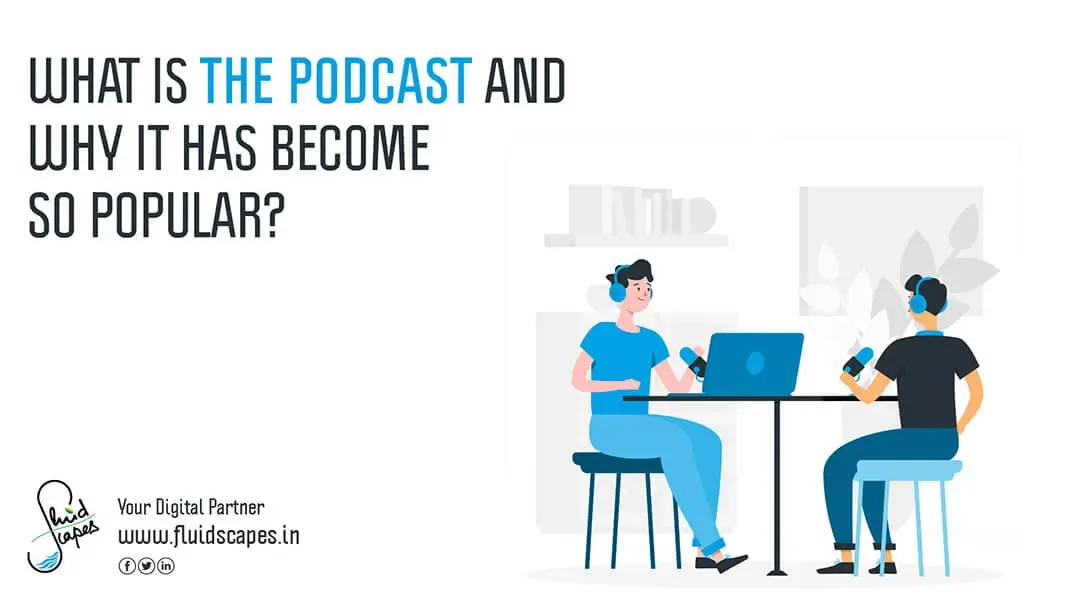
What is the podcast and why it has become so popular?
The best way to understand the concept is to go to the origin of its name i.e. iPod + Broadcast. Like iPod, Podcast is audio on-demand and on-the-go, but instead of storing audio files it sources them from the Internet, some similarity to broadcasting. The users can either receive live content or they may listen to the content updated and stored at the source site, any time later.
Although podcast connotes beautiful flow of audio content – some people call it Internet Radio but that is a misnomer- actually, it can transport video files as well. There are four reasons why this medium has become so popular.
Handsfree uninterrupted listening – without having to look at the screen and control. You may be driving or involved in other works at the same time while listening to a podcast.
Superior audio quality – Data streaming technology has come of age to deliver distortionless audio (audio files are smaller and easier to handle than the video files).
Hasslefree access – The RSS technology which is at the heart of podcast is a particularly strong method for subscription and distribution of syndicated audio over the Internet. You subscribe once and receive feeds automatically.
Mastery of the podcasters – They present the content like audio blogs, mixing an intimate and personal style, flow, knowledge, and appealing voice.
Podcasting for marketing
Audio storytelling is becoming the new craze. Compelling content, whether through reading or listening, captivate one’s heart. With the listener base swelling day by day, podcasting presents a new avenue to the marketers.
Scientists found relations between audio learning, brain stimulation, and addictive effects, and of opinion that the influence of audio can be deep because while listening you are constantly building images of the story in your brain to create your own production.
Niche audience
More and more podcast channels are coming up, with engaging talks on a number of subjects. Whichever maybe your area of interest such as politics, fitness, cooking, travel, comedy, there is a podcast channel on that.
This provides marketers with the benefit of getting a niche audience if they can choose the right podcast to advertise on.
Studies reveal a growing percentage of the listeners admit the influences of podcast ads on their buying decisions. The growth forecast for podcast advertising in the USA is nearly 110% by the end of 2020.
Higher chance to connect
Besides providing excellent audio experience, podcasting offers another great advantage i.e. one can listen to podcasts anytime, anywhere – whether they are at their work, driving, cooking, working out, or walking. This makes for a very high rate of reach. With appropriately made podcast ads brands can instil better connections with consumers.
Podcast hosts create intimate voice-driven appeal on the minds of the listeners. Like micro-influencers on social networks, they establish themselves as passionate and trusted experts to their niche audiences. Bespoke podcast ads read by the hosts pose higher efficacy chances than other podcast ads.
Podcast conversations bring wonderful opportunities to brands and advertisers. No doubt that this provides a much higher yield in terms of value for money.
Adversity for some turns into an advantage for others. While the coronavirus pandemic is causing havoc to the lives and economies, it has brought an unexpected advantage to the small businesses to create strong brand images, due to upsurge in Internet and social media browsing.
Newspapers are closed, billboards have no viewers, people locked in homes are on their mobiles for more time than ever – can there be a better opportunity for the brands to grab maximum eyeballs using the digital platforms!
Seasoned businessmen know that disasters usually come with some opportunities. The COVID-19 fallout has seen a sharp increase in brand recall exercises carried out on social media, which are thronged with visitors for extended hours these days.
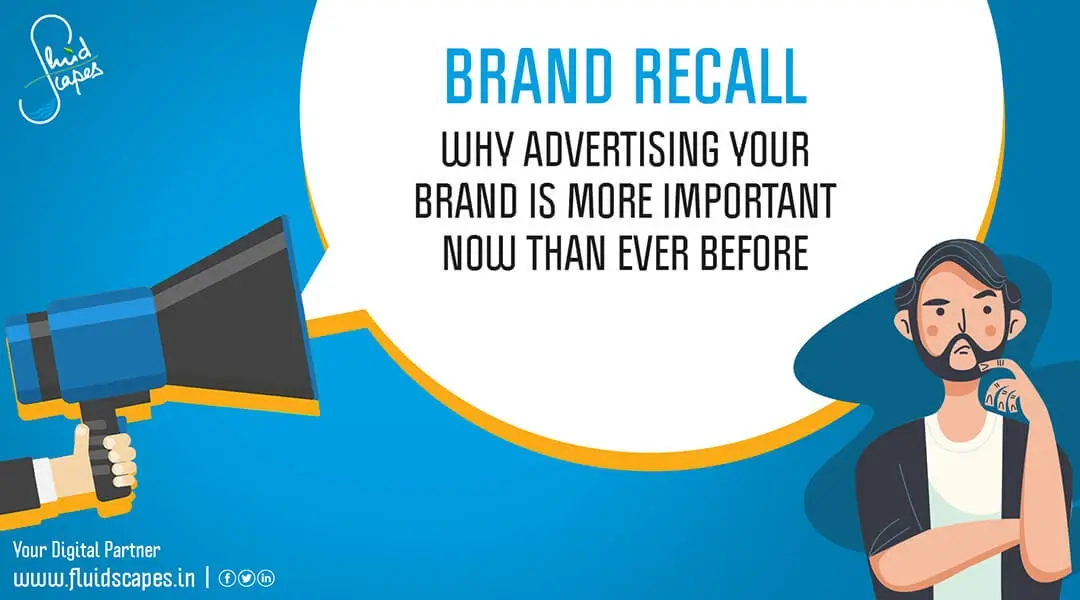
What is brand recalling?
This is an important part of branding that helps to relate the name of a brand with a certain type of product or service and the instant recollection of the same by the consumer. It’s a component of brand awareness, which is a measure of how instantly the brand name in question comes to the minds of the consumers when prompted by a certain product category. Brand recall is absolutely critical for not only it leads to direct sales to the consumer but also for the word of mouth marketing and referral marketing strategies.
Why is this the perfect time?
The key reasons why brand recall on digital media is encouraged now are these:
The cost has come down – Drastic drop in sales has forced many companies to review their advertising strategy and lower advertising budgets. Ad rates, which are plummeted by almost 50%, offering double benefits to many companies in terms of greater audience reach at a much lesser cost.
After this ordeal is over customers will start buying – Staying connected to your audience will pay you a good dividend as they’ll recall your brand when making purchases. Now that the consumption has come to a halt, it is raring to make a roaring return.
The right strategy can keep a company afloat through the storm – This is a rare time when all of the digital media is experiencing a traffic explosion. Prudent business heads have jumped at this chance to maximise their reach with sharp and focused contents – not necessarily product related but to empathise with people, giving solutions and stuff like that.
Enhanced analysis and tracking for remarketing purposes – Access data parameters on the present branding campaign can be studied for analyzing consumer behaviour and demographics. This will be very useful for retargeting specific communities to achieve greater sales when normalcy returns.
Overall, the lockdown has brought an unprecedented opportunity to the business to stay connected with the known audience and explore new consumers. A well thought out and sensitive campaign plan during this phase will help to offset the losses and generate long term growth.
Communication and user experience are the fountainhead of innovations that are making lives richer in the present digital age. Chatbot in its new form has become an instant hit because it interweaves the two factors so very well.
Although the concept of chatbot first emerged in the 1960s and many experimentations followed thereafter to give it a proper shape, it was not before 2016 the technology saw its first commercial success. The credit should go to Mark Zuckerberg for allowing companies to create their chatbots on Facebook messenger. This move initiated the chatbot craze as the brands were able to personify messenger, engage customers, and save cost. Someone rightly said, “genius is in the idea…” Earlier, the messenger was only being used for personal chatting and Facebook was losing ground in the race to be a pro-business medium. So, Zuckerberg clubbed messenger and chatbot (AI-powered) together with an expectation that the mix of informal chatting and intelligent assumption will create a new way for business conversations. It did, with a bang, and in no time the concept was replicated on other platforms as well, to make it a hot and big opportunity for all businesses.
So how Chatbot is doing in its new role?
The chatbot has evolved into the messenger-bot, which is actually an app but does not unfold itself through a menu. Instead, it uses instant messaging or conversation as its interface. The messenger-bot allows informal type messages, common between the friends on chat, for sales and support related queries.
Today’s Chatbots are AI-based softwares that are programmed to react to the humans’ questions instantly with appropriate answers. The use of AI provides them with human-like intelligence to learn, assume, predict and furnish the appropriate answers to complex but relevant questions.
Chatbots are seen as intelligent assistants in marketing with double benefits in terms of increase in business conversion and in cost-cutting. However, its uses are not confined to businesses only but are being used in other applications as well, to render meaningful and useful information for quick decision making.
To understand the benefits of Chatbot, it may be compared to the call centres in banking and healthcare with the fact that the average time saved per chatbot chatting has been found to be 4 minutes. On a monthly or yearly basis for a large setup, this results in an increased interaction at a much lower cost.
This simple arithmetic of revenue and functionality gains is opening up more and more industries to chatbot marketing. A chatbot can be incorporated into one or more interfaces such as the website, Facebook, or Twitter pages of an organization. There can be an integration of various apps into a chatbot and reliable communication between them using APIs, thanks to cloud computing.
How chatbots are serving various industries
Since chatbots have great power to engage and satisfy customers, more and more applications are coming up, which are specific to different industries. Already, it’s being used in the industries such as retail and consumer goods, banking, legal, insurance, education, healthcare, etc. In the world of entertainment, Facebook messenger chatbot games are big attractions.
One of its popular roles is as a virtual salesperson, which can increase order booking like anything. The flow of conversation varies according to the type of business. For example, it is a massive hit with food delivery startups and large food brands for food selection and ordering from social media. The same model, for that matter, is replicated in other businesses as well.
You may visit the website of a product or company to learn about different types and complete the formality for purchase, or you may use the chatbot. The latter will be more useful as it will clear your doubts and guide you to the best option for you.
Chatbots for government uses
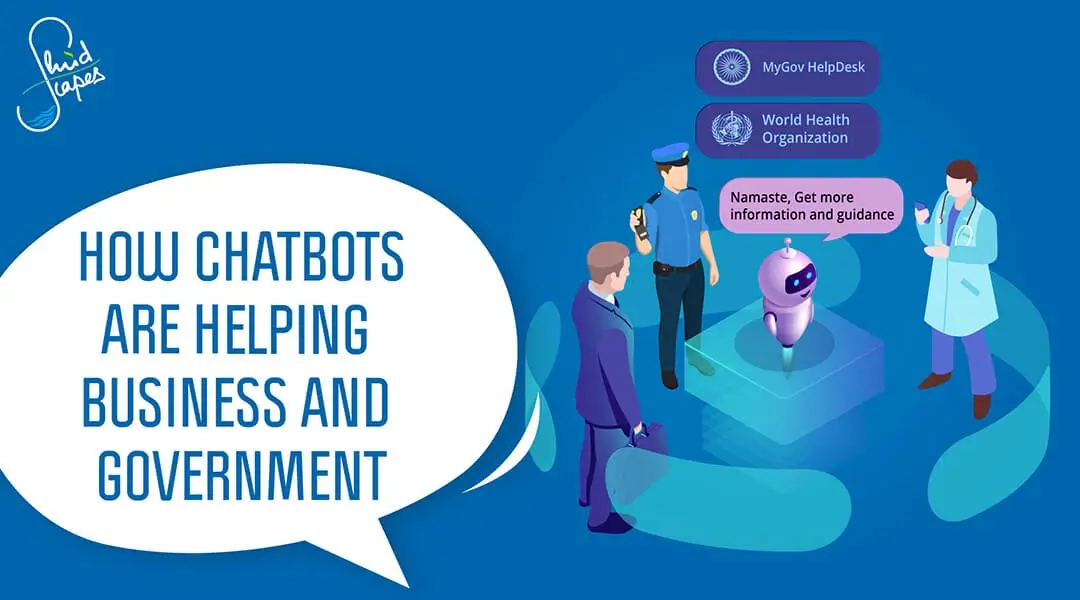
Use of chatbots can greatly help to improve communication between the government and the common citizens and fulfil the objectives of government initiatives. Since chatbots are omnichannel people can get support on multiple platforms. This is a very useful tool to improve on aspects such as information sharing, data collection, advice and recommendation, qualitative and quantitative inputs, etc. People can use the chatbots in their native languages to access information, submit complaints, access and pay bills, and a host of other services.
The Government of India has set up a platform called MyGov to engage citizens through information sharing and participation in various developmental activities. This is accessible from all leading social media platforms. Presently, a chatbot called MyGov Corona Helpdesk, which can be accessed through WhatsApp is providing all relevant information regarding India’s battle against COVID-19. Similarly, Goa has come up with a chatbot called Cobot-19 to respond to queries on COVID-19 in English and Konkani, with Hindi support in the works. WHO has also recently launched a chatbot on Facebook Messenger to combat COVID-19 misinformation.
The conversational chatbot is definitely being looked at as a vital component of digital marketing. Voice conversation chatbots with speech recognition are also getting momentum as the next step of development. However, as customer experience is the most important factor in marketing, the development in chatbots are directed towards mixing some human elements as well, in the responses.
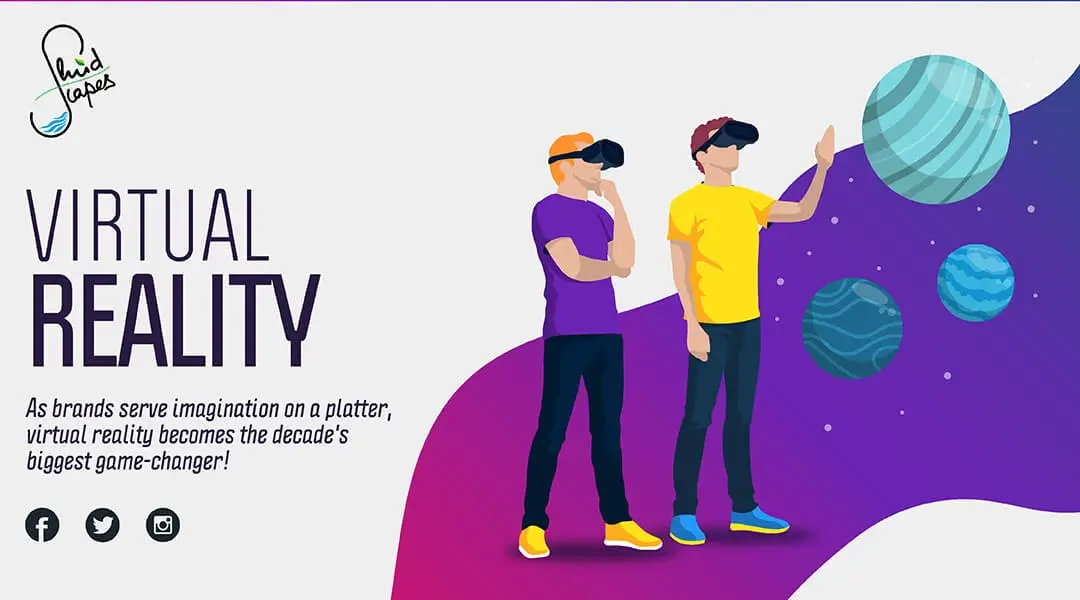
To many of us, virtual reality may sound weird or limited to gaming only but actually, that is not the case – this is another marvel of technology, a concoction of logic and imagination, that has started stepping out of the boundary of gaming to enrich the business world with great new ideas and possibilities.
Virtual reality acts as a bridge between the real and imaginary world and allows us transit between the two. Our crazy dreams seem very real – imagine walking in space or racing in the Olympics 100 metres. It gives us a completely immersive experience created with software and makes us believe the unreal as real.
The origin of virtual reality is the simulation technology that used high-performing computers and sensory devices to create artificial situations with high accuracy on a computer screen for the purpose of training, research, education, etc. But those simulations were only 2D.
With many advancements, such as rendering live video and graphical animation in realtime along with increased processing power to process multiple video streams simultaneously, the simulation technology evolved into its present 3D avatar called virtual reality. Of course, the stronger computing power of today fuelled its development.
All big technology companies are investing in virtual reality in a big way, is a sign that there is a tremendous push for rolling out a new genre of products to find applications across the industries. Facebook, Microsoft, Google, Apple, Amazon, etc. are expected to lead the world in developing creative and engaging VR applications.
How VR is expected to change the business landscape?
Adopting virtual reality help businesses in terms of better working spaces, better ways to work remotely, better collaboration, virtual team meetings in the same room, and so on. Virtual prototyping gives big leverage to design and development – this is already proven and has helped in time and cost-saving for the aerospace and shipbuilding industries. Following is a brief account of how other industries can be benefitted by VR.
Healthcare
Many new-age companies are developing VR-based real-time telemedicine apps that enable superior doctor-patient communication, data exchange, and treatment totally from remote. The patients receive the needed care in the comfort of their home. This type of solutions combine VR, AI, and cloud computing and also make use of advanced data analytics and sophisticated tracking tools. Surgeons now can perform robotic surgery on the patient from remote with the help of immersive 3D videos.
Retail
VR offers some major improvement areas to retailing. It can track shoppers’ gaze in stores to find out the products or areas that receive maximum attention from the customers. This gives retailers exclusive information to improve consumers experience and maximise sales. VR also provides real-life simulation to help customers make the perfect decision and purchase from their homes. For example, a virtual reality kitchen experience can help customers virtually see and feel certain kitchen gadgets in their own home.
Construction
Virtual reality is making architects’ lives easier. Turning paper plans into 3D computer models coupled with immersive VR simulation help architects walk their clients through the design so that the clients feel exactly the way the actual construction would have offered. This provides a win-win for both parties with valuable feedbacks to save money and time. On one hand, the VR models are helping designers to visualise the full-scale effect of their design and on the other hand, enabling them to showcase their works to prospective clients.
Immersive data exploration
Gone are the days of the pie chart. VR is making it possible to present a 3D display of data that can be interacted in a dynamic manner. VR visualizations present much easier pattern recognition and retention with the perspectives beyond the 2D images. Users can view, analyse the data individually and also work collaboratively. This increases the effectiveness of data analytics to fulfil the needs of the business where it is applied.
Manufacturing
Design and prototyping have got a big push through VR modelling to generate huge cost and time savings for the manufacturing industry. Making prototypes is always expensive and time-consuming work. The immersive VR experience lets manufacturers take vital decisions and also understand the small changes that will make the product robust.