Category: Brand Management

  • Building Of A Successful Advertising Program: Tips & Strategies

    Building Of A Successful Advertising Program: Tips & Strategies

    A well-thought-out ad campaign can boost your business many fold. The advent of digital marketing has made advertising affordable, but you need to know what it takes to make your ads effective. This blog will help you as a guide to building an advertising program for the best results.

    Building an advertising program must be based on specific marketing objectives, such as acquiring new customers, increasing sales, creating awareness of new products or new locations, and so forth.

    Setting advertising objectives is not only necessary for marketing success but also for the day-to-day operations of a small business. Your immediate goal will decide your advertising objective and the response to your advertisement will be the metric to measure if your goal is reached.

    How to start building a successful ad program for your business

    An ad campaign involves lots of contemplation and deliberation. Follow the guidelines below to build the foundation for your ad campaigns.

    #1. Identify Your Goal

    What do you hope your advertising program will achieve? Are you attempting to draw in new clients or are you hoping to entice returning ones? What kind of consumer traffic growth are you seeking, and over what time frame? Each goal is unique and requires a specific design.

    #2. Make a budget

    Setting up a budget for your advertising strategy within your capacity is the next important point to consider. How much money are you willing to spend on your ad campaign? If you already have some ideas, how much will it cost to put them into action?

    #3. Identify Your Audience

    Identifying the demographics who are most likely to purchase your goods or service is helpful when you’re trying to increase sales. What group of people do you want to appeal to? Do you serve wealthy elderly or young people who scavenge cash from couch cushions?

    #4. Select The Products or Services to feature in your Ad Campaign

    It’s best if you can be as specific as possible. If you are a fast food chain, you’ll need to feature fast food in your advertising, rather than doing like a general eatery that has no specialty. Are you introducing a new product that you want to highlight in your ad, or do you want to spread the news of slashing the price of an existing product? What do you want to emphasize?

    #5. Conduct a thorough SWOT analysis

    SWOT is a complete assessment of your company that analyzes strengths, weaknesses, opportunities, and threats to your business. What is the main strength of your company? What do you excel in that gives you a benefit? Are you selling apparel? Then maybe you can take the opportunity of the ensuing winter to launch an ad for fashionable winter dresses. Also, stay informed about actions your rivals are taking that might harm your firm,

    #6. Articulate why you are different from the competition

    You should emphasize how your company differs from the competitors in your ad campaign. Use your SWOT analysis to identify why your product is better than the competition. It could be a lower price or superior quality, or something else. Utilize such differentiators in your advertising strategy.

    #7. Choose an advertising plan

    What, when, and where are the three questions that need to be addressed? What kind of advertisements will you be running? When will you start using them? Where will they eventually show up? Are you planning to use display advertisements on the web, Instagram ads, or Google ads? It all comes down to an effective marketing plan!

    #8. Look for a low-cost yet effective way

    The most effective kind of advertising is word of mouth, and few things can create word of mouth as effectively as a well-run social media campaign. What kind of social media marketing initiatives may your company run? Could you sponsor a nearby occasion or organize a competition of some kind? Make a list of inexpensive steps your company could take to assist your advertising strategy.

    #9. Craft your ad copy

    So you’ve determined your target audience, preferred platform, budget, and all other pertinent information. It’s now time to start writing great ad copy.

    Ad copy is the content that should be designed to achieve advertising goals. It should compel readers/viewers to take action.

    Do you want people to visit your store or your website? Is your immediate goal to drive free software signups or ebook downloads? Consider the content and how it can contribute to the end goal(s) of your ad campaign.

    #10. Make People Talk

    While your ad copy message should incorporate your brand’s purpose and tie in with long-term marketing objectives, it should also be memorable.

    This is why, as more advertising moves to social media platforms like Facebook, Instagram, and even Twitter, brand marketing must get to the point as soon as possible in order to generate customer attention and social sharing. If your message — whether it’s text, images, or videos — can compel consumers to pause, look, and share with their friends, you’ll have a lot higher chance of generating organic interaction and driving more traffic to your site.

    #11. Consistency across platforms is the key

    If no one follows through with an advertising plan, it won’t help to promote your firm. It is now time to put all of your thoughts into practice. Organize a social media campaign, play a podcast ad, and the like.

    The most important thing in ad campaigns is to maintain consistency irrespective of channels. Be consistent in your branding and messaging. Using the same logo and colors is very important. And the messaging on every platform must be consistent. Billboard copy should be identical to a social messaging copy, which should be identical to any radio or television advertisements, which should be identical to the homepage copy of your website.

    Final words

    Since the above steps lead to the success of your advertising program, you need to satisfy yourself with the results of each. For example, how sure are you about your target demographics, your strengths & weaknesses, your ad copy emphasizing your uniqueness, etc.

    Finally, analyzing the end result against your advertising objective(s) is essential. If it is the first of many advertising initiatives for your company, analyzing the results will help you improve on the next.

    Source- Fluidscapes
    We are one of the best digital marketing companies in India that provides online reputation management services to all types of organizations. We assist businesses to stay on top of the game by leveraging the latest technologies and breakthroughs in marketing strategies and business processes. Want to grow your business, even more, get in touch with us and we’ll tell you how.
  • Earn And Burn Loyalty : A Guide To Increase Customer Retention Rate

    Earn And Burn Loyalty : A Guide To Increase Customer Retention Rate

    In a marketplace where competition is hyper and the environment is ever-changing, the biggest marketing challenge faced by any brand is customer loyalty. Companies brainstorm for new ways to lure customers, but nothing works as much as the earn-and-burn loyalty strategy does.

    An effective loyalty program is critical for customer retention, and customer retention is critical for your business. Here is why

    • The cost of recruiting new consumers is significantly higher than the cost of retaining existing customers. A just 5% increase in client retention can result in up to a 95% increase in profitability. Acquiring new customers might cost anywhere from 5 to 25 times more than keeping those you already have.
    • Customers who have returned might become brand ambassadors, engaging in UGC posting or word-of-mouth communication about your product/service.

    What is a loyalty program?

    A loyalty program is one that systematically rewards customers for their loyalty by providing both real and intangible benefits such as discounts, additional services, unique access, and other incentives.

    A loyalty program cannot offer indiscriminate discounts or incentivize loyalty card ownership. It’s a data-driven program that rewards the appropriate clients for the expected behavior. But a loyalty program is not a cost center. At the end of the day, spending through loyalty programs must generate profits.

    What are the different types of Earn and Burn loyalty programs?

    • Earn and Burn
    • Tiered
    • Perks based
    • Communities based
    • Coalition of brands
    • Gamified

    Of so many types of loyalty programs, the Earn and Burn method is the simplest and most effective strategy.

    So, no wonder that a major part of your marketing efforts revolves around devising loyalty programs for customer retention, and you want to go with the earn-and-burn loyalty strategy.

    Earn and Burn Loyalty: What Is It and how does It work?

    Earn and burn loyalty programs commonly come to your mind when you discuss loyalty programs in general. It is the most basic yet successful loyalty tactic. Customers earn or gain points by participating in brand-assigned activities and then burn or redeem those points for discounts, awards, or incentives.

    This is a simple yet convenient concept that goes well with the customers’ psychology. Customers all across the world accept the earn and burn loyalty program because they understand, and trust this.

    The concept of ‘earning and saving points for later’ is one that most people believe in because it is dependable, proven, and tested. Earning and burning loyalty can also provide comfort to seasoned or repeat shoppers. It gives consumers the incentive to spend more in order to win later through loyalty redemptions.

    How can one gain earn and burn rewards?

    You can reward customers based on their spending with an earn-and-burn point-based loyalty program. Every rupee spent by the customer earns them the earn and burn reward points, which can later be redeemed as rupees towards a purchase. Digital wallet services, such as Google Pay, Amazon Pay, and others are examples of the wild successes of the earn-and-burn loyalty program.

    Why is the earn and burn loyalty program so popular?

    Quick implementation

    Earn & Burn loyalty programmes treat all consumers similarly, eliminating the need for additional segmentation. Implementation is quick and easy when just purchases are rewarded.

    Budget-friendly and convenient

    Earn & Burn programmes are simple to implement because the rate of reward redemption is restricted by the amount of loyalty currency available. Furthermore, it is less expensive than a discount system.

    High perceived worth

    Customers regard these programmes as excellent value, despite the fact that the incentive has a larger perceived value than its real cost. Furthermore, unspent points enable brands to save money.

    Simpleness of use

    The rule for earn & burn is simple: accumulate cash and redeem it. Customers may immediately comprehend the concept and begin earning points as a result of its simplicity.

    Creates Customer database

    Customers must identify themselves, either by joining up or by displaying their loyalty card, as both online and in-store transactions are rewarded.

    How to make your earn and burn loyalty program successful?

    Here are some practical and relevant ideas you may consider.

    Educate Your Customers

    Create a loyalty program with an earn vs. burn ratio that makes customers feel special and favored. Small customization can go a long way toward increasing customer loyalty to a company. Allow your clients to select their rewards from your catalog and create a dynamic program that revolves around them.

    Provide Multiple Ways to Earn Points

    Your company’s and marketing goals may not be one-dimensional, and neither should your loyalty program. Provide more than one way to gain points based on your marketing strategy. For instance, if you want to increase customer acquisition, reward your referrers. Similarly, with the assistance of a knowledgeable loyal partner, you may achieve your business objectives through your loyalty program.

    Collaborate with Charitable Organisations

    Collaboration with a charity can assist you in projecting a socially responsible image. Allow your customers to participate as well by providing a loyalty program. Allow clients to give their loyalty points to a worthy cause or charity. This will not only produce a ‘feel-good’ aspect, but will also build your relationships with your customers.

    Collaborate with Other Brands

    Even if you face a financial constraint, you can still maintain your rewarding options. Collaborate with other businesses to provide your consumers with a broader range of rewards to pick from and expand their scope of loyalty redemption. A joint program can benefit both parties while also making customers happy.

    Reward Social Sharing

    Creating a strong social media presence, while necessary, may be a daunting task. You can build both real user-generated content and a strong online presence with the support of your loyalty programs. Reward your customers for sharing your posts or leaving reviews and comments. Organic promotions will draw attention to the brand.

    Design gamified rewards

    Another effective method to reward customers is to provide them with great experiences. Your incentives may not always have to be monetary. You could design aspirational or experiential incentives.

    Experiential Rewards are incentives that are utilised to generate lasting memories with experiences such as concerts, events, cultural activities, and more to please customers and promote brand.

    Source- Fluidscapes
    We are one of the best digital marketing companies in India that provides online reputation management services to all types of organizations. We assist businesses to stay on top of the game by leveraging the latest technologies and breakthroughs in marketing strategies and business processes. Want to grow your business, even more, get in touch with us and we’ll tell you how.

  • Exploring The 5 M’s Of Advertising : A Key To Business Success

    Exploring The 5 M’s Of Advertising : A Key To Business Success

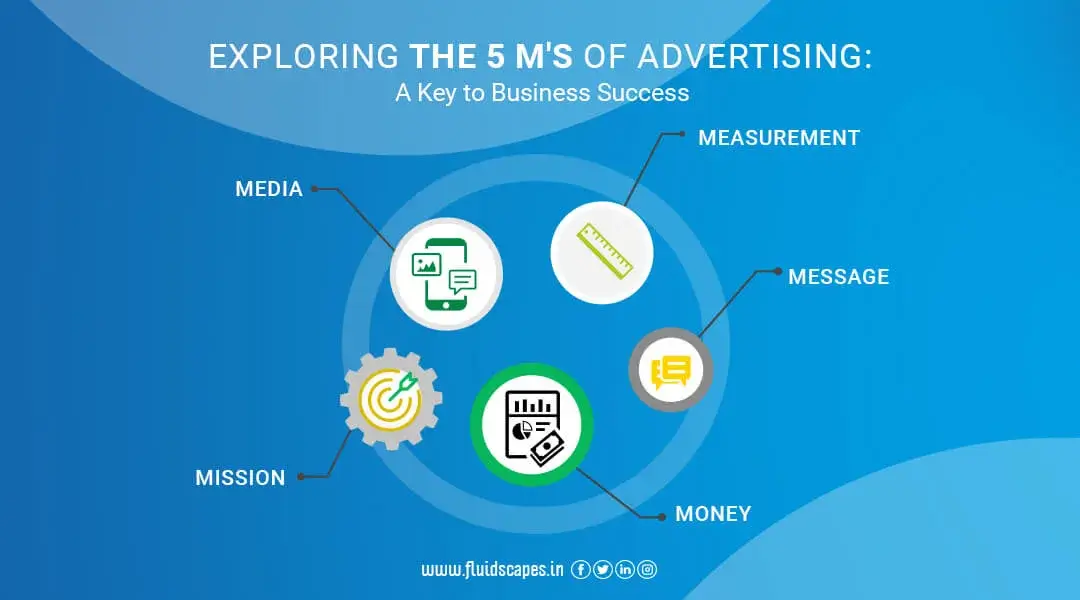
    Launching an ad campaign typically requires a series of considerations and deliberations regarding mission, money, message, media, and measurement – the 5 M’s of advertising. Understanding these elements of advertising is critical for a marketing manager to optimize the success of the campaign.

    What are the 5 M’s of advertising?

    The 5 m’s of advertising are Mission, Money, Message, Media, and Measurement. They serve different purposes. The details are as follows:

    • Mission: What are the goals of the marketing effort?
    • Money: How much funding is needed to accomplish the goals?
    • Message: What is the message and what is the message strategy that will be used?
    • Media: What media channel(s) will be used to convey the message?
    • Measurement: How should the effectiveness of the ad campaign be assessed?

    Marketing managers always begin by looking at the target market and the potential of the product in that market before working out an advertising strategy, which is built upon the five key elements that make up the “5 M’s of Advertising.” as explained below:

    Mission

    What is the objective of the campaign? Broadly, there can be three types of objectives:

    • To promote the brand – brand promotion is the most common objective of advertising.
    • To disseminate information and increases awareness – common examples are:
      • Informing the launch of a new product or opening of a branch
      • Informing an upcoming version of a product
      • Informing an upcoming branch or shop in a new market
      • Highlighting features of a product or service
      • Educating the market about the best way to use a product
      • Informing special offers or changes in price
      • Rectifying negative perceptions about a product
    • To remind – To make the potential customers keep waiting for an event promoted by the brand, opening of a new branch, and the like.

    Money:

    Although money is not the main factor for the success of an advertisement, it plays an important role in determining the length and volume of reach of your promotional campaigns. In the context of advertising, money denotes the budget for advertising.

    The budget of an ad campaign may vary depending on:

    • Nature and type of product
    • Nature, habit, buying capacity, and other characteristics of the target audience
    • The geographic segmentation of the market
    • Type of media used for the campaign
    • Time duration of advertising

    Five important thumb rules to decide the allocation of money in an advertising:

    Product Life Cycle (PLC) Stage:

    Large advertising expenses are frequently allocated to new products to raise awareness and encourage consumer testing. As a percentage of revenue, established brands are often maintained with smaller advertising budgets. It’s critical to understand what PLC stage the product is in.

    Market Share:

    Brands with a large market share typically spend less on advertising to keep up their market share. Increased marketing costs are necessary to gain a larger share of the market. Reaching customers of a popular brand is less expensive from a cost-per-impression perspective than reaching consumers of brands with a small market share.

    Competition:

    In a market with a large number of competitors, a brand must advertise more heavily to be heard above the noise in the market. Even the smaller but active brands in a market may cause the need for heavier advertising. The frequency of ads needed to put across the brand’s message to consumers has an important impact on the advertising budget.

    Brand Promotion:

    A brand needs to spend more money on advertising in a market with many competitors in order to be heard above the din. Smaller but nonetheless active brands in a market might require more aggressive promotion by a bigger brand. The frequency of advertisements to establish the brand’s message also has a significant impact on advertising expenditure.

    Commodity Classes:

    For the brands of specific commodity classes, like cigarettes, beer, soft drinks, etc., extensive advertising is necessary to create a distinctive image. Advertising is also necessary to spread out the message if a brand can provide specific physical advantages or qualities.

    Message:

    The success of the advertisement is heavily dependent on the advertising message. The message here refers to the advertisement’s content, which can be of multiple types or forms, such as voice, video, photographs, and text.

    There are fundamentally two types of message generation:

    Inductive:

    Brainstorming is necessary for this approach. Customers can be a good source for message creation. You can get enough insight and ideas from how they feel about the product, its advantages and disadvantages, and so on to create a compelling message. Similarly, dealers, suppliers, professionals, and even competitors can be possible sources of messaging ideas.

    Deductive:

    The deductive method for message creation is founded on the idea that a consumer expects four different kinds of rewards from a product:

    • Rational
    • Sensory
    • Social
    • Ego

    Additionally, the buyer may envisage these benefits from three experiences, namely, results-of-use, product-in-use, or incidental-to-use experiences. This way, the marketers might pair the four different reward types with the three different experience types to create 12 different messages.

    Message Evaluation, selection, and execution:

    Before finalizing a message, marketers conduct a thorough evaluation. A successful marketing strategy should centre on at least one unique selling point for the goods or services offered by the business.

    Marketers can rank these messages according to desirability, exclusivity, and plausibility to assess the message. The messaging must first convey something appealing or intriguing about the product. Additionally, it must contain a feature that sets the product or brand apart from alternatives or competing items. In addition to these requirements, the message must be reasonable and trustworthy. The marketer should be in a position to support his/her claims.

    Finally, comes the execution of the message. Execution is as important as the message itself to create the desired impact. Some advertisements seek intellectual placement, while others seek emotive positioning. When delivering a message, the style, tone, language, and format must all be kept in mind.

    Media

    Media disseminates the advertising message to the target demographic. It is how you transmit the message to the intended audience. The use of digital media for advertising has grown in recent years, owing to the rapid advancement of digital technology.

    The following factors are to be considered while deciding on the best advertising medium:

    • What geographical area is being targeted?
    • The timing of advertising and media use.
    • Choosing the media channels that are available in the geographical market within the specified time period.
    • Choosing the best (most efficient and effective) media channel among the available options.
    • Determine the media’s reach, frequency, and desired impact.

    Measurement

    The evaluation of the effectiveness of an advertising campaign is critical since it always aids in preventing future waste of money and aids in making essential corrections that are significant and vital for the subsequent advertising program.

    The most common approach to measuring the efficiency of the advertisement programme is to conduct research on the effectiveness of the advertisement. There are two kinds of research:

    • Communication-effect research
    • Sales-effect research

    Communication-effect research evaluates whether or not an advertisement communicates effectively. It is also known as copy testing and can be performed either before or after the advertisement is released (pretesting).

    Sales-Effect In contrast, research assesses the efficacy of an advertisement in terms of sales. How effective the ad was at increasing sales can help the marketer estimate the ad’s effectiveness. Sales effect research is utilized less frequently because sales might be influenced by factors other than advertising, such as prices, packaging, product quality, availability, and other factors.

    Source- Fluidscapes
    We are one of the best digital marketing companies in India that provides online reputation management services to all types of organizations. We assist businesses to stay on top of the game by leveraging the latest technologies and breakthroughs in marketing strategies and business processes. Want to grow your business, even more, get in touch with us and we’ll tell you how.
  • Zomato And Swiggy Logo: A Complete Analysis Of Visual Language

    Zomato And Swiggy Logo: A Complete Analysis Of Visual Language

    Brand war has become more intense and subtle by the intelligent use of visual language. The rise of Zomato and Swiggy brands can be interesting case studies as both are doing great in the same business and in the same market. An analysis of Zomato and Swiggy logos might give us a sense of how they have capitalized on visual language to bolster their positions.

    Why is Visual Language so Important Today?

    A visual language is a system of communication using visual elements. An image that carries a meaning can be used to communicate an idea. A diagram, a map, a painting are all examples of elements of visual language, while its structural units include line, shape, color, form, motion, texture, pattern, direction, orientation, scale, angle, space, and proportion.

    The visual language that establishes brand perception is about using a predetermined font selection, color scheme, logo, etc. and maintaining uniformity in designing the branding content for various platforms.

    Brand perception may make or break your chances of success in today’s hyper-competitive market. It is the sum of the audience’s feelings, attitudes, and experiences with a product or service. When it comes to dealing with multiple competitors, brand perception clearly makes the difference between gaining new customers and losing existing ones.

    Positive brand perception is a result of a thoughtful selection of fonts, color schemes, logos, etc. But in today’s market, merely outlining these aspects of your brand is insufficient. You need to make sure that your brand has its unique visual language to stand out in the competition.

    A visual language goes beyond simple brand guidelines by creating a distinct illustration style, icon design, and data visualization style for all branded content. Too often, organizations are found unaware of the harm of confusing or contradictory visual language and creating content with multiple illustration and icon styles. For the viewer, this can appear disconnected, chaotic, and even perplexing.

    Zomato Vs Swiggy logos

    While Swiggy is primarily a food delivery app, Zomato offers the service of food delivery and restaurant discovery.

    Zomato

    The Zomato logo was first introduced in 2012 and has undergone several changes since then. The current logo was launched in 2020 and features a new font and color scheme. The visual language of the Zomato logo is simple, yet effective.

    The Meaning of the Zomato Logo

    The Zomato logo features two main colors, deep red and white. The deep red color represents passion, energy, and excitement, which are all characteristics of the food delivery industry. The white color represents purity, cleanliness, and simplicity, which are essential when it comes to food.

    This international online restaurant aggregator envisions a logo that is clear, simple, and legible. A second criterion is the form’s integrity. In order to better represent the branding, management has implemented two modifications – text within a simple geometric shape and a separate wordmark.

    The letters are placed as close together as the square area will allow. Additionally, the logo is utilized in two mirror-opposite configurations: a red inscription on a white background and a white inscription on a red background. Both instances have an appealing aesthetic impact.

    Logo usage must be legible and maintain the integrity of its form. There are two forms in which the Zomato logo can appear with the wordmark inside a square, or a standalone wordmark.

    1. Logo with Square

    This unit serves as Zomato’s app and website icon.

    2. Standalone Wordmark

    This unit is the primary brand logo and must be used across all brand assets including print, digital, and other offline media.

    Typeface

    The typeface used in the Zomato logo makes it easier for people in every country around the globe to understand the sign. They first adopted the clean and proportionate typeface Metropolis and then modified it according to themselves and named it Okra. The version with the bold, somewhat slanted lettering was chosen since it goes well with the aesthetic of the food service. Small italics give off a friendly vibe.

    Color

    Two of the company’s four official colours can be seen in the logo. These are White Feta (#FFFFFF) and Red Cranberry (#E237440). Additionally, the red colour in the symbols has a gradient: it starts off light in the upper portion, grows progressively, and finally becomes a deep, dark shade at the bottom.

    Zomato Color Codes:

    Overall the design of the Zomato logo is sleek and minimalist, which adds to its modern feel. The typography used in the logo is simple and easy to read, with bold letters that make the brand name stand out. The logo’s overall shape is also visually appealing, with a rounded square that gives the impression of a seal or stamp of quality. Overall, the Zomato logo is an excellent example of effective branding. It is simple, modern, and memorable, and it perfectly represents the food delivery industry. The combination of red and white is striking and easily recognizable, making it an excellent choice for a brand that wants to stand out in a crowded market.

    Swiggy

    A well-known and easily recognized symbol that is simple, bold, and memorable. If you look closely at their logo, the symbol is a “S” and a map marker, which is very pertinent to the brand’s delivery-based operation.

    The Meaning of Swiggy Logo

    The Swiggy logo effectively advertises the firm because of its creative use of colors and symbols. It not only provides a subtle suggestion about the sector in which the company operates, but it also facilitates the acquisition of new business.

    The logo for Swiggy combines a wordmark with an icon. The icon, which represents the name of the brand with a large, fashionable “S”, is the most striking element of the design. It makes the brand stand out and is more distinctive.

    And there’s no denying that it has a lot of significance. Besides representing the brand’s name, the stylish icon creates a geographic emblem that connects to the company’s operation or service.

    The wordmark doesn’t appear to be as distinctive as the solo emblem. It’s a sombre sans-serif typeface with traditional proportions and consistently thick lines.

    However, in this instance, the basic font works best because it doesn’t overshadow the “S” icon, which is the Swiggy logo’s most crucial component.

    Overall, the word mark’s primary aim, in this case, is to simply expose the brand’s name to potential buyers, whereas the icon has more complex purposes of conveying a subliminal message. The final result is a decent contemporary typeface that is legible at any size.

    Typeface

    The typography used by Swiggy is based on a Futura typeface that has been changed. There were several letter variations that were utilized exactly, like “W” and “Y”. Minor adjustments have been made to others, such as the “G”s square bottom stroke, which lacks any protruding parts. The upper part of the “S” in the inscription was lowered, and the remaining characters were changed to suit individual needs.

    Colors

    The primary justification for using the color orange is that, like the colours red and yellow, it tends to make people feel hungry. Some highly skilled marketers assert that these colours increase our hunger. Therefore, businesses use it as a strategy to evoke feelings of hunger in viewers of their logotypes.

    Numerous leaders in the fast food industry, including McDonald’s, Burger King, and Wendy’s, have used hues from the red to yellow spectrum. The Swiggy logo’s orange colour lies halfway between red and yellow, therefore, in a way, it combines elements of the two colours.

    The color orange is thought to stimulate the brain. It also increases mental activity, which frequently makes people feel hungry. Additionally, according to psychologists, this shade of orange gives Swiggy yet another benefit from using it in its logo. It has the hue of turmeric, which is very well-liked in India.

    Swiggy Color Codes:

    In conclusion, the Swiggy logo is a great example of effective branding in the food delivery industry. Its design is unique and memorable, making it easily recognizable to customers. The use of the color Orange, which is associated with youthfulness, energy, and happiness. They inspire creativity and uplift people’s moods, and are a great choice for a brand that aims to provide customers with an unparalleled food delivery experience. It is no wonder that the Swiggy logo has become an integral part of the brand’s identity and has contributed significantly to its success in the highly competitive food delivery industry.

    Source- Fluidscapes
    We are one of the best digital marketing companies in India that provides online reputation management services to all types of organizations. We assist businesses to stay on top of the game by leveraging the latest technologies and breakthroughs in marketing strategies and business processes. Want to grow your business, even more, get in touch with us and we’ll tell you how.

  • Top 10 Digital Promotion Strategies For Brands During Festive Season

    Top 10 Digital Promotion Strategies For Brands During Festive Season

    The festive season is one of the most important times of the year for brands. Consumers are in a shopping mood, and businesses have an opportunity to drive sales and increase their brand awareness. In the digital age, brands can leverage a range of digital marketing strategies to make the most of this season.

    Festivities bring new life to the retail business. Now that a substantial retail business is taking place online in India, expanding the customer bases beyond the boundaries, a well-thought-out digital promotion campaign can assure you a share of this multi-billion dollar retail bonanza across the country.

    Buying gifts for loved ones is what makes the festive season so special. Online orders for clothing, jewelry, footwear, electronics, and scores of other items will expectedly jam the Internet in the run-up to the festivals.

    How will you position your product and brand when thousands of sellers are jostling to catch the attention of the buyers? What will be your digital marketing campaign ideas that will make the buyers aware of the special festival offers from you? Here are some useful tips that will help you to make the most of it.

    #1. Plan early

    The festive season is a busy time, and brands need to start planning their marketing campaigns well in advance. It’s essential to know the key dates of the festive season and map out a marketing plan that targets the right audience. Brands need to consider the platforms they will use to promote their products and the type of content they will create.

    #2. Get as many subscribers as possible

    Shoppers will be looking for new brands to try during the festival season, so now is the time to start optimizing your subscription process. It is critical to understand what works best for your target audience. Will rewarding be the best policy to boost sign-ups? Have you considered making the sign-up process more fun? Do popovers increase sign-ups among your target audience?

    There are numerous strategies you can try in the run-up to the festive season. You can maximize the growth of your follower list during this period of high traffic by trying from the proven tactics.

    #3. Get your social media strategy right

    When it comes to festive season marketing campaign ideas, social media can be a huge help. Your social strategy for the Diwali / Christmas season should revolve around the specific festival and its spirit of joy and celebration. Begin by determining which social media channels are most effective for your eCommerce offers. Plan your marketing efforts to revolve around those channels and users.

    Begin your holiday celebrations by updating your social media profiles’ profile and cover photos, banners, and other visual aspects. Your social media imagery should highlight the fantastic deals, discounts, and offers that your fans can look forward to.

    #4. Leverage Influencer Marketing

    Influencer marketing is another effective way to reach a large audience during the festive season. Brands can collaborate with influencers to create content that promotes their products. Influencers can also share their experiences with the brand, which can help build trust and credibility.

    #5. Use personalized emails to inform your audience

    Email marketing should be used by digital marketers to increase sales to potential customers. Sending personalised emails with their name and relevant details is a great idea if they have been a customer for a year or more.

    This technique reminds your customers how much you appreciate their loyalty. It’s a great strategy for any time of year, but especially during the holidays.

    #6. Run a contest

    The contest is the most effective way to increase sales and engagement on the brand page. Running a contest can boost engagement and allow you to interact directly with your audience. Most of us associate “contest” with winning prizes, and who wouldn’t want to win prizes during the festival?

    Giving away hampers or prizes will draw attention to your brand and aid in word-of-mouth publicity. Giving your product away in hampers will also help you promote it. It is a worthwhile investment that will add long-term value to the company.

    #7. Use multiple communication channels

    Before the festival season begins in earnest, consider your marketing channels and how you use them. Customers are on the go and expect immediate responses; is emailing sufficient?

    One of the benefits of digital marketing is that it allows marketers to easily connect channels and communicate across mediums. Retargeting ads during the festivals helps to increase brand recognition and sales. SMS is ideal for eliciting action from your engaged audience. A well-timed text message alerting customers to new products, upcoming sales, and back-in-stock items can guarantee a revenue boost during the festive season.

    #8. Conduct SEO for the specific festival

    Proper research of specific festival-related keywords will greatly aid in understanding consumer demands. To attract shoppers during the holiday season, your SEO should rank well for festive-themed queries and also assist the website in ranking high, ultimately encouraging sales.

    #9. Invest On paid marketing

    Festive season is the best time to invest in paid ads because everyone during these times stays in an excited mood so they don’t think twice before shopping if you target the right people. Paid advertising on platforms like Google AdWords, Facebook Ads, and Instagram Ads can help increase your brand’s visibility and drive traffic to your website. Use relevant keywords and target your ads to specific demographics to reach your target audience. You can use Facebook ads for different purposes like brand awareness or lead generation but it is best to use lead generation ads during these festive times.

    #10. Put out discount schemes

    Festive sales and discounts always pique people’s interest and encourage them to shop more, not just for gifts, but also for themselves. They may even end up purchasing items they did not intend to buy in the first place. Furthermore, providing some promotional codes, such as free shipping or a free gift, can help boost sales.

    Source- Fluidscapes
    We are one of the best digital marketing companies in India that provides online reputation management services to all types of organizations. We assist businesses to stay on top of the game by leveraging the latest technologies and breakthroughs in marketing strategies and business processes. Want to grow your business, even more, get in touch with us and we’ll tell you how.

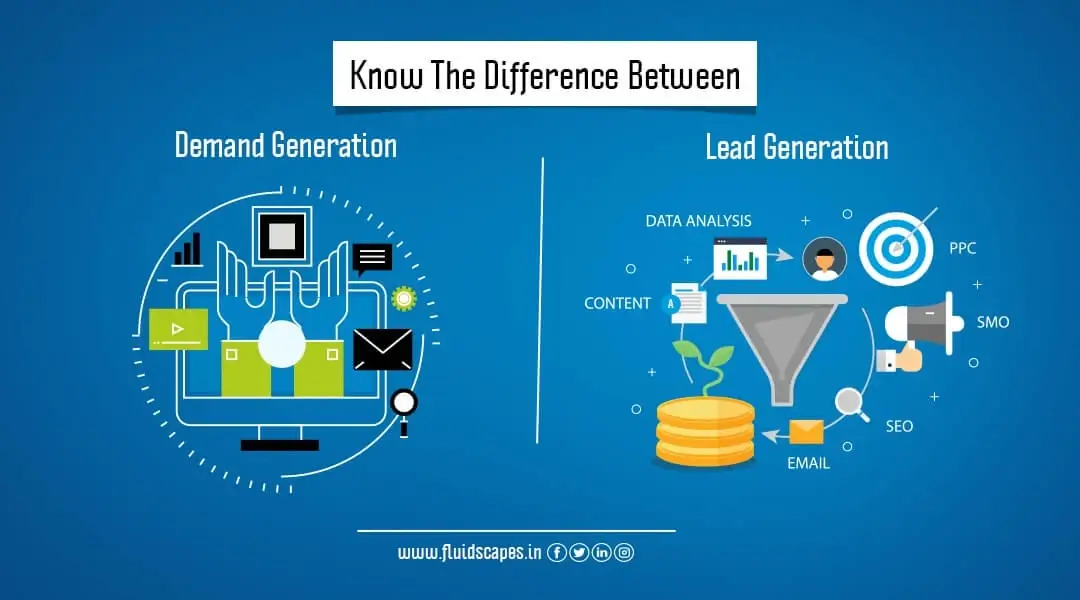
  • Know The Difference Between Demand Generation Vs Lead Generation

    Know The Difference Between Demand Generation Vs Lead Generation

    Demand generation and lead generation are two distinct yet connected goals of marketing, but they are often mentioned interchangeably. In this blog, we will look at demand generation vs. lead generation to understand the purposes and techniques involved in each, in the context of digital marketing.

    One of the biggest benefits of digital technology is that it acts as a gateway to using the Internet for a superior buyer’s journey. People can search, verify, and buy anything from the virtual marketplace through e-commerce and social commerce. This has changed the focus of marketing from outbound to inbound because people are more comfortable with choosing the right product and approaching businesses any time they want. Demand generation and lead generation strategies form the foundation of inward sales.

    What is demand generation?

    Demand generation is how you get people in a new market to recognize your brand, the value of your products, and the benefits of your offers. Building trust, educating audiences, and increasing brand awareness are all components of the demand generation process.

    There are many demand-generation activities applied in digital marketing to assist the sales and marketing teams to generate demand for a product or service at each stage of the buyer’s journey. Successful demand-generation strategies require your sales and marketing departments to be on the same page and working together. Every tactic you employ will work toward a specific end goal.

    What is lead generation?

    The lead generation process is all about persuading an audience to learn more about your business offerings. The aim is, of course, to convert them into customers after convincing them that what you offer will meet their needs.

    Demand Generation vs. Lead Generation.

    Demand generation assists you in attracting your target audience, while lead generation assists you in converting qualified audience members into customers.

    While you may wonder which strategy is best for assisting you in meeting your business objectives, neither can be used exclusively. Demand generation is directly related to lead generation because you don’t receive qualified leads and convert them into customers unless you generate the urge in them to buy your product. Given below are some of the key differences between the two.

    Key differences between demand generation and lead generation

    Demand generation mainly aims at growth, while lead generation aims at conversion. If you imagine a marketing funnel, demand generation is a top-of-the-funnel activity, whereas lead generation is a bottom-of-the-funnel activity.

    Demand generation is used to raise awareness about your product and company and grab people’s interest in what you have to offer, while lead generation is used to nurture those audiences and convert them into customers.

    However, demand generation has a direct impact on lead generation and aids your efforts. If you’ve exercised demand generation successfully, you know that most of the leads you will receive have good potential to be converted.

    How demand generation helps lead generation.

    Demand generation strategies primarily involve content marketing. With your content, you attract leads, educate them and inform them that you are dealing with the product/service that they require. These leads may visit your website, learn about you and then leave.

    When they conduct another search and find another article from your company, they realise that you are an authority in that field and you’ve assisted them with their needs. You should include CTA on your blogs where visitors can enter their information, including email addresses.

    Once you obtain their email address, your lead generation process starts. This involves nurturing the case using email, in which you will share content with them that will persuade them to purchase your product or service.

    Some B2B demand generation strategies include:

    #1. Creating authority for content marketing –

    In the age of the Internet, most Searches and information sharing are taking place on the Internet. Posting quality Content, such as blogs, videos, white papers, case studies, etc. can help in gaining recognition and authority.

    #2. Searching for target customers –

    Creating buyers’ persona and the use of buyers’ intent data are some of the proven methods of identifying target customers.

    #3. Using content syndication –

    Content syndication involves promoting your content to your ideal customers. Content syndication activities include:

    • Reaching out to decision-makers in a targeted manner
    • Using paid ads to promote relevant content
    • Increasing reach by leveraging distribution platforms.

    #4. Try a highly targeted ad campaign –

    Paid ads with keywords improve the probability of more leads than organic search results. LinkedIn and Google are the primary platforms for achieving the best results in the B2B space. LinkedIn allows you to fine-tune your target audience, including firmographic criteria. This targeting data is equivalent to demographic data for organizations.

    #5. Utilize account-based marketing strategies –

    Account-Based Marketing (ABM) is essential for B2B companies seeking to increase demand. A good ABM strategy begins with compiling a list of qualified target accounts. Selling to the accounts you target will be simple if they are a good fit for your product/service.

    #6. Use demand generation tools –

    Nurturing leads in the sales funnel is extremely important, but when the volume of leads increases, using software for nurturing may prove to be wise to prevent a lack of timely attention to some qualified leads. This will free up more time for your sales team to focus on closing.

    How to create a lead generation campaign

    The two common lead generation campaign tactics include:

    • Using CTAs with lead generation forms to collect audience contact information and send additional emails,
    • By promoting gated offers with lead capture forms on social media,

    Furthermore, you may use sales intelligence software, which will enable you to collect contact information from prospects who have searched for content related to your product online. When you use this type of software, you know your leads are qualified because they have expressed an interest in learning more about what your business has to offer.

    Source- Fluidscapes
    We are one of the best digital marketing companies in India that provides online reputation management services to all types of organizations. We assist businesses to stay on top of the game by leveraging the latest technologies and breakthroughs in marketing strategies and business processes. Want to grow your business, even more, get in touch with us and we’ll tell you how.

  • Social Media For Businesses In 2023

    Social Media For Businesses In 2023

    Social media started in the early 2000s, so we can call it the gift of the millennium. In the next two decades we have seen how this wonderful gift spawned different genres of social networks to encompass the lives of more than half of the world’s population. And now we are entering yet another glorious phase of the same revolution – social media for business.

    Social networks with their millions of subscribers are like gold mines for businesses, but the problem is lack of tools to dig deep into them. The recent drives by the social networking giants to incorporate several innovations have made social media for business a profitable new channel for business.

    Social media for small businesses

    Social media and small businesses are made for each other. Without a social media presence, your small business may be losing out on crucial branding opportunities. There are some significant benefits of social media for businesses, such as:

    • Entice customers, gain customers’ feedbacks, and foster customer loyalty
    • Add international markets to your market reach
    • Conduct market research and cut marketing costs
    • Create a network of customers and increase revenue by advertising
    • Develop your brand, exchange ideas to improve how you do business,
    • Hire skilled employees, for example, through job networking sites like LinkedIn. I
    • ncrease traffic to your website, improve its search engine ranking.
    • Keep an eye on your competitors.

    At a lower cost than almost all other marketing channels, social media provides three fundamental advantages – targeting, reach, and scale. Everyone is on social media all day, every day. Brands must go where their customers are. We’ll look at the best practises for an effective social media marketing strategy.

    How businesses use social media for marketing

    You can reach customers and prospects wherever they are by incorporating social media into your small business marketing strategy. You can develop a successful social media presence to market your brand by following these tips:

    Create a strategy for social media marketing.

    Social media success is best achieved when you plan ahead. Developing a social media marketing strategy for each platform you intend to use is the first step.

    Posting regularly is important

    Your followers value consistency, so stick to a posting schedule. While being consistent, avoid posting too frequently, which may turn off your followers.

    Create a distinct voice.

    You should create a consistent voice and tone for your social media presence, one that resonates with your audience and influences their perception of your brand. Identify ways to relate to your audience without appearing overly concerned. Don’t be afraid to be yourself and speak your mind. As a result, your company is perceived as being friendly, flexible, and relevant.

    Use social media to your advantage.

    Run fun social media contests, link to your website or to special offers, etc. and host live videos with exciting updates or news to generate more leads and engage customers.

    Identify your target audience.

    To ensure that your content has reached the right audience, use your analytics tools to see demographic information, customer behavior, and social media trends. Knowing what your audience wants to see from you and responding accordingly can help you increase your engagement rates significantly.

    The impact of social media on business can be summarized as under.

    • Allow businesses to reach targeted audiences.
    • Help make your business omnipresent.
    • Help brand building at lower cost and time.
    • Increase loyalty. Increase word-of-mouth referrals.
    • Increase industry awareness and collaboration.
    • Help run personalized campaigns at a much lower cost.
    • Increase customer engagement with current customers and gain new customers.
    • Improve communication with customers

    If you are a startup or small business and do not yet have a good social media presence, it is a disadvantage. No matter what type of a business you are in, social media can benefit you in multiple ways.

    Source- Fluidscapes
    We are one of the best digital marketing companies in India that provides online reputation management services to all types of organizations. We assist businesses to stay on top of the game by leveraging the latest technologies and breakthroughs in marketing strategies and business processes. Want to grow your business, even more, get in touch with us and we’ll tell you how.

  • Best Ways To Write Copy For Social Media

    Best Ways To Write Copy For Social Media

    If you are a business owner, looking to establish your brand on a limited budget, social media copywriting might be the best way forward. Social media in recent times have added features to become pro-business. This and the natural crowd-pulling ability of social media are the reasons why copy for social media is touted to be the first choice of marketers.

    Copy or content is the lifeblood of advertising and many other business promotional activities. Now that social media is increasing in number and size to assume leadership in the field of digital communication, copywriting for social media has become a winning strategy to garner customer engagement.

    However, copywriting is a specialist job, and writing social media copy is an even more challenging task because it requires targeting audiences within their environment that keeps on changing.

    So, how to get started? What are the best ways to write a copy for social media? We have provided some tips here, but before getting there it’s important to take a look at some basic technical considerations. You can only succeed in social media when you master their mechanics.

    “Social media” is the umbrella term for online platforms and communities that allow users to create and share content, build communities, and interact with other users. Besides Facebook (Meta), Twitter, and LinkedIn, there are messaging applications such as WhatsApp and WeChat, platforms for sharing media such as YouTube and Instagram, interactive apps like Snapchat and TikTok, discussion forums, social bookmarking sites, review networks, and more!

    There are some similarities between platforms, but some differences as well. Especially, the below two basics you have to be careful about:

    Character’s limitations.

    Each platform has a different word limit that you must adhere to. For example, a tweet can only be 280 characters long, whereas a Facebook post can be 63,206 characters long.

    That is not to say you should use all of them. People have short attention spans and limited time. They quickly lose interest when confronted with a wall of text. That is why, if you want people to read and engage with your posts, they should be clear and concise.

    How to use hashtags

    Most platforms use hashtags, but they all have different best practices. Find out where your audience is and where you want to be seen. Then, research how to make use of hashtags on those specific platforms. You can find anything you need on the internet!

    7 best tips to write copy for social media

    #1. Be clear about your tone and voice

    What kind of impression do you want to make? What is the format of copy, what demographics you are targeting, and what is the purpose or goal it is supposed to achieve? These questions will define the right tone and voice for your copy – whether it should sound cool and professional, exciting, or fun. Remember you have to express the right emotion in a short copy.

    #2. Lead with the main idea

    Copywriting for social media is all about getting your main idea in front of your followers. They won’t give you time, it’s important to capture their attention while they’re scrolling. You sometimes need to lead a paragraph with a strong and compelling teaser–but it will often need to be followed by a strong and compelling lead.

    #3. Consider asking open-ended questions.

    You can engage your followers on social media by asking questions about your copywriting. You’ll get more responses from them if you ask them questions they’ll love to answer. Consider incorporating those questions as they relate to your brand to encourage people to share their experiences.

    #4. Apply hashtags wisely

    Hashtags can help your content get more exposure on certain social media platforms. Instagram and Twitter, in particular, use hashtags to increase reach. Adapt your hashtag strategy to the platform you’re using. Instagram, for example, allows users to include up to 30 hashtags per post. Hashtags on Twitter are useful for keeping up with trending topics and conversations.

    #5. Post a variety of copies

    Avoid posting the same types of content at the same rhythm. Don’t be afraid to shake things up by sharing engaging content, curated content (including your insights! ), and even a little sales copy.

    If you sell products or services, some of your posts should be direct sales pitches that direct your followers to your offer. Other posts should be your own or curated content aimed at educating or engaging your target audience. Include clear calls to action (CTA) on every post, regardless of the end goal—whether you want the user to visit an article or a product page.

    #6. Engage in conversation.

    In general, social media copywriting should be informal. The primary goal of social media is to connect people in a digital environment. Remember, your primary objective is to bring out a conversation, so aim for friendly, relatable, and informative copywriting.

    If you are writing for a product or service, take the line of PAS (problem, agitate , solve). This involves mentioning a problem, highlighting the inconvenience it creates, and then the solution using that product or service.

    #7. Maintain a uniform voice across platforms.

    Maintaining a consistent brand voice across all platforms is critical for developing a strong online presence. A consistent brand experience across platforms is absolutely necessary to help your target customers understand and grow confidence about your product. This helps the cause of a product more than graphics and visuals.

    Some social media ad copy examples

    Facebook ad copy of Slack – Slack’s “Make Work Better” Facebook ad:

    Between the rainbows and unicorns and the admission that no one enjoys pointless meetings, this is an excellent example of relatable Facebook ad copy.

    The CTA is also strategically placed for the ad, as asking users to sign up based solely on this information may not be the most effective strategy.

    It’s a classic example of how the core benefit of an internal communication tool app can be expressed in an amusing manner, and also that the primarily a personal networking platform facebook can be a platform to advertise business-focussed cloud software.

    Heal:

    Despite amazing technological advances in modern medicine, finding a doctor who accepts your insurance and scheduling an appointment is a time-consuming process. Discover a better way to see a doctor, according to this Heal advertisement. On-demand and on your timetable.

    Healing emanates from the smiling face of a doctor combined with the assurance from the CNN logo right in the middle. This Facebook ad makes customer pain points central to its message, cleverly using “discover” to make it more appealing.

    The table below gives an overview of character limits for different content formats of some leading social media platforms:

    Facebook 
    Username50 characters max
    Page Description155 characters max
    Posts63,206 characters max
    Comments8,000 characters max
    Video sizeUp to 10 GB
    Duration240 mins max
    FormatMP4 recommended, but any format can be used
    ImageUpload Size 30 MB max
      
    Twitter 
    Tweets280 characters max
    Direct Messages10,000 characters max
    ImageUpload Size 5 MB max
    Resolution1500 x 500 pixels
      
    LinkedIn 
    Status700 characters max
    Articles120,000 characters max
    Group Discussions2,000 characters max
      
    Instagram 
    Caption2,20 characters max
    Bio150 characters max
    Username30 characters max
    Hashtags30 hashtags max
    Image Size30 MB max
    Image Aspect Ratio1:91:1 to 16:9
    Video Upload4 GB max
    Video Duration60 seconds max

    Source- Fluidscapes
    We are one of the best digital marketing companies in India that provides online reputation management services to all types of organizations. We assist businesses to stay on top of the game by leveraging the latest technologies and breakthroughs in marketing strategies and business processes. Want to grow your business, even more, get in touch with us and we’ll tell you how.

  • YouTube Video Ads For Beginners: A Guide To Launch Your Video Campaign

    YouTube Video Ads For Beginners: A Guide To Launch Your Video Campaign

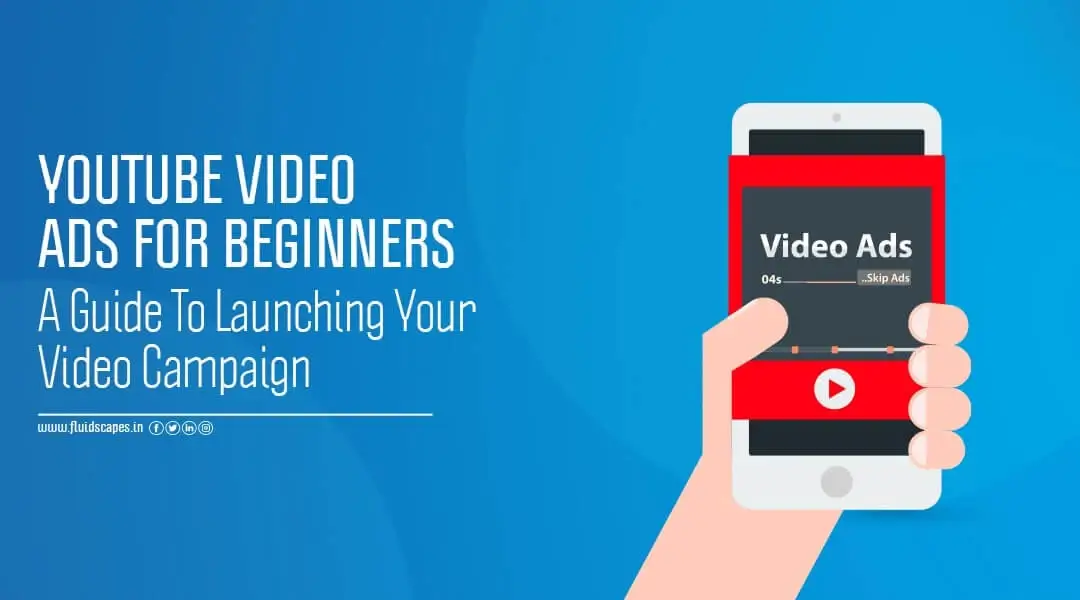
    Advertising boosts the prospects of a business, but the catch is that the ad must be impactful and viewed by the people for whom your product matters. YouTube Video Ads score highly on both counts and should top your priority chart if you want to speed up your growth.

    You have an advertising budget and you want to optimize your reach to the target customers. Running a series of YouTube ads may be your best bet to make sure a sizeable proportion of your target audience gets to see your content. As new formats and tracking capabilities emerge, you can also use these data to evaluate its ROI.

    There are more than 2 billion users of YouTube alone who view billions of hours of video every day.

    How to advertise on YouTube?

    Smart video content leaves an overarching effect on the minds of viewers. Through YouTube advertising, your video content can be advertised on YouTube or in search results to maximize your user reach. However, you should take measures to ensure that people view your ad content fully before they watch another video.

    YouTube ads for beginners

    Running a YouTube video ad for the first time and securing a high ROI requires you to learn about the different types of YouTube ads as described below:

    #1. Video discovery ads or In-feed video ads

    YouTube discovery ads or In-feed video ads are frequently visible on the platform’s primary pages, which include:

    • The home page
    • Page of search query results
    • As related videos, YouTube watch pages

    Because they appear on the video platform’s most prominent pages, these types of ads help a person/ brand to gain more visibility/ engagement/ traction.

    Benefits:

    • Increase brand awareness by displaying your ads when viewers watch related videos, scroll through the YouTube home feed in the app, or search for content.
    • Inform viewers who are actively consuming relevant content.
    • Increase the likelihood that viewers will subscribe, share, and watch additional videos from your brand.

    #2. TrueView In-stream skippable ads

    This type of YouTube advertisement is most commonly available, which requires advertisers to pay for TrueView ads if users watch them for at least 30 seconds or until the ad is finished.

    The viewer clicks on CTA in the ad, which takes them to the brand’s website.TrueView In-stream skippable ads must be between 12 and 360 seconds in length, according to YouTube.

    Benefits:

    When someone clicks on a video related to the search term for which the ads are running, these ads come to play before the video. As the name implies, viewers have the option to skip these ads, and you would only be required to pay if the viewers view this for more than 30 secs or the full length of the ad, as mentioned above.

    Advertisers can gain a lot of information about the performance of their ads by using TrueView in-stream skippable ads, which can help with testing and optimization.

    When you run ads through your Google Ads account, you will have access to data, such as:

    • The audience who completely or partially viewed your ad
    • Number of people who clicked on the CTA
    • Channel subscriptions as a result of the ad

    These parameters help advertisers decide where to spend and allocate their advertising budget in order to maximize their Return on Investment (ROI).

    #3. Non-skippable In-stream ads

    These ads can appear at any time during the video. The viewer will be unable to skip the ad when it plays, as the name implies. These advertisements last between 15 and 20 seconds.

    These types of ads will appear for videos that are at least 10 minutes long. In addition to that, viewers will receive a 5-second countdown notification before the non-skippable in-stream ad begins.

    These advertisements are Pay-Per-Click (PPC).

    #4. Bumper ads

    As the name implies, these ads simply interrupt the viewer’s video and last for a maximum of six seconds per ad. Bumper ads are the shortest type of YouTube ads available and cannot be skipped.

    Despite their short duration, bumper ads can be used effectively to promote a brand, service, or product.

    Benefits:

    • Unskippable ads – with a duration of just 6 secs or shorter
    • Uniquely effective at grabbing attention.
    • Ideal for viewers on mobile as people often watch videos on the go.
    • Cost effective

    #5. Overlay ads

    You should choose Overlay ads if you want to advertise on YouTube without being intrusive. Like an in-stream video ad, they just hover at the bottom of the video.

    An ad overlay is less intrusive than other larger pop-ups because it appears as a pop-up across the bottom 20% of the video window, whether it is text or image based. Users can view your advertisement while continuing to view the video they initially clicked on, and they can also always close it by clicking the “X” at the top-right corner.

    Benefits:

    • Improved user experience – because overlay advertisements are not disruptive.
    • Contextual targeting – the ads are pertinent to the products visible in the frame and help audience, advertisers and publishers (video owners).
    • Interactivity – overlay ads can also be used for other things like surveys, tests, tweets, backstories, exclusive deals, and more. Overlay advertisements can be used in inventive and creative ways to give users a less intrusive experience and give advertisers more
    • effective advertising options.

    With so many advertising options and over 2 billion active users per month, YouTube offers great benefits to the advertisers. Targeting audiences on the basis of behaviours, intentions further increases the chances of getting higher ROI.

    Source- Fluidscapes
    We are one of the best digital marketing companies in India that provides online reputation management services to all types of organizations. We assist businesses to stay on top of the game by leveraging the latest technologies and breakthroughs in marketing strategies and business processes. Want to grow your business, even more, get in touch with us and we’ll tell you how.

  • How To Reduce CPC In Google Ads Effectively

    How To Reduce CPC In Google Ads Effectively

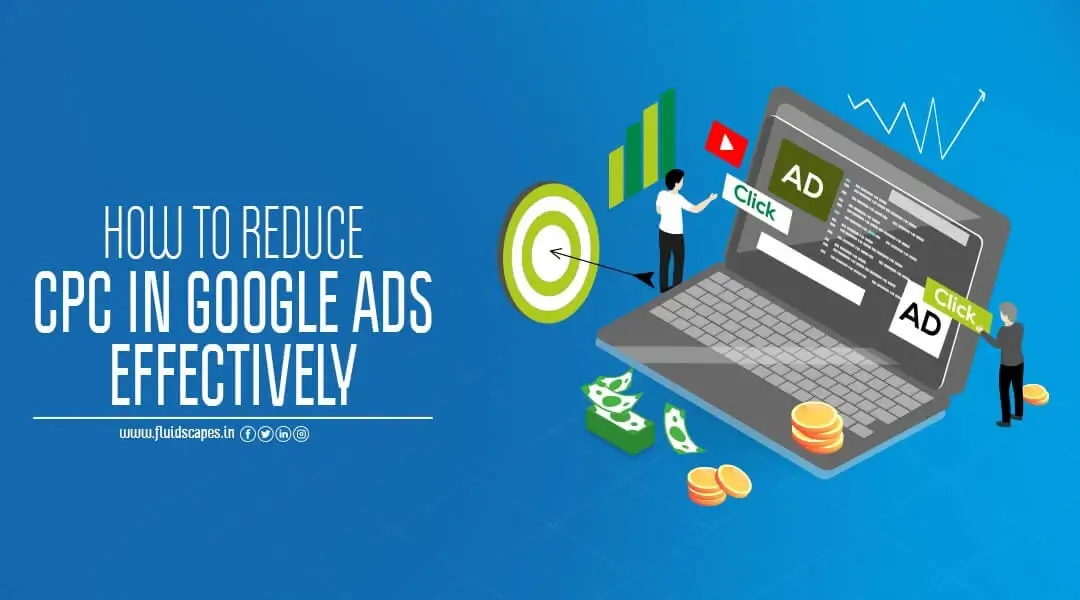
    Unlike conventional advertising, digital ad campaigns based on Google ads allow you to choose the right strategy according to your campaign goal and budget. Cost per click or CPC in Google ads plays the key role in determining which strategy you should adopt to achieve your campaign goal, without exceeding your budget.

    What is CPC and why is CPC important?

    Cost-per-click (CPC) is the highest amount that you (the bidder) agree to pay to Google Adwords for every click on your ad by the net surfers (prospects). Google will place your ad according to this amount (there are other factors as well). If your CTC is high, your ad will most likely find a place on a high viewing page relating to your product category.

    Keyword bidding is also extremely important for the success of your advertisement.

    Because Google is a search engine, keywords are central to almost all search marketing. Bidding for the right keywords holds the key in paid strategy.

    If you have a cakeshop, for example, you can ensure that people searching for keywords like “cakes near me” or “chocolate cakes near me ” see your advertisements.

    In CPC bidding campaigns, you set a maximum cost-per-click bid or simply “max CPC” – which is the maximum amount you’re willing to pay for a click on your ad (unless you’re using bid adjustments or Enhanced CPC).

    Your maximum cost per click (CPC) is the highest you’ll typically be charged for a click, but you’ll often be charged less – sometimes much less. The final amount you are charged for a click is referred to as your actual CPC. As more clicks are received for your ad, the cost-per-click will decrease. You can take this as a sign that your campaign is successful.

    You’ll be able to choose between manual bidding (where you set your own bid amounts) and automatic bidding (let Google set bids to try to get the most clicks within your budget). CPC pricing is also known as pay-per-click pricing (PPC).

    How Google Adwords cost-per-click calculator works

    This determines how much Google Ads will cost your company, and how much will it cost you to acquire a customer?

    Google Ads (previously AdWords) operates on an ad auction model, which means that there is no set price for a single ad.

    Companies create campaigns, and the amount they are willing to pay influences their ad rank (which determines whether their ad wins and appears or not), as well as relevance and other factors.

    Every keyword and display ad placement holds an auction for every new user. This means that Google Ads pricing isn’t preset but varies according to what your competitors are bidding for the keywords, locations, and audiences you select.

    Keywords can cost as little as $ 0.5 or as much as a couple hundred dollars, depending on your industry, location, and competition.

    You’ll end up spending a lot of money if you target high-competition keywords with high commercial intent (and potential value). However, the potential ROI is much higher.

    How to decrease CPC in Google Ads?

    As an advertiser, your target should be to make the most at a lower cost. There are some measures that help lower cpc in Google ads to reduce the cost of your paid campaign. It requires a good knowledge of what factors can keep your CPC low. Below are some insights on how to lower costs per click:

    #1. Use display ad builder

    You can use Display Ad Builder to have Google pull images from your website and do about 80% of the work of creating display ads with your colors and branding.

    #2. Avoid mobile apps

    In-app activity consumes a significant portion of the average mobile user’s time on their device. Mobile is fantastic, but not all mobile activity is beneficial to your GDN campaigns. In fact, unless you’re specifically targeting app users, you might want to avoid them entirely.

    #3. Use Google web designer for HTML ads

    In 2020, Google rebuilt its Web Designer, adding a slew of new features as well as improved integration with other Google products. The most exciting feature is the interactive, animated HTML5 ad builder.

    When compared to static image ads alone, animated HTML 5 ads will garner more attention and clicks.

    #4. Identify specific demographics and target in-market audiences

    In-market audiences are people whose search and/or browsing history indicates they may be interested in a particular product or service. Someone who has been searching for “flowers” and visiting flower retailer websites, for example, could be identified as being interested in Mother’s Day gifts. In-market targeting is also effective for products/services with longer purchasing cycles.

    #5. Boost your remarketing efforts

    Remarketing ads are one of the most effective methods for increasing your relevance and Quality Score, and thus lowering your CPCs. Visitors to your website are tagged so that you can target them with ads as they navigate the Internet, browsing sites, watching videos, checking their email, and so on.

    Source- Fluidscapes
    We are one of the best digital marketing companies in India that provides online reputation management services to all types of organizations. We assist businesses to stay on top of the game by leveraging the latest technologies and breakthroughs in marketing strategies and business processes. Want to grow your business, even more, get in touch with us and we’ll tell you how.