Category: Brand Management

  • 7 Ways To Improve The Project Management Process

    7 Ways To Improve The Project Management Process

    Whether it’s the development of a new product, digital transformation of the company, or expansion of office capacity, each goal in business is a project that requires proper planning and a systematic approach, which is combinedly called project management.

    So, analyzing the project planning process can be an effective way to understand and improve project management.

    What is Project Management?

    Project management is about knowing the goal(s) of the project, making sound planning to achieve them, organising resources, and executing the plans to achieve the desired result.

    But broadly, it’s project planning that holds the key to the success of your project management.

    Project planning is defined by the process of identifying the objectives and scopes of the project, both short-term and long-term goals and milestones(deliverables), and assigning tasks and budgeted resources for each phase.

    A good plan makes it easy to convey to all the stakeholders and is most beneficial when examined on a regular basis. A strategy becomes effective only after carefully examining the pros and cons of it through discussions with the team members.

    If you’re a startup or have a fast-paced work environment, project management may appear to be very slow at first because making a thorough planning and documenting it to the finer details is the first step in a project management process and it takes time.

    However, utilising the plan as a roadmap to keep you and your team on track will save you a significant amount of time and money.

    The following seven steps will help you to improve your project management process:

    #1. The road map should be clear to all stakeholders.

    A well-planned project should have a clear roadmap that explains the strategy to reach the milestones on the way to achieve the final goal. These milestones should not be changed abruptly, and all the stakeholders should be well aware of their roles & responsibilities in reaching the milestones.

    A project can be successful and finished on time with the required participation/contribution from the stakeholders. This will be possible if the benefits from the outcome of the project are explained to them. The stakeholders might include the project manager, the team members, and the beneficiaries of the project (employees or customers).

    Don’t try to assume what each stakeholder’s wants and objectives are. Before you begin recording your project plan, speak with them to ensure that you have a thorough understanding of the project, as well as the abilities and resources of everyone on the team.

    #2. Make a list of the milestones.

    This list should break down the overall project into smaller tasks for deliverables that can be assigned to particular team members, with anticipated deadlines for each deliverable or task included.

    Make sure you understand and document each deliverable’s approval procedure. If you’re working on a project for a client, make sure you understand their internal approval procedure so you’re not surprised by delays or slowed down by competing viewpoints.

    #3. Select the team and reach out to each team member

    Individuals and/or organisations involved in each deliverable or task should be documented by name, and their roles should be described in depth. Otherwise, misunderstandings might cause delays and the need for team members to redo their work.

    Hold a project kickoff meeting with your team to discuss your strategy. Request them for their suggestion in determining the best method for completing the task. This will not only help you to be more efficient, but will also help you get their support because they will feel more attached to the process. Using a project management platform like Wrike to keep everyone on track and save all documents and interactions in one location might be beneficial.

    If you decide to use email to communicate about the project, consider using a team inbox email solution instead of continually passing large conversation threads back and forth. This will allow you to delegate emails that require project-related attention to team members as appropriate.

    #4. Anticipate the risks and take measures to minimize the impact

    Identify the risks that your project entails. Consider what you’ll do if anything takes far longer than expected, or if the prices end up being considerably more than you thought.

    You don’t need to have a fall-back plan for every potential negative event, but you should spend some time with your team brainstorming what could go wrong. That is, rather than being caught off guard afterward, you should do everything you can to avoid such risks at the start. Risk considerations can also impact your budgeting.

    #5. Prepare a budget for your project

    This is a must-do act. Your project planning must include information regarding the expected cost and budget for each deliverable and milestone. Refrain from allocating huge sums of money to large projects without first determining how the money will be used. This will assist your team in comprehending the resources available to them in order to complete the task. These amounts may be ranges rather than absolutes while you’re creating your initial budget.

    You may need to seek quotations from a few different vendors to make a cost idea for individual things. If you need to make adjustments to the bigger project due to financial limits or if your vendor doesn’t offer exactly what you expected, it’s a good idea to mention the agreed-upon project scope briefly in your budget paperwork.

    #6. Set smaller goals to accomplish the project

    Use your list of milestones for setting smaller goals and tasks that must be performed in order to achieve the overall goal. Establish acceptable time frames, taking into account the productivity, availability, and efficiency of project team members. Your goals should be

    • Clear, concise, and written in an easy language.
    • Expressed in a specific number or quantity that is to be achieved in a certain timeframe. A number or quantity makes it easier for people to measure the achievement.
    • Realistic to achieve because setting an impractical and unrealistic target will frustrate and demotivate the stakeholders, delay the project, and overshoot the project cost.
    • Completed within the concrete timeframe. If you need to adjust the timelines for your milestones, make a note of when and why you did so. Avoid making changes in the dark, such as changing deadlines without informing your team and important stakeholders.

    #7. Set progress updating guidelines

    A collaborative workspace, either online or offline, should be set up for your project so that all parties can track its development. Make sure you have a communication plan in place—write down how frequently you’ll update stakeholders on progress and how you’ll convey information. This can be done through email on a monthly, weekly, or daily basis.

    Use the same format or structure of the report you established when you selected your milestones. If you need to inform progress, try not to waste time reinventing a new report structure. Remember that project management software like Wrike helps keep stakeholders informed without clogging your inbox or losing conversations in protracted Slack sessions.

    Staying organized and communicating effectively with your team and stakeholders are the keys to successful project planning and management. Whether you use project management software or not, consider where and how you’ll maintain all the materials and resources related to your project; if possible, keep everything in one location.

    Source- Fluidscapes
    We are one of the best digital marketing companies in India that provides online reputation management services to all types of organizations. We assist businesses to stay on top of the game by leveraging the latest technologies and breakthroughs in marketing strategies and business processes. Want to grow your business, even more, get in touch with us and we’ll tell you how.
  • Let’s Talk About Organic Digital Marketing. Startups Pay Attention To This One

    Let’s Talk About Organic Digital Marketing. Startups Pay Attention To This One

    Too many choices sometimes create confusion and leave one undecided without the help of a guide. With the pouring of new techniques, digital marketing strategies might seem a little too many for small business owners. As a proponent of using digital marketing for sustainable business growth, we take it upon ourselves to simplify the matter and show the road ahead.

    All methods or techniques of digital marketing belong to either of the two broad categories – organic marketing and paid marketing. Having a clear concept about organic marketing vs. paid marketing helps you to formulate the right marketing strategy for your product or service that realizes your overall marketing goals that also fits your budget.

    What is Organic Digital Marketing?

    Organic is what is done or produced naturally. So, organic digital marketing is all those online marketing methods that employ natural, authentic, and value based tactics to promote brands and develop business over a period of time.

    Organic marketing, mainly results in inbound marketing, has no cost for advertisement or for publishing. You just have to register your website with Google search console or sign up for Bing or Yahoo indexing, totally free of cost. This is done because the online searches that form the main source for organic search traffic happen mainly on these leading search engines. Another source for organic traffic is social media; there are many social media channels and completely free of cost.

    What is Paid Marketing?

    Online paid marketing (we may also call it inorganic marketing) refers to paid ads and paid messages that are usually meant for targeted audiences. This is in sharp contrast to organic marketing, which are not targeted to specific groups.

    Paid ads usually come with CTA (call to action) buttons, urging audiences, potential customers to act as desired by the advertisers such as order for the product or buying a virtual training contract, etc. Paid posts on Facebook or Twitter also have latent CTA prompts in the wordings.

    You can’t compare the efficacy of organic marketing with that of paid marketing because the purposes of the two are different. While the paid digital marketing campaigns are designed to drive quick sales, organic marketing aims at creating awareness and developing brand equity over a period of time. Therefore, if budget permits it makes more sense to include both types in your overall marketing strategy.

    Organic marketing is a big friend of startups

    Most startups have to deal with two types of pressure in the initial period – the lack of funds and creating the right buzz about their venture. The two problems are actually interlinked and can be addressed successfully by taking a calibrated approach to organic marketing practices as follows:

    Social Media Marketing:

    This is the easiest, cheapest, but very effective marketing strategy for the startups that requires nothing but creating a page for their business on various social media platforms and inviting their friends and relatives.

    As the company grows, start-ups can keep posting information about the company and the products and services it offers, examples being events, celebrations, achievements, new help desk numbers, etc. There’s a strong chance that organic reach will grow as friends and family spread the word within their circles, helping businesses gain more exposure and word-of-mouth promotion. We provide social media services for our clients, check out in detail.

    Search engine optimization

    Searching for information about businesses, products, and services is the most common and accurate means of finding the information. This implies that startups must maintain correct information on their website and ensure that there are sufficient hyperlinks linking to Google search results.

    Organic keywords, keyword analysis, backlinking, link building, and link popularity are just a few of the main parts of SEO that every start-up should be aware of in order to organically position their businesses at the top of search engines like Google and Bing. Let our SEO experts take care of your search engine optimization.

    Quality Link Building

    The acquisition of backlinks from third-party websites, which deliver quality traffic to the website, is an important SEO practise. It also helps to raise the ranking of the website as a reliable and trustworthy source of information. Link building is a crucial SEO technique that necessitates a great deal of knowledge.

    Online advertisement for free

    There are numerous web portals that allow users to submit classifieds and advertisements for free. These portals are generally packed, so getting excellent reach may be difficult; but, given that they are free, it is always worth a shot. Many complementary firms would search these portals when they post their ads, and this may lead to them learning about your start-up, giving you a marketing advantage.

    Complementary business

    Startups can also make use of free advertisement sites for their businesses by following complementary businesses on social media. This can happen if a startup creates a Twitter or Facebook account and follows other businesses in the same category actively by liking their posts and interacting with them. This would make the startup visible to its followers and generate interest in them about itself.

    Remarketing

    You shouldn’t expect that all visitors to your website will readily buy your product, contract offer, or whatever. But they definitely leave an opportunity for future business through this organic marketing practice called remarketing. Remarketing entails acquiring the cookie ID of your visitors (with their consent) to communicate to them about new products or offers, value or feature additions, etc. This is considered to be an effective method to increase sales conversion rate against no customer acquisition cost.

    What should be your best approach?

    Organic marketing is very profitable over a long trajectory, starting from the very beginning or even before the launch of a startup. Although the processes involved incur minimum or no cost, there is an operational cost in terms of 24×7 monitoring of the online media, analysis of data through multiple tools, creating marketing mix, and proper management of the whole exercise. This itself is a full-time occupation of a team of experts. Initially, you may start with your social media account as said above, but if you really want to establish fast as a brand without spending high amounts towards advertising, it makes sense to let your organic marketing be handled by a specialist organic digital marketing agency unless you are an expert yourself.

    Source- Fluidscapes
    We are one of the best digital marketing companies in India that provides online reputation management services to all types of organizations. We assist businesses to stay on top of the game by leveraging the latest technologies and breakthroughs in marketing strategies and business processes. Want to grow your business, even more, get in touch with us and we’ll tell you how.
  • Digital Marketing For Dummies. Digital Marketing Fundamentals For Beginners

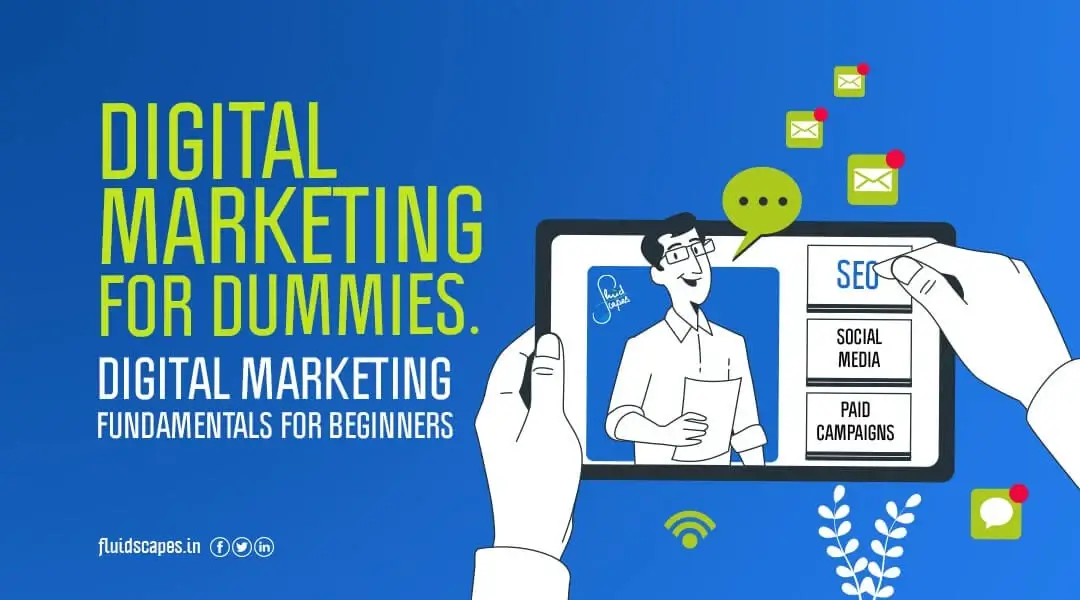
    Digital Marketing For Dummies. Digital Marketing Fundamentals For Beginners

    We are in the middle of 2021. You will hardly find a person without a smartphone, and you will hardly find a business person who hasn’t tried digital marketing at least once. Of course, a lot of micro-businesses are doing it unknowingly – sending prices through Whatsapp, and the like.

    But they should go beyond that. In fact, digital marketing is such a dynamic subject, with so many innovative techniques to cash in for better results and sustained growth that it’s practically a loss for small businesses not to adopt online marketing early on.

    And the first step to doing that is to understand the purpose and processes of digital marketing efforts. Although it’s likely to be managed by specialists, it’s always a plus for the business owners to take interest in various methods and their scopes in order to build strategies. This article is an effort to present digital marketing for beginners, to help small business owners understand the digital marketing fundamentals.

    What is digital marketing? Why you can’t do without.

    As a budding entrepreneur or small business owner of today, you are using smartphones and mobile apps. Apps are now a strong digital marketing medium. So you are already promoting the digital marketing concept, though unknowingly. Therefore, what you need now is to update yourself about the power and ambit of digital marketing tactics and how it can take your business to the next level.

    Internet and social media have made deep inroads into the lives of humanity across the world and given rise to many databases of people with names, sex, age, contact details, and other data. For a business, digital marketing basics entail a flurry of digital procedures to identify the potential customers, monitor & analyse their behaviour, and communicate with them.

    Digital advertising has made doing business a lot easier. Think about the traditional way of starting a business – you would have no or little information about your market and your customers at the initial stage, which increased the risk factor as you were compelled to guess a lot of things.

    And there you have digital marketing helping you alleviate risk through pre-launch marketing. You can identify your customers and create buzz for your venture before getting started.

    Marketing is essential for the survival of a business unless it’s a monopoly. Traditional marketing imposes heavy financial burdens on small businesses. Moreover, options are few and there is no way to see if your marketing campaign is creating interest and awareness among customers.

    By contrast, a digital marketing plan is at least 10 times less costly and has many techniques that ensure business growth. Most importantly, you can demarcate your customers, run your campaign focused on them, measure the results and recalibrate if required.

    As said earlier digital marketing has many procedures. Your business may not need all. You need the expertise to make a winning digital marketing strategy that will have the right combination of these procedures. Here are some of them –

    Social Media Marketing

    A very penetrating marketing method that is carried out on various social media platforms to reach out and engage with large numbers of people of the chosen demographics. Social media marketing requires in-depth knowledge, skill, and dedication for success.

    Email Marketing

    Email marketing is a digital marketing strategy that involves developing relationships with prospects and customers through special-purpose e-mail content that usually carries announcements of product or service launches, special offers, and the like. The advantage of email marketing is that your message can be sent to a large number of prospects in one shot at a cheap rate, and you can automate the entire process.

    Search Engine Marketing

    Search engine marketing or SEM refers to the paid search or Google ad search campaign, which is an inexpensive way to advertise your product or service and connect your target audience to your website. The common terms used in search engine marketing are Paid Search Advertising, PPC, CPC, and CPM.

    Search Engine Optimization

    Search Engine Optimization or SEO is the process of generating traffic to your website organically through publishing content with key-words or key-phrase and ranking them on top of the list of Google search pages.

    Website Building Strategy

    A smart and informative website is at the center of the digital marketing strategy and should be your number one priority for your business. Design of an ideal website should focus on the primary requirement of your business.

    Remarketing

    A lot of visitors to your website or mobile app may not buy your product in the first instance but leave an opportunity with you for future business. This is called remarketing, which entails acquiring their cookie ID to communicate about the new launches, value additions, new offers, etc. This tactic is an effective and economical way to increase your sales conversion rate.

    Content Generation, Optimization and marketing

    Content marketing is a universal method for gaining organic traffic to your website. The process involves generation of relevant content and optimizing them by inserting appropriate key words and phrases, adding meta and title tags, and links.

    Quality Link Building

    Good quality link building is a crucial SEO exercise that acquires backlinks from third-party websites that drive quality traffic to your website. It also helps with ranking your website as a credible and trustworthy site. Link building is a very important SEO practice that requires high expertise.

    Affiliate Marketing

    Affiliate or referral marketing is a commercial arrangement (against compensation) with a third-party marketer who can generate rich organic buyers for your products or services by generating relevant content and links on their websites or YT videos that redirect the interested parties to your website.

    E-commerce Marketing

    This entails both inbound and outbound marketing strategies to find and communicate with people who have shown interest in a product or service and also serving the incoming queries of a potential buyer.

    This is not all. As one of the fastest growing fields, digital marketing is being enhanced regularly with the introduction of new techniques. However, it’s advisable to take the help of an expert agency to work out a bespoke strategy to achieve rapid growth of your business.

    Source- Fluidscapes
    We are one of the best digital marketing companies in India that provides online reputation management services to all types of organizations. We assist businesses to stay on top of the game by leveraging the latest technologies and breakthroughs in marketing strategies and business processes. Want to grow your business, even more, get in touch with us and we’ll tell you how.

  • What’s Native Advertisement, Should You Do It?

    What’s Native Advertisement, Should You Do It?

    With each passing day as digital marketing is expanding its boundary, it is becoming more and more competitive too. The unlimited wide range of Internet users presenting unlimited scopes for business growth alright, but it’s a test of business model, strategy, and techniques.

    Techniques are many, coming up one after another to provide new directions to digital marketing whenever it faces a new problem. The latest digital marketing technique that is creating a big buzz with its high efficacy rate is Native Advertising campaigns. Getting curious? Let’s dig into it.

    What is Native Advertising?

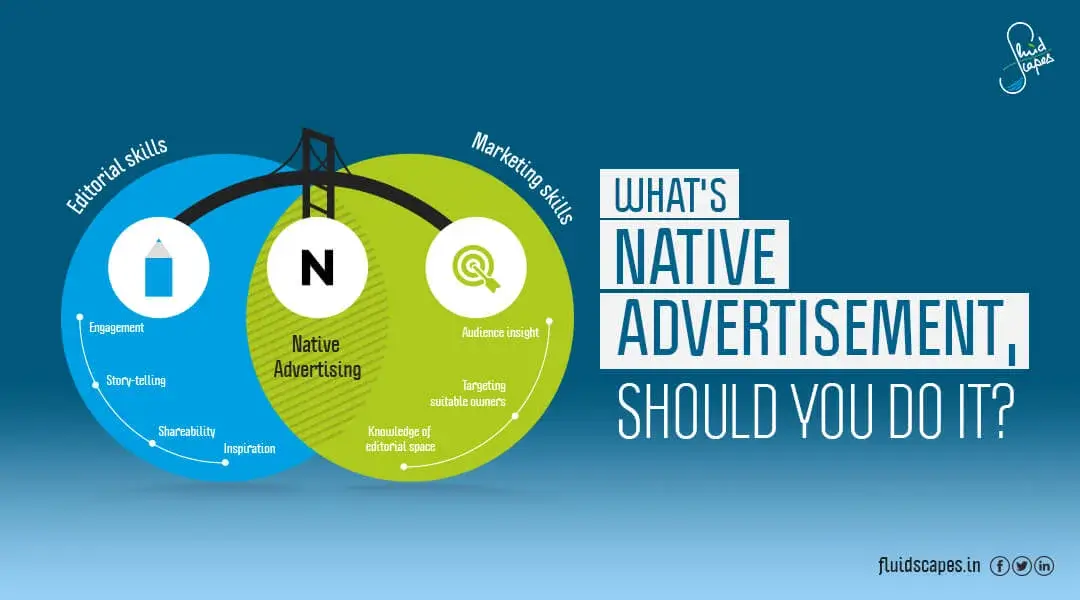
    There was (and still is) an old method of advertising, mainly used in the print media, called “sponsored articles,” which has been reinvented as “native advertising” for digital media. What was earlier used to be in the text-only mode now has a multi-dimensional form including text, image, infographics, and video.

    The best point about native advertising that makes it stand out is its non-intrusive nature. Native ads don’t really look like ads but part of the mother content. They are so well aligned with the style, tone, and type of natural content of the platform on which they get published that viewers can hardly differentiate between the two.

    And, that is the secret behind calling them native ads – they imbibe the native or original editorial content to meet their marketing goals.

    Why use Native Advertising?

    The main reason why people avoid or block traditional display ads is that they cause disruptions. Therefore, native content ads are a better approach to reach your target demographic because they blend seamlessly into the content and don’t cause distraction of mind to the users when they are viewing the main content; and data shows that it works.

    Native ads are more engaging and trustworthy, according to the newest native advertising statistics. They also produce more clicks and conversions than other types of advertising. Native display advertisements have an 8.8 times greater click-through rate (CTR) than ordinary display ads.

    Statistics reveal that Native ads are not perceived as advertising by 77% of users. As a result, native ads receive 53 percent more views than standard ads and have a 40-fold higher click-through rate than traditional display ads.

    Some people criticise native advertisements that they “look” like regular content and dupe people to believe they’re “genuine.” That simply isn’t the case – people click on them because they like the creative design of native ads.

    Native Ad examples

    Why have native ads gained such a scale of popularity? You can find out yourself by looking at the below examples – they never push a product or a brand, rather they create a story around concerns, worries, or other emotions that indirectly suggest using that product or brand for a solution.

    1.The Onion

    The Onion created this ad for its client H.R. Block, which is a tax consultant. The name of H.R.Block is only seen as the owner of this sponsored post and nowhere else on the ad. But the ad emphasizes the generally dull, dry topic of tax formalities in a pleasant, approachable, and extremely amusing manner, establishing a good reason to approach an expert for the job.

    2.Colored Corn

    Creating a tale is one of the most effective native strategies. And if the storey is visually appealing and vibrant, that’s even better. Take, for example, this piece of native content that was pushed on Business Insider.

    The example above has the appearance and feel of a standard Business Insider storey. Glass Gem Maize, a multi-colored corn variety, is the subject of the storey. It’s the storey of one man’s hunt for his Native American ancestors, which led to the development of colourful corn. The storey of the rainbow corn is presented in spectacular, bold, eye-catching pictures, in typical Business Insider style.

    3.Ikea puzzle

    Amusing Ikea A-Z puzzle designed to advise on how to have a good night’s sleep. This campaign, published on The Telegraph, avoids persuading readers like other native advertising, to buy a specific product in favour of using the company’s knowledge and skills to assist people with daily difficulties such as life, business, sleep (as mentioned above), or other aspects of life.

    Many of the native ads we see online these days are quite fantastic. Some are visually appealing, while others are unique, and yet others provide ideas for new methods to promote engaging content and acquire mindshare.

    Native advertising platforms

    Native advertising platforms are used by the advertisers to produce ads that blend in with the original content on a website. In the main news stream of social media platforms, for example, you will find ads that look very similar to organic posts.

    Below are some of the leading native ad platforms you may use to reach your audience:

    • Facebook Audience Network
    • Dable
    • Google AdSense
    • Verizon Media Native (formerly Gemini by Yahoo)
    • ReklamStore
    • AdPushup
    • Nativo
    • NativeAds
    • MGID
    • Outbrain
    • Taboola

    All native advertising platforms have one thing in common: they’re a useful tool for marketers looking to boost lead generation, conversions, and sales, as well as publishers looking to monetise their sites and improve user experience.

    Native advertisements platforms are meant to offer your content more exposure than it would get on your own channels. This is accomplished in two ways:

    • Placing your content on respectable and reliable information sites that have a high chance of attracting a larger audience. Because the material is designed to give insights and viewpoints rather than promotional and sales pitch, audience members are more likely to form favourable impressions of your company.
    • The implied endorsement from those publishing sites aids your content in overcoming “banner blindness,” which is becoming more common in digital advertising.

    Hopefully, this article has answered some of your questions concerning native advertising. If you choose this method for your own campaigns, it’s best to consult a competent digital marketing agency.

    Source- Fluidscapes
    We are one of the best digital marketing companies in India that provides online reputation management services to all types of organizations. We assist businesses to stay on top of the game by leveraging the latest technologies and breakthroughs in marketing strategies and business processes. Want to grow your business, even more, get in touch with us and we’ll tell you how.

  • What Is Project Management Exactly? Tips To Better Your Project Management Skills

    What Is Project Management Exactly? Tips To Better Your Project Management Skills

    Whatever may be the nature and size of your organization, going digital should be a priority to accomplish an overall efficiency boost. Going digital may have different implications ranging from addressing a local or departmental requirement through technology up-gradation to streamlining the individual departmental automation processes, to the full-fledged transformation of processes and culture of your business.

    Any transformation is essentially a disruption or destruction of the conventional system and thought processes. Digital transformation of your organization may be painful initially causing a drop in the performance graph before flying upward.

    However, here is a word of caution. A large percentage of digital transformation projects fail to yield the desired result due to mistakes at some stages. But that doesn’t mean that the value of the endeavor is worth nothing or your project costs have gone to waste totally. There are many intricate processes involved. Many a time it turns out to be the wrong implementation of one or more processes that are hindering success. Identification and correction of mistakes by a superior project management company remove the roadblock to your business transformation goals.

    So the lesson we have learned up till here is that although the digital transformation is essential for the sustenance of business, its implementation is tricky and prone to mistakes that call for efficient project management services.

    But what is project management, especially in the context of digital transformation?

    Project management is a group of processes and activities that are implemented/performed in a logical order to achieve an expected result. The person who organises/manages all the activities in a project plan directly or indirectly is called the Project manager. The Project Manager should be a good taskmaster so that the project can be delivered within the limitations such as time, cost, people, risk, etc.

    Digital transformation is a difficult project because it transforms the traditional methods of business processes into digital methods that perform in perfect synergy. It ensures cooperation by the staff and management and their training. The goal of digital transformation project management is to transform a business to become more efficient, prompt, customer-caring, and profit-making.

    What are project management tools, and why do you require them?

    Project planning generally consists of many types of tasks that are to be performed by different groups of people and experts. Project management tools help to create and distribute tasks to the selected people for seamless collaboration and to establish a hierarchy for effective and efficient completion. Some of the best project management tools are:

    • Wrike
    • ClickUp
    • monday.com
    • FunctionFox
    • Nutcache
    • TeamGantt
    • Slack
    • ProWorkflow
    • KeepSolid Goals

    Project Management strategies

    Your organisation could be at one of the three basic levels as given below:

    • A fully established process might be in place, which is working fine and has good adaptability.
    • A process might be running but requires fine-tuning and expansion.
    • There might not be any process in place.

    You need to think about adopting an appropriate strategy if you are in a situation that matches either #2 or #3 in the above list. Following steps, you may undertake to improve your current digital project management methodology process or establish a new one to give your business planning a new dimension.

    • Use of Tools – There are many Project Management software and tools (some of them mentioned above) available for task or process creation and development. The most common types of these tools are workflow management softwares, change process management softwares, and business process management softwares.
    • Designating a process owner – You must designate a person or group in charge to create a process and oversee its functioning. Project teams or an individual act as the central hub for processes and give final approval on processes.

    How our project management services benefit the technology up-gradation of your business?

    The various stages of project management are:

    • Initiating
    • Planning
    • Executing
    • Monitoring & Controlling
    • Closing

    Although new applications and solutions continually pushing the boundaries, our approach strikes a balance between futuristic technology and cost-effectiveness. Quality is maintained all through the project to ensure that the core project goals are achieved along with a high level of customer satisfaction. Below are the glimpses of how individual departments and activities get benefitted through the essential project management services.

    Human Resource Management – We implement advanced cloud-based HR solutions that provide comprehensive, fast, and easy ways for the HR department to search and contact employees, store and retrieve data, analyze the performance of the employees, and make an authentic profile of the employees.

    Infrastructure Management – Infrastructure management consists of systems management, network management, and storage management. Our project consultants provide technology solutions to render perfect synergy between them.

    Web-based App Development – App development projects have to meet underlying conditions such as a high degree of performance, keeping it within budget, and meeting the deadline. Our successful project managers maintain excellent interfacing with the clients and the development team to complete the project within schedule.

    Inventory Management Systems – Our project consultants ensure the development of efficient inventory management solutions that involve a wide scope of processes ranging from inventory forecasting, replenishment, demand forecasting as well as quality management.

    Data Analytics – Project to develop data analysis tools that serve the companies profoundly in many ways, such as close understanding of their customers, evaluation of ad campaigns, creating content strategies, and product development.

    CRM Systems – Development and implementation of CRM software to track, manage, and collect customer interaction data.

    Source- Fluidscapes
    We are one of the best digital marketing companies in India that provides online reputation management services to all types of organizations. We assist businesses to stay on top of the game by leveraging the latest technologies and breakthroughs in marketing strategies and business processes. Want to grow your business, even more, get in touch with us and we’ll tell you how.

  • What Is Content Syndication? And How To Do It Successfully?

    What Is Content Syndication? And How To Do It Successfully?

    Marketing always looks out for new ways to get around a problem. In digital marketing, while it’s an advantage to have a sizable online crowd round the clock, it’s a big challenge to identify and connect with the right audience which will benefit.

    We know that content marketing is a proven method in digital marketing to generate organic traffic to your website but its efficacy largely depends on where you have put your original piece of content. In other words, it’s not enough to have good quality relevant content, you have to place it in a good platform for a high visibility target audience.

    From that perspective, the Content Syndication campaign stands out to be an effective method to find the right category of audience. Content Syndication is not a new concept, it has a cousin in the print media called Print Syndication partners to distribute news articles, columns, political cartoons, comic strips, and other features created by freelancers to newspapers, magazines, and websites with the necessary rights for republishing different types of content.

    Similarly, Content Syndication evolved from the time it was first introduced in digital media, and deals in a variety of content formats today. In addition to blogs and articles, you can publish other digital content such as Ebooks, Whitepapers, Podcasts, Infographics, Webinars, etc. In fact, the scope of Content Syndication seems unlimited as it is providing a win-win solution to both the content creators and content publishers.

    What is Content Syndication?

    This is a content marketing technique in which your content gets published on a third-party website that has a larger audience and viewership. But it can’t be any randomly chosen content or website, rather they should belong in a common group or type. The key to success in your Content Syndication strategy is choosing ideal platforms that can give you audience bases ready to make purchasing decisions.

    But will it not lead to duplicate content issues and invite penalties from Google? No, because Google understands that the same content may get published on multiple websites for legitimate reasons like content syndication, which is a valid marketing tactic and content strategy to create more customer engagement (in line with Google’s policy) and always furnished with backlinks to the original source. Secondly, Google discourages duplication of content but they don’t penalize for that.

    However, it may be wise to have some minor changes like a new title or a fresh image when you duplicate your content in order to minimize risk and retain the SEO value of the content.

    Also, your Content Syndication strategy doesn’t essentially mean republishing the entire content. Actually, there can be multiple approaches to it, such as:

    • Republishing the entire work
    • Post the edited version of the original work
    • Post only the title
    • Post an excerpt from the original content.

    Benefits of Content Syndication

    • Higher exposure to the right people – Syndicating to a proper third-party site helps you get more value for your content as it is presented to the right kind of people that you expect to attract as your customers.
    • Receive quality backlinks – Syndication of your content helps you to receive quality and valuable backlinks to boost organic and referral traffic growth to your websites.
    • Reputation of high domain authority – Links from authoritative websites perceived as recognition for your content and your domain authority. This will further help you rank higher in organic search.

    Your online presence and brand recognition are bound to grow from the consistent publishing of your content. In a highly competitive market, publishing content regularly on several highly rated platforms with wider audience bases can provide you big leverages in terms of establishing domain authority and high brand value. This will provide you with opportunities to approach for distribution or cross-promotion of your products.

    Content or web syndication is also called a growth marketing strategy. Whether you are a B2B business or a B2C, a well-planned syndication strategy can amplify your brand value and drive potential customers to your website. For instance, you may publish an original guest post on a platform that offers B2B content syndication services. Or, you may get an SEO blog post from your website duplicated in a strong B2C platform.

    Free vs. Paid Content syndication platforms

    Yes, you have both options. You may try out the free sites or may go for paid syndication. There are some popular platforms like Medium, Quora, LinkedIn Pulse, BuzzFeed that will be willing to publish your article/ blog on their site for free. However, how much potential traffic and the niche audience they can generate is a question mark.

    On the other hand, you have paid syndications where you need to pay to place your blog content. These can be large publications with associates through whom you have to contact..For example, a link to your content can be placed at the end of editorial content on a leading publication.

    There are many companies that offer content syndications as a service. They operate on a cost-per-lead (CPL) basis. They optimize your campaign by presenting your content to the most suitable audience to achieve more CPL. Typically, CPL is a factor of the more specific targeting.

    Source- Fluidscapes
    We are one of the best digital marketing companies in India that provides online reputation management services to all types of organizations. We assist businesses to stay on top of the game by leveraging the latest technologies and breakthroughs in marketing strategies and business processes. Want to grow your business, even more, get in touch with us and we’ll tell you how.

  • Impact Of Copywriting On Digital Marketing

    Impact Of Copywriting On Digital Marketing

    The Internet is a huge repository of information and digital marketing is the most prolific generator of information on the Internet in modern times.

    Not only the volume but also the many different types of marketing tactics and formats digital marketing has invented to package the information can be a subject of research by itself.

    And what this ocean of information is made up of? It’s the written content, almost entirely – almost because videos, audios, graphics, podcasts have their shares too, albeit very low. However, these other forms are also made out of written content.

    Content continues to be the default medium of communication for digital marketing, and it’s the quality of content that matters most for its effectiveness.

    Quality of Content! How is that defined?

    Good question, and a common misnomer. Many digital marketers attribute quality content to overly stylish writing. To a lot of people, grammatical mistake-free content is considered to be of a high standard written by professional copywriters.

    But often they tend to disregard the purpose of content, which should essentially be about solving a problem or addressing a need with the proper and sufficient information. At Fluidscapes we provide quality copywriting services in which we stress on creating content that satisfies the need of the reader in simple and error-free language, only then it attracts more viewers and qualifies to be quality content.

    That isn’t easy – creating targeted content that covers the subject well and is an enjoyable read, not to forget keyword insertions. But that’s the challenge, which makes the content stand apart. Bespoke content for different digital marketing activities such as SEO, PPC, SMM, etc. brings valuable traffic from search to the website, and that is considered quite a success in the circle of digital marketers.

    Rightly so, because catching a random customer’s attention during the fleeting moments of browsing and making them curious about your product or service is undoubtedly an achievement for the content and marketer both. However, from the business perspective just having good traffic to the website daily doesn’t matter much, what really matters is conversion to sales. That is where copywriting comes into play.

    An appropriate analogy would be to imagine that touts are bringing potential customers to your shop but then it finally depends on your salespersons to convince the prospective clients and close the deal.

    Let’s take a look at how the use of copywriting can make a big difference in the result of your digital marketing.

    What is copywriting?

    Although what copywriting produces is essentially content, which is why sometimes copywriting is generalized as content writing but there are differences in concept and their applications.

    Copywriting is the shorter version of content writing, a micro-version you can say, that may range from a few words, a headline, or a line, to 3-4 lines maximum. The whole purpose of copywriting is to zoom in on an idea, concept, benefits, etc. to help the readers visualize and convert them into prospective buyers/customers. It’s to-the-point, strategic, and highly persuasive writing.

    Copywriting is intended to drive visitors/target audience to take action. In contrast, the tone of content writing is providing guidance and sharing information.

    Effective copywriting has been the lifeline of advertising for ages, be it billboards, print media, TV, social media channels, or any other platform. Some of the examples of copywriting in digital marketing are the captions of Facebook ads, headlines of Google ads, descriptions of YouTube videos, etc.

    Other popular applications of copywriting in the sphere of digital marketing are e-mail copywriting, and SMS copywriting according to their specific uses for SEO marketing, email marketing, and SMS marketing.

    Copywriting also plays a pivotal role when it comes to websites. Aptly known as website copywriting, it has a huge impact on the visitor’s perception and interest. In conjunction with UI and UX, website copywriting plays an important role in the bounce and return rate of visitors which directly affects the conversion rate of a website.

    Stated below are some of the elements of a website that depend heavily on copywriting and have a huge impact on leads generated. These includes

    • Product pages
    • Website sales copy
    • PPC landing page
    • PPC ads
    • Cost per mille (CPM) ads
    • Sales emails
    • Short Message Service(SMS) ads

    Website copywriting can also be embedded in the website’s long content to optimize certain areas, for example, the Call-To-Action (CTA) portion if required, from the main content.

    The importance of copywriting in digital marketing entails creating a strong urge in your viewers to buy into what you’re offering using the right choice of words mixed with the right amount of emotion. A judicious combination of content writing and copywriting is what makes digital marketing effective both in terms of high traffic and conversions.

    Source- Fluidscapes
    We are one of the best digital marketing companies in India that provides reputation management services to all types of organizations. We assist businesses to stay on top of the game by leveraging the latest technologies and breakthroughs in marketing strategies and business processes. Want to grow your business even more, get in touch with us and we’ll tell you how.

  • Is Organic Reach Dead? Are The Social Media Platforms Forcing Companies To Do Paid Ads!

    Is Organic Reach Dead? Are The Social Media Platforms Forcing Companies To Do Paid Ads!

    Yes and no. To find an answer to something as grave as this, We decided to dive deep into the matter and got this mixed bag response.

    While an overwhelming number of sites were found to have declared the end of the era of social organic reach for businesses, citing statistics and graphs of the drastic fall in the number of organic reach on Facebook, Instagram, and LinkedIn a few sites are putting up some arguments saying that it’s only to make the platforms more user friendly and to prevent the news feed from the clutters of spammy, low-quality business feed.

    Here is our take on this

    Each platform is different from the others in terms of unique advantage, revenue-generating process and target. For example, Instagram has introduced a unique shopping experience through a feature called ‘Checkout on Instagram’ that ensures that the users can choose their products, enter the shipping details and make payments without leaving the platform. Brands have to pay a small fee to avail these special facilities.

    Apart from the above, social media platforms, in general, are dependent on paid posts and ads to meet their huge operational cost.

    This explains why they are resorting to monetize their business user base by encouraging paid posts and ads and making organic reach more and more stringent.

    While the leading brands with millions of followers can still do albeit fall in their organic reach, small businesses with only a few hundred followers will find it really difficult to be visible if not switched to paid posts and ads.

    Not convinced, want more inside news? All right, but let’s first refresh our concept base about organic vs. paid social media posts and what is organic reach per se.

    Organic means absolutely natural. In the world of social media, organic posts mean unpaid or free posts, which can be any type of content including work-in-progress photos, random thoughts, links to blogs, shared posts from friends & acquaintances and their personal networks coming to your news feed automatically.

    By contrast, there are paid posts that are directed at certain group(s) of people against charges for the purpose of product promotion and sales. Naturally, the paid posts have targeted reach and much more efficacy than the organic posts unless the latter goes viral.

    For your business, you may use either organic posts or paid posts or both depending on your budget and strategy.

    When you use organic posts your efficiency is measured in terms of organic reach which is simply a measurement of how many people can see your unpaid post.

    Similarly, paid reach means how many people can see your paid post.

    It all started from Facebook

    In 2018, Facebook introduced EdgeRank Algorithm that changed the definition of organic reach. This was the beginning of the end of free publicity for businesses, followed by other platforms in their own methods.

    Earlier, every time an unpaid post appeared in someone’s news feed, Facebook would count it as organic reach. But now, entering the news feed is not enough, your unpaid post must be opened and seen by someone to be counted as an organic reach.

    This small change in the platform saw a sharp decline in the organic reach of the business pages. Surveys conducted after the change revealed that with the new definition only 6% of the audiences were seeing the unpaid post organically.

    To implement this Facebook provided users with choices on how to view their news feeds. They can now view videos as well. It’s a win-win – boost in organic reach for the business and ad revenue from videos for Facebook.

    Apparently, Facebook did it for clearing the clutters of low-quality business posts from the space reserved for personal communication but the move served dual purposes. We can refer to Mark Zuckerberg’s observation –

    The trend seeps into Instagram

    Quite expectedly, since Instagram is owned by Facebook.

    With a 500 – 800 million active user base every day, Instagram beats all other platforms when it comes to promoting business. No other platform can engage audiences with captivating content quite like Instagram.

    Although Instagram doesn’t have the quality issue as much as Facebook, Twitter, and LinkedIn, still they introduced an algorithm to filter the organic content. Their goal is clear from the comment of their CEO, Kevin Systrom, on this change –

    “On average, people miss about 70 percent of the posts in their Instagram feed. What this is about is making sure that the 30 percent you see is the best 30 percent possible.”

    However, even though the organic growth on Instagram is declining, it still is outperforming all other platforms combined.

    The LinkedIn story

    Earlier LinkedIn wouldn’t have newsfeeds like Twitter and Facebook. This was preventing them from having high traffic engagement. LinkedIn then introduced some cool new features to increase its active user base but that resulted in more organic posts from the businesses rather than an increase in revenue.

    Eventually, LinkedIn also took the same path as Facebook to cut down on the organic reach through a series of measures such as:

    • Reprioritising other content such as LinkedIn ads within their newsfeed,
    • Creating a higher threshold for engagement rate,
    • Increasing engagement quality requirement,
    • Prioritising LinkedIn blue badge influencers, etc.

    What it ultimately comes down to

    With most social media platforms encouraging more of paid posts and ads, the return from organic content is becoming less and less trackable and scalable and with slim chances for conversions.

    Businesses would do better to spend on the paid reach to bring home a much greater advantage than frustrate themselves on the organic route.

    The capabilities offered to the brands through the paid Facebook ads are extensive and the benefits acquired far exceeds anything that you might receive with your organic content. You can track your return from Paid ads through scalable metrics like leads generated, visits, and conversions. Here are some quick points about advertising on some of the leading social platforms:

    • You need to keep your social media advertising strategy, cost, and results aligned with your business goals.
    • Most small and medium businesses are looking for agencies with specialists that can offer flexible social media management pricing packages to grow and maintain their social media following over time.
    • You’ll achieve two primary goals from your ad campaign on a leading social media like Facebook – you’ll reach mostly your target audience, and you can expect a healthy return on your Ad spend (ROAS).
    • Facebook advertising cost has two components – the overall amount spent and the cost of each result that you get.
    • The Facebook ad cost calculator is a perfect tool that provides you with insight into calculating your return on ad spend (ROAS) from your Facebook ad campaigns.
    • While Facebook can reach a wide range of demographics, Instagram performs best if your product has to reach an audience with age between 25 and 29 years.
    • Both Facebook and Instagram advertising can be managed through the same Ads Manager. However, their advertising costs vary depending on various factors. Instagram is slightly more expensive than Facebook but its yield is also higher than that from Facebook.
    • Advanced targeting, rate of engagement, external links, longer videos are some of the benefits of Instagram marketing.
    • How much does it cost to advertise on Instagram depends upon the variables like the objective of your campaign ( brand awareness, conversions, or both), audience size, specificity, click-through-rate, etc.

    Source- Fluidscapes
    We are one of the best digital marketing companies in India that provides reputation management services to all types of organizations. We assist businesses to stay on top of the game by leveraging the latest technologies and breakthroughs in marketing strategies and business processes. Want to grow your business even more, get in touch with us and we’ll tell you how.

  • Brand Recall (Why Advertising Your Brand Is More Important Now Than Ever Before)

    Brand Recall (Why Advertising Your Brand Is More Important Now Than Ever Before)

    Adversity for some turns into an advantage for others. While the coronavirus pandemic is causing havoc to the lives and economies, it has brought an unexpected advantage to the small businesses to create strong brand images, due to upsurge in Internet and social media browsing.

    Newspapers are closed, billboards have no viewers, people locked in homes are on their mobiles for more time than ever – can there be a better opportunity for the brands to grab maximum eyeballs using the digital platforms!

    Seasoned businessmen know that disasters usually come with some opportunities. The COVID-19 fallout has seen a sharp increase in brand recall exercises carried out on social media, which are thronged with visitors for extended hours these days.

    What is brand recalling?

    This is an important part of branding that helps to relate the name of a brand with a certain type of product or service and the instant recollection of the same by the consumer. It’s a component of brand awareness, which is a measure of how instantly the brand name in question comes to the minds of the consumers when prompted by a certain product category. Brand recall is absolutely critical for not only it leads to direct sales to the consumer but also for the word of mouth marketing and referral marketing strategies.

    Why is this the perfect time?

    The key reasons why brand recall on digital media is encouraged now are these:

    • The cost has come down – Drastic drop in sales has forced many companies to review their advertising strategy and lower advertising budgets. Ad rates, which are plummeted by almost 50%, offering double benefits to many companies in terms of greater audience reach at a much lesser cost.
    • After this ordeal is over customers will start buying – Staying connected to your audience will pay you a good dividend as they’ll recall your brand when making purchases. Now that the consumption has come to a halt, it is raring to make a roaring return.
    • The right strategy can keep a company afloat through the storm – This is a rare time when all of the digital media is experiencing a traffic explosion. Prudent business heads have jumped at this chance to maximise their reach with sharp and focused contents – not necessarily product related but to empathise with people, giving solutions and stuff like that.
    • Enhanced analysis and tracking for remarketing purposes – Access data parameters on the present branding campaign can be studied for analyzing consumer behaviour and demographics. This will be very useful for retargeting specific communities to achieve greater sales when normalcy returns.

    Overall, the lockdown has brought an unprecedented opportunity to the business to stay connected with the known audience and explore new consumers. A well thought out and sensitive campaign plan during this phase will help to offset the losses and generate long term growth.

  • Augumented Reality: How AR Is Changing The World

    Augumented Reality: How AR Is Changing The World

    We are living in an exciting time. Adding wings to our science and technology to fly us to an unknown world where the distinction between fact and fantasy is blurred. Augmented reality and Virtual reality are the finds of this exploration that are making science-fiction a whole new branch of industry to change our lives in many ways.

    Although the research on Augmented reality(AR) dates back many decades, it is only a few years ago that this technology has started being used commercially. Some wonderful AR-based products have already revolutionized our experiences and paved the way for more applications across different industries. So, what is augmented reality? We will try to grasp the concept as below and discuss how AR is poised to disrupt digital marketing per se.

    The concept of AR

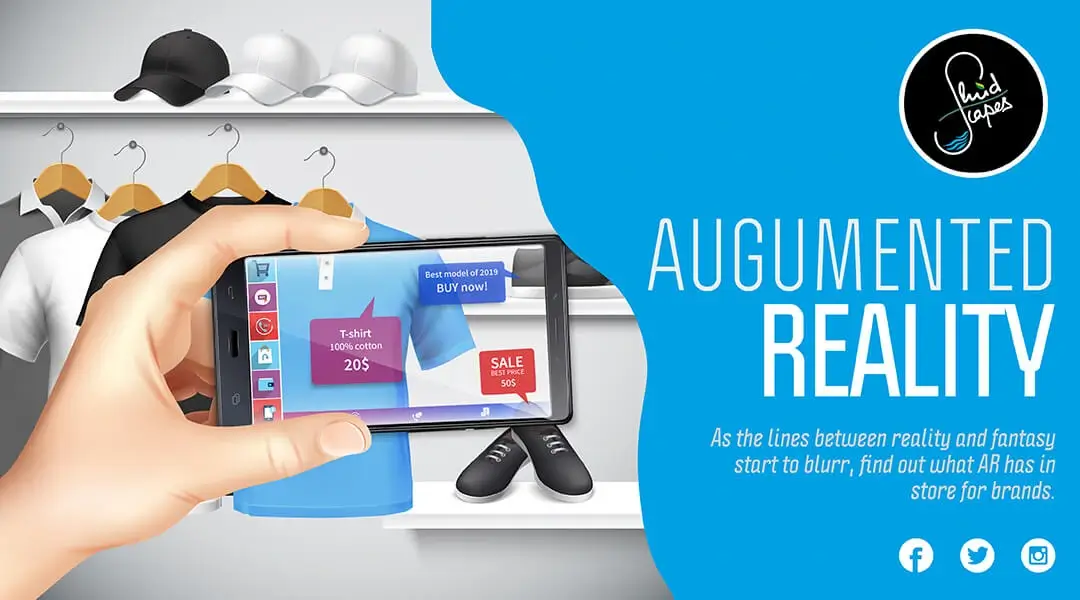
    As the name implies, Augmented Reality augments the real-world experience by virtual elements. These virtual elements are digitally developed videos, texts, or images, overlay the live view taken by using a mobile camera, headset, or a tablet. The virtual information is superimposed simultaneously on the real-life inputs, in order to create an illusion of a virtual world in an actual environment.

    As the name implies, Augmented Reality augments the real-world experience by virtual elements. These virtual elements are digitally developed videos, texts, or images, overlay the live view taken by using a mobile camera, headset, or a tablet. The virtual information is superimposed simultaneously on the real-life inputs, in order to create an illusion of a virtual world in an actual environment.

    AR in gaming

    There will be imaginary objects(static or moving) that can appear in your regular setting, such as a monster in your living room, or a comic-book character in your community park. It gives you an immersive experience when you access an AR-based game through your headset, mobile, or tablet. Pokemon Go has been a phenomenal success that set the trend of AR gaming.

    Other applications

    If you are a cricket buff and have watched the TV broadcasts of the game recently then you must have noticed how the broadcaster used AR technology to overlay a portion of the field with the name of the major sponsor. While it looks like the name is painted on the cricket field, actually it is not. A leading eyewear startup offers you the facility to try on and select from a number of frames and sunglasses on their range fully online! The AR-based app from the company overlays your face with the frame image.

    How AR works

    AR function is executed by an AR app when you scan an AR trigger. There are two types of trigger – marker-based and location-based. A marker-based trigger needs scanning of a 2D code such as a QR code, a barcode, or watermark. A location-based trigger doesn’t use code. It triggers automatically when the user reaches a certain geographical location or near a certain image. You have to use your mobile camera or GPS, or other devices to trigger AR. The AR app produces an image or video to overlay the image you capture through your mobile camera. As you move the device the overlay also moves to allow you to get different views of the projected information, as they would have been naturally.

    How AR can benefit digital marketing

    • Magnifying brand awareness – Immersive and interactive ad creatives, much like video games, help marketers achieve an engaging and emotional connection with the customers. As long as the application is novel, marketers can reap huge benefits.
    • Sustained Customer Engagement – Studies reveal of the extra-large dwell time that an AR-based marketing campaign can ensure, in comparison with any other form of ad – according to a source, while the dwell time in traditional radio or TV ads is around 2.5 secs, with AR ads it can be around 75 secs.
    • Enhanced UI/UX – AR integration helps marketing campaigns to be more informative and interactive. Customers can get to the right information easily and quickly.
    • Boosting sales – Like the virtual try-on eyewear example given above, similar apps can be developed for other products as well. The customers can select and order from anywhere they are.
    • Offering the right product to the right people – AR ads coupled with machine learning algorithms offer advanced hyperlocal advertising that analyzes user behaviour and interests in order to zoom-in on the right people who are more likely to buy your product.
    • Much cheaper than the traditional ads – AR-based ad campaigns offer much higher performance/price ratio than the print media or TV ads. Moreover, once made the same AR application can be used for future campaigns without any extra cost.

    AR is expected to sweep digital marketing. Companies such as Google and Facebook have already developed AR viewing technology for Android and iOS. It’ll be wise for a business to incorporate AR into its marketing to leapfrog the competition.