Author: admin

  • How To Do SMS Marketing In India : A Complete Guide

    How To Do SMS Marketing In India : A Complete Guide

    Despite the numerous types of digital advertising dishing out numerous options to marketers, SMS, or simply texting, continues to feature in marketing strategies as a cheap but effective method for connecting customers. You can use it for both mass messaging and individual messaging. Read on to learn about how to do SMS marketing in India.

    What exactly is SMS marketing?

    SMS marketing is the use of text messages to send promotional campaigns or transactional messages for marketing purposes (SMS). These messages are primarily intended to communicate time-sensitive offers, updates, and alerts to individuals who have agreed to receive text messages from your company.

    Below are some common examples of SMS applications:

    • Promotional offers and deals
    • Confirming shipping of ordered item with delivery date
    • Confirming payment transactions
    • Follow up for customer support
    • Scheduling and reminding appointment
    • Internal alerts

    What are the two types of SMS used in SMS marketing?

    Businesses typically send two types of SMS messages:

    Transactional SMS –

    Businesses use transactional SMS to communicate critical messages like order/booking confirmation, order status/update, delivery-related information, etc.

    Promotional SMS –

    Promotional SMS messages are used for marketing and advertising, such as to alert customers to a limited-time offer or a special dish on the menu.

    What makes SMS marketing so effective?

    The mobile has evolved into a powerful business tool. With a massive number of mobile users, India is outpacing the rest of the world in mobile marketing. SMS marketing, also known as text marketing, is a type of mobile marketing that is popular among marketers due to its high reach, high open rates, and low cost.

    What are some reasons for the popularity of SMS marketing?

    • Very high mobile user base
    • SMS messages are generally opened and read.
    • SMS can be received on any mobile device (smartphone or non-smartphone).
    • When a mobile service pack is purchased, SMS service is included by default. There is no need to download any apps.

    What are the underlying benefits of using SMS marketing?

    • High levels of customer engagement
    • Significant brand exposure
    • Enhanced customer feedback
    • Increased online feedback
    • Campaign monitoring is simple.

    How do you make your SMS marketing successful?

    SMS marketing is most effective when combined with voice, email, Facebook Messenger, and other channels, as no single method is a panacea. SMS is one of the most dependable ways to reach out to your customers. If you are new to digital marketing and wonder how to do SMS marketing in India, here are the industry best practices to improve the effectiveness of your SMS marketing:

    Utilize permission-based marketing at all times.

    Only those who have given their consent should receive texts from you. This is known as permission-based marketing, which is essential for the accomplishment of your text marketing campaigns.

    Permission-based marketing helps you to maintain digital etiquette. This prevents you from breaking local regulations and CTIA recommendations that safeguard consumers from unwanted solicitation. You can ask your customers to complete an online form, participate in a contest, or text a specific keyword to a mobile number or shortcode in order to opt-in to receive text messages with exclusive discounts, new product updates, or other important information.

    Understand your clients

    To target the right audiences, consider demographics and purchase history based on location. Do not send a twenty-year-old an anti-wrinkle cream coupon if you are a cosmetics company.

    Track the effectiveness of your messaging by using a CRM (Customer Relationship Management) tool to help you send the right message to the right recipient.

    Create customer segments for more targeted marketing. For general sales and promotions from which everyone will profit, they send out mass mailings.

    Consider using a shortcode to establish your brand

    Using a shortcode will be your best choice if you require mass SMSing for your product and will give you these two significant advantages:

    High throughput – At any given time, you can send 100 SMS texts per second.

    Brand recognition – By looking at the shortcode, recipients will be able to picture your brand.

    However, you can use a short code with a keyword to enable customers to opt-in to text messaging, in which customers will type a given keyword in response to a shortcode message to select, vote, or confirm something. Typically, shortcodes are meant for one-way communication to send messages like promotional, notification, order confirmation, etc.

    Be succinct and clear with your message.

    Get to the point quickly. Avoid using abstractions, all-caps, emojis, and write in plain English.

    You have only 160 characters to express yourself. Try to finish it faster if you can. Make sure the message is expressed clearly and succinctly in plain English. Avoid using all-caps and emojis, and abstract language.

    Additionally, open-ended messages must be avoided at all costs. An example of an open-ended communication is a message that welcomes customers to a sale but does not state when the sale will end. Whether the arrangement is for a day or a month is unclear to the client. If you give customers a deadline for a sale or an expiration date for a coupon, they are more likely to take action.

    Timing of messaging is crucial.

    Text messages are intended to elicit an immediate response. Customers’ reactions to SMS-promoted sales, promotions, and events are influenced by impulsive decisions. If you have a store opening event on Friday night, let people know on Friday afternoon. Send a supper promotion at the end of the day rather than in the morning if your restaurant offers one.

    You could step on thin ice if you send out messages too early in the morning or too late at night. Acceptable hours are between 8 a.m. and 9 p.m.

    Take SMS timing to the next level by figuring out the best time to text a particular person based on how they have responded to your texts in the past. By customizing your marketing, this ultra-targeting goes beyond geography and demographics to produce the best results.

    Offer opt-in for every channel

    If you give customers the option to opt-in at every point of contact, your SMS marketing campaign will be very successful. To increase your response rate, heed these recommendations.

    Follow these recommendations for an increased response rate:

    Social Media: Add an opt-in button to your Facebook page to allow clients to sign up for your SMS campaign.

    Website: Make sure that SMS opt-in is prominently displayed on your website. Newsletter: Make the option to sign up for SMS visible in your newsletter. Point-of-sale: Make sure that staff are asking clients if they would like to receive SMS.

    Evaluate the effectiveness of your campaign.

    Intelligent marketers always consider return on investment when evaluating their effectiveness. As long as you select the appropriate SMS solution, text marketing offers a direct, measurable, and trackable marketing channel.

    You can adjust your SMS campaigns and optimize your marketing messaging across all platforms by quickly determining which messages and promotions are successful and which are not. The best part is that you can record leads as well as any text-based responses and inquiries for follow-up sales.

    What sectors typically employ SMS marketing, and how?

    The following are some sectors where SMS marketing works very well:

    • Healthcare
    • Tourism and travel
    • Financial and banking
    • Retail purchasing
    • Restaurant and catering in real estate

    SMS marketing excels in these sectors due to its immediate nature. However, other sectors have also begun utilizing SMS marketing to reach millions of people and build brand recognition.

    SMS marketing is just ideal for both mass and individual messaging. It has a high open rate and comes at a cheap cost. If you have just launched your startup or want to improve the customer service of your small business, it’ll be worth taking a look at how to do SMS marketing in India and rein in your marketing spend.

    Source- Fluidscapes
    We are one of the best digital marketing companies in India that provides online reputation management services to all types of organizations. We assist businesses to stay on top of the game by leveraging the latest technologies and breakthroughs in marketing strategies and business processes. Want to grow your business, even more, get in touch with us and we’ll tell you how.
  • Single Page Website Pros And Cons

    Single Page Website Pros And Cons

    Websites are central to digital marketing. The bulk of the initial investment goes into developing a purposeful website. So, it’s no wonder that the emergence of the single-page website as a more cost-effective, convenient, and target-oriented alternative to the conventional website has created a new trend in digital marketing.

    But as all good things come at a cost, a single page website has some drawbacks, which makes multi-page websites more suitable for certain conditions. In this blog, we will discuss single page vs. multi-page website with some single-page website examples to understand the one-page website benefits and its drawbacks.

    What is a One-Page Website Design?

    A website that only has one HTML page is referred to as a single or one-page website. No other pages, such as an About, Features, or Contact Us page, are present.

    The user experience is made more continuous and fluid by the fact that content on single-page websites is fully loaded on the first page. Users can scroll down a single-page website to find various content sections, or they can click navigation links that let them jump to specific locations on the page.

    Single Page Website Benefits

    #1.Simplicity and Ease of Use

    The fact that single-page websites contain everything in one page, makes them simple to use and one of the main factors contributing to their popularity. There isn’t much that is simpler than a one-page website that has a distinct introduction, middle, and conclusion.

    A one page website design is ideal for websites with a single purpose due to its simplicity of use. The linear experience of this design helps to muster more attention from the users on your product or story

    People are realizing how helpful it can be to navigate a single-page website. There is more scrolling and less clicking on one-page designs. Single page scrolling website is advantageous because more users will likely stay on your site because they prefer scrolling to clicking. One-page designs offer a seamless and intuitive user experience as long as the design is kept simple and uncluttered.

    #2. Greater User Engagement

    It’s simple to understand that users get more engaged with one-page websites because they are just that—one page. Users will receive messages and calls to action more quickly on a one-page website. Because users are only interacting on one page, responding to your website’s calls to action is simpler.

    Because they are all in one location, they don’t have to look far to find a contact form or buttons that lead to your social media accounts. Additionally, since users are more likely to stay on your website longer, since they only need to scroll down one page as opposed to trying to navigate through pages, subpages, etc., due to our increasingly short attention spans.

    #3.More Attention to Quality

    With one-page websites, digital storytellers can create linear stories that are easy to read. One-page designs concentrate attention on a single page, giving content more bandwidth (and often more money). In comparison, multi-page websites offer fewer opportunities for creativity because each page must be optimised and quality is often overemphasized.

    A one-page layout also offers more space for images. Designers can tell a story using a variety of media, creating a more immersive experience for the user, rather than worrying about stuffing a page with content. Instead of worrying about making logical connections, the focus is on the content.

    #4. Results in More Conversions

    Since better user experience results in higher conversion rates, the one-page design scores much higher in terms of conversions. Conversion into sales should be your top priority when building a website to generate leads, sell goods or services, or even build an email list. A one-page website increases the likelihood that a user will take the desired action.

    One page reduces options and minimizes distracting factors. Your visitors won’t unintentionally switch to another page and forget to click CTA. The slow loading of pages won’t frustrate them after they decide to buy. It’s all right there on the page, and if your content is compelling enough, they won’t hesitate.

    #5. Easy to Access with a Mobile Device

    Another strong factor that makes single-page websites more on demand in many situations is that they can be accessed rather easily using a mobile device. In sharp contrast, multi-page websites will be very slow to load, which makes most users leave rather than deal with the hassle. The one-page design is by far the simplest to use on any type of device, even though many multi-page website designs are responsive and optimized for mobile support.

    #6. More Affordable and Easier to Maintain

    A single page website will generally be less expensive to build and maintain, even though the layout strategy may require a little more time and work. A single page website could be designed and built within just 10-15 hours, as opposed to a multi-page website, which could take three times as long.

    One-page websites are also simpler to maintain. Everything that needs to be fixed, altered, added, or removed is on one page. For website owners who don’t consider themselves experts in web design, this is especially helpful. For instance, if you choose WordPress as your web platform, you will only need to edit one page (with various buckets and sections). When your website goes live, the developer you work with should be able to show you how to maintain it.

    Drawbacks of One-Page Websites

    #1. Difficult for Keyword Optimization

    The number of keywords is a major factor in search engine optimization. In a single-page website the scope of keyword optimization is limited. You need to take a specialized approach to SEO if you intend to use a single page website. You must first pick your keywords carefully because you can only use a limited number. A page with an excessive number of keywords is considered spam, and search engines do not support spam.

    To make up for this problem, you’ll have to put in more effort to make sure that:

    • Your site loads quickly,
    • Your content is of the highest caliber (since you have fewer keywords to choose from),
    • You build lots of links.

    On a one-page website, it is possible to have good SEO, but you will undoubtedly have to put in extra effort. Remember search engines prefer content-rich, simple-to-read websites that focus on a single subject, which can match the features of a one-page website.

    #2. Not Ideal for Sharing

    This disadvantage results from the fact that it’s a challenging task to share information distinctly when there is a lot of it on a single page. Many times, only the top part of the page comes up when a user chooses to share your website, while the information intended to be shared belongs to the middle or lower parts.

    There are, of course, inventive ways to get around this. For instance, you could place social sharing buttons on particular sections of the page, but that would require some specialized coding and might make the page look cluttered. You are faced with the challenge of finding balance once more.

    #3. Difficult to Use Analytics

    Although usability testing can be used to improve a one-page design, it will be difficult to run most other analytics options. Google Analytics will only be able to determine who your visitors are and how long they spend on the page. But because it is a single page, it cannot determine which parts of the page are being most actively used by visitors.

    This presents difficulties on many levels. It is challenging to increase conversions with fewer analytics (although single-page designs tend to have better conversions). It also becomes difficult to figure out why visitors are leaving, which might lower bounce rates and have a direct effect on SEO.

    #4. Scalability is Compromised

    On a one-page website, you don’t have much option to add more content if required in future. To maintain the same page length, one option is to replace any existing content. Another option is to jam as much information as possible onto a page, which will make users scroll much further. Or, you can choose to make your website more extensive by adding additional pages.

    One Page Website Examples

    #1. Cookcollectivekitchen.com

    Cook Collective offers the entire kitchen and storage space on rent. This provides excellent opportunities to start and flourish a food business at minimum risk. It can be availed by virtual restaurants as well as by street vendors. The website communicates all of this information on a single page.

    #2. whatisBeyond.com

    Beyond is a music festival that promises spiritual and immersive experiences. This is conveyed on a one-page site with an outstanding header image. As you scroll down the page, you’ll learn more about the festival and its past participants.

    One-page websites can be ideal for promoting events. There may be less amount of text if the design requires so, to match the context or subject. You can use a large and attractive header image to draw the user in, and keep their attention with high-quality photos throughout the rest of the page, as shown by Beyond.

    #3. Roma

    Roma is a one-page website that educates the public about the exploitation of domestic workers. The site welcomes visitors with a full-width image and bold statement. The content lets you walk through the story without any disruption but provides three important links – Take Action, Roma Documentary on Netflix, and to jump to the next section. This helps you to navigate swiftly to any part you want.

    #4. The Art of Texture

    One-page sites are ideal for promoting documentaries and films, as illustrated in The Art of Texture. Provide more context by embedding them into your page and adding additional elements, such as a blurb and images.

    The website is devoted to a documentary about a college artist. A click on the Play Movie button will let you watch the documentary directly on the page. Also, there is a slideshow and a gallery of artworks on sale.

    Source- Fluidscapes
    We are one of the best digital marketing companies in India that provides online reputation management services to all types of organizations. We assist businesses to stay on top of the game by leveraging the latest technologies and breakthroughs in marketing strategies and business processes. Want to grow your business, even more, get in touch with us and we’ll tell you how.

  • Know The Difference Between Demand Generation Vs Lead Generation

    Know The Difference Between Demand Generation Vs Lead Generation

    Demand generation and lead generation are two distinct yet connected goals of marketing, but they are often mentioned interchangeably. In this blog, we will look at demand generation vs. lead generation to understand the purposes and techniques involved in each, in the context of digital marketing.

    One of the biggest benefits of digital technology is that it acts as a gateway to using the Internet for a superior buyer’s journey. People can search, verify, and buy anything from the virtual marketplace through e-commerce and social commerce. This has changed the focus of marketing from outbound to inbound because people are more comfortable with choosing the right product and approaching businesses any time they want. Demand generation and lead generation strategies form the foundation of inward sales.

    What is demand generation?

    Demand generation is how you get people in a new market to recognize your brand, the value of your products, and the benefits of your offers. Building trust, educating audiences, and increasing brand awareness are all components of the demand generation process.

    There are many demand-generation activities applied in digital marketing to assist the sales and marketing teams to generate demand for a product or service at each stage of the buyer’s journey. Successful demand-generation strategies require your sales and marketing departments to be on the same page and working together. Every tactic you employ will work toward a specific end goal.

    What is lead generation?

    The lead generation process is all about persuading an audience to learn more about your business offerings. The aim is, of course, to convert them into customers after convincing them that what you offer will meet their needs.

    Demand Generation vs. Lead Generation.

    Demand generation assists you in attracting your target audience, while lead generation assists you in converting qualified audience members into customers.

    While you may wonder which strategy is best for assisting you in meeting your business objectives, neither can be used exclusively. Demand generation is directly related to lead generation because you don’t receive qualified leads and convert them into customers unless you generate the urge in them to buy your product. Given below are some of the key differences between the two.

    Key differences between demand generation and lead generation

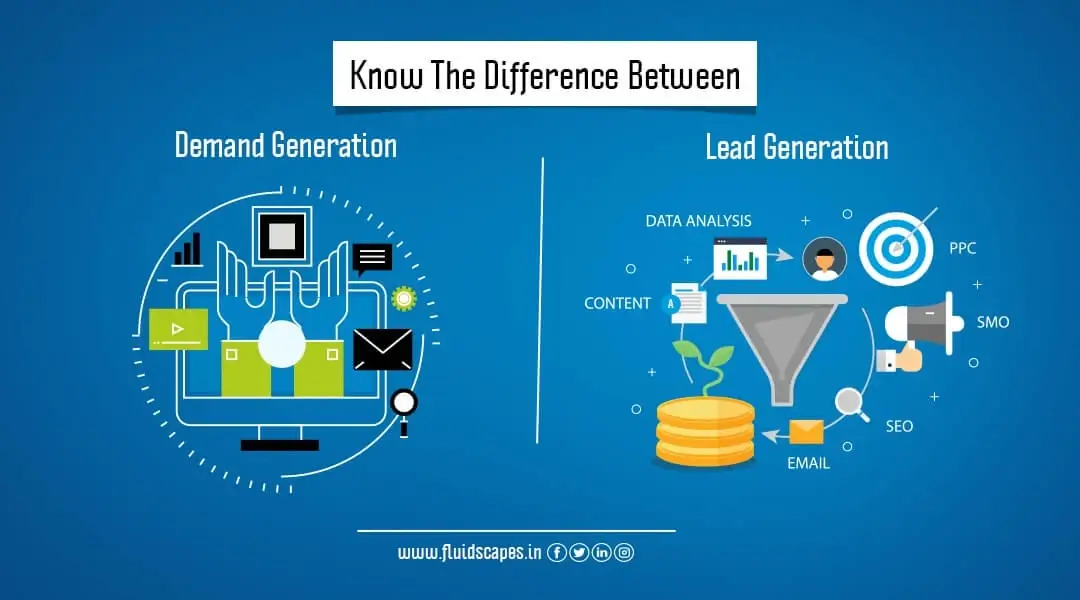
    Demand generation mainly aims at growth, while lead generation aims at conversion. If you imagine a marketing funnel, demand generation is a top-of-the-funnel activity, whereas lead generation is a bottom-of-the-funnel activity.

    Demand generation is used to raise awareness about your product and company and grab people’s interest in what you have to offer, while lead generation is used to nurture those audiences and convert them into customers.

    However, demand generation has a direct impact on lead generation and aids your efforts. If you’ve exercised demand generation successfully, you know that most of the leads you will receive have good potential to be converted.

    How demand generation helps lead generation.

    Demand generation strategies primarily involve content marketing. With your content, you attract leads, educate them and inform them that you are dealing with the product/service that they require. These leads may visit your website, learn about you and then leave.

    When they conduct another search and find another article from your company, they realise that you are an authority in that field and you’ve assisted them with their needs. You should include CTA on your blogs where visitors can enter their information, including email addresses.

    Once you obtain their email address, your lead generation process starts. This involves nurturing the case using email, in which you will share content with them that will persuade them to purchase your product or service.

    Some B2B demand generation strategies include:

    #1. Creating authority for content marketing –

    In the age of the Internet, most Searches and information sharing are taking place on the Internet. Posting quality Content, such as blogs, videos, white papers, case studies, etc. can help in gaining recognition and authority.

    #2. Searching for target customers –

    Creating buyers’ persona and the use of buyers’ intent data are some of the proven methods of identifying target customers.

    #3. Using content syndication –

    Content syndication involves promoting your content to your ideal customers. Content syndication activities include:

    • Reaching out to decision-makers in a targeted manner
    • Using paid ads to promote relevant content
    • Increasing reach by leveraging distribution platforms.

    #4. Try a highly targeted ad campaign –

    Paid ads with keywords improve the probability of more leads than organic search results. LinkedIn and Google are the primary platforms for achieving the best results in the B2B space. LinkedIn allows you to fine-tune your target audience, including firmographic criteria. This targeting data is equivalent to demographic data for organizations.

    #5. Utilize account-based marketing strategies –

    Account-Based Marketing (ABM) is essential for B2B companies seeking to increase demand. A good ABM strategy begins with compiling a list of qualified target accounts. Selling to the accounts you target will be simple if they are a good fit for your product/service.

    #6. Use demand generation tools –

    Nurturing leads in the sales funnel is extremely important, but when the volume of leads increases, using software for nurturing may prove to be wise to prevent a lack of timely attention to some qualified leads. This will free up more time for your sales team to focus on closing.

    How to create a lead generation campaign

    The two common lead generation campaign tactics include:

    • Using CTAs with lead generation forms to collect audience contact information and send additional emails,
    • By promoting gated offers with lead capture forms on social media,

    Furthermore, you may use sales intelligence software, which will enable you to collect contact information from prospects who have searched for content related to your product online. When you use this type of software, you know your leads are qualified because they have expressed an interest in learning more about what your business has to offer.

    Source- Fluidscapes
    We are one of the best digital marketing companies in India that provides online reputation management services to all types of organizations. We assist businesses to stay on top of the game by leveraging the latest technologies and breakthroughs in marketing strategies and business processes. Want to grow your business, even more, get in touch with us and we’ll tell you how.
  • How Digital Marketing Is Impacting Small Businesses

    How Digital Marketing Is Impacting Small Businesses

    A majority of small businesses face problems with scaling up, not just because of limited funds, but because of weaknesses in areas like customer reach, inventory control, market research, and so on. Digital marketing has come as a panacea for small businesses to improve in every aspect and elevate to new levels.

    Digital marketing is an umbrella term which actually encompasses all techniques and tactics, available and emerging for the enhancement of business processes. This allows us to innovate new ideas and also improve on them.

    Here is why digital marketing is important for small businesses.

    We can broadly identify communication, data searching, content sharing/ distributing, and remote payment as the four pillars of digital marketing. Let’s see how they are impacting small businesses:

    Customer Acquisition –

    Tracking through digital platforms and social media and analyzing data are producing a large number of leads, which are further getting converted into customers of today or tomorrow through effective communications. The best part is that it allows businesses to choose between local and global audiences.

    Content Distribution –

    This feature is boosting customer acquisition for small businesses. All types of content about the products are getting shared to help customers’ decision-making. Every day, a business can share huge content with the audience via social media, emails, applications, newsletters, and so on. This helps marketers easily spread their message to a large audience.

    Customer Information –

    Another very important advantage of digital marketing is acquiring demographic data and the choice of certain demographic groups, which can help a business make vital business decisions. Suppose you want to introduce a new product and then you consult a customer database. Understanding the pattern in the data will enable you to determine which product will work and which will not.

    Brand Building Opportunity –

    Customer information is important to the company. Similarly, today, customers are interested in everything about the companies from which they purchase their products.

    It provides an opportunity for a business to share its information and reveal its true personality online. This actually leads to creating the brand and building confidence in customers as they feel that the brand is transparent. In response, the customers show more brand loyalty.

    Encourage Innovations –

    Digital marketing offers many innovative ways to identify, follow, and communicate with probable customers on various platforms. Brands can stand out from the competition by having an innovative approach when there is stiff competition in the market.

    In marketing, catching people’s attention is vital. Below are some statistics that underline the presence of a massive number of people on different digital platforms round the clock, including social media. This makes digital marketing an easy and powerful method to reach out and influence people’s reactions, habits, and lifestyles in a big way.

    • Every day, more and more people are going online because the internet has become more accessible. As of 2023, approximately 4.55 billion people (which is more than half of the world population) are on some type of social media
    • 400 million new users have opened at least one social media account in the last year only.
    • Search engines account for approximately 93% of all website traffic.
    • Before making a purchase from a store, 82% of people use their phones to conduct an online search.
    • If a brand’s name appears more than once during their search, 60% of consumers are more likely to buy it.

    Having read up till this, if you are still not sure why digital marketing is important for small businesses, look at these incredible features of digital marketing, which are proven strategies for acquiring new customers at much less cost than conventional marketing.

    Pay-Per-Click (PPC) Advertising

    This feature allows you to have better control over advertising spending. If you can direct your money and advertise only to those who are most likely to become customers, especially in the early stages of your business,

    You can use this method of paid advertising to bid on keywords to target particular platforms or audiences, producing responses that are more targeted and significant. The PPC marketing also helps your website rank higher and show up in the top search results.

    SEO (Search Engine Optimization)

    SEO, or search engine optimization, is the process of making changes to your website in order to better position it when users search for:

    • The things from your product range
    • Services that you offer.
    • Details on subjects of which you have extensive knowledge and/or experience.

    Your pages are more likely to be found and clicked on the more visible they are in search results. The ultimate objective of search engine optimization is to assist in attracting website visitors who will convert into clients, customers, or a loyal audience.

    Social Media Marketing (SMM)

    SMM is the practice of interacting with customers through social media platforms in order to develop brands, boost sales, and increase website traffic.

    Affiliate Marketing

    Affiliate marketing is a type of marketing in which affiliates are compensated for each visit, signup, or sale they generate for a merchant. This arrangement enables companies to outsource a portion of the sales process.

    Content Marketing

    This is a type of marketing that entails the creation and dissemination of online content (such as videos, blogs, and social media posts) with the goal of piquing interest in a brand’s goods or services but without directly endorsing them.

    Inbound Marketing

    Instead of actively seeking out and competing for the attention of potential customers through outbound marketing, inbound marketing allows businesses to attract their ideal customers organically at various stages of their buying journey (awareness, consideration, and decision).

    Source- Fluidscapes
    We are one of the best digital marketing companies in India that provides online reputation management services to all types of organizations. We assist businesses to stay on top of the game by leveraging the latest technologies and breakthroughs in marketing strategies and business processes. Want to grow your business, even more, get in touch with us and we’ll tell you how.

  • Push Vs. Pull Strategies In Marketing – Know How It Works

    Push Vs. Pull Strategies In Marketing – Know How It Works

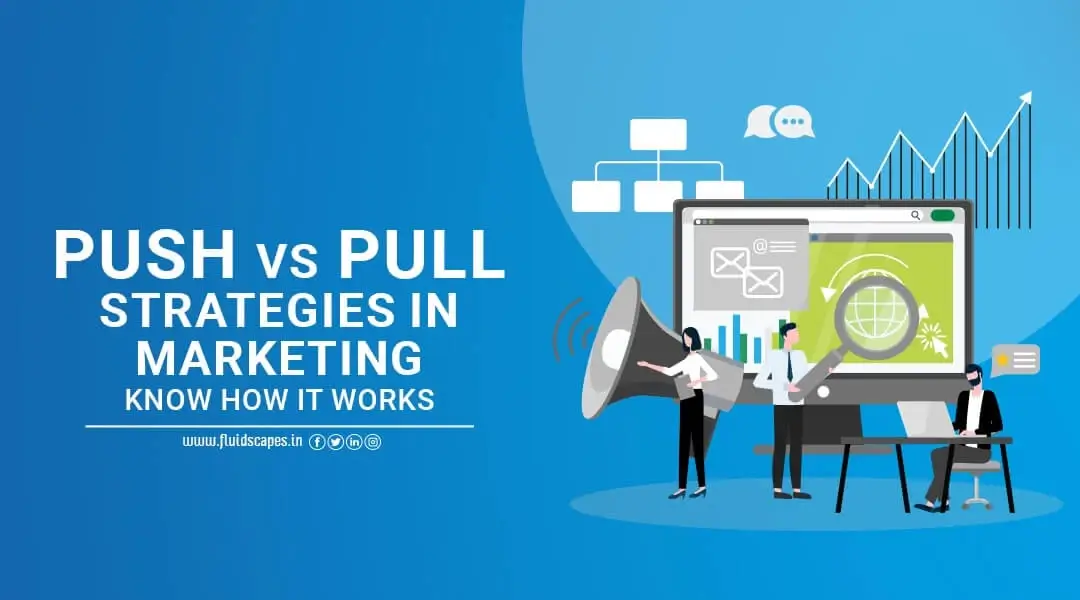
    Push and pull marketing are two different ways to market your business. Let’s learn about push and pull marketing strategy. Push marketing is when you push something on people, while pull marketing is when you invite people to join you.

    Both these strategies have their own pros and cons and are used by many marketers in their businesses today.

    In this blog post, we’ll look at the difference between push vs pull strategies, what they mean for your business and how you can use them effectively.

    Push versus Pull Strategies

    Push marketing strategy is a strategy where you push your product or service to your target audience. Pull marketing strategy, on the other hand, is a strategy where you pull your target audience towards your product or service.

    Push strategies are more effective when the target audience is already aware of the product or service because they will have an easier time accepting it if they have already used it in some way before. This could be through word-of-mouth recommendations from friends and family members who have tried using them themselves, as well as online reviews on websites.

    However, push marketing strategies can also work well if there aren’t any other options available at all!

    Different Types of Marketing

    In marketing, there are various types of strategies:

    Branding

    this is the most basic strategy and it involves creating a brand identity for your business. A good branding strategy will help you build trust with your customers, which in turn increases sales and leads to better ROI for your business.

    Direct Marketing

    Direct mailings are an example of direct marketing, because they’re sent directly to an individual based on their stated preferences or demographics such as age and location. This type of communication is especially useful when trying to reach out-of-the-way audiences that might not be well-known by others in the industry so it’s important that these campaigns have high-quality content that attracts attention from potential buyers within this niche market segment before launching any type of advertising campaign designed specifically around them.”

    The Benefits of Push and Pull Strategies

    Push and pull marketing strategies are similar in that they both promote a product or service by communicating it to customers. They differ, however, in how they communicate with their customer base—push methods use only one-way communication whereas pull methods use two-way communication.

    Push marketing strategy is more effective in the short term because it has immediate results with fewer costs associated with it compared to pull marketing. Pull methods are more effective over longer periods of time due to their ability to build up loyalty among consumers over time (and therefore increase sales).

    What is Push Marketing, and How Does it Work?

    Push marketing is a strategy that involves the use of direct marketing techniques to promote products or services. The goal of push marketing is to get people in front of your product, so they become aware and interested in it.

    Push Strategies Include:

    Direct mail campaigns (including catalogues) – This can be used for both new products and services as well as existing ones. It includes all types of mailers (e-mail, letters), postcards, leaflets etc., but also includes personal contacts like phone calls or face-to-face meetings with salespeople who will talk about your brand name and its benefits over time until you have built enough trust, with them then ask them if there’s anything else we could help with today because we think this product might be right for them.”

    What is Pull Marketing, and How Does it Work?

    Pull marketing strategy is an approach to marketing that leverages the power of consumers to pull products and services for them. It’s based on the assumption that consumers know what they want but may not have a way of getting it—or even know where to look for it. Pull marketing strategy focuses on creating demand by offering something that people want but can’t find elsewhere.

    Pull Marketing Takes Many Forms:

    Hard-to-find items (e.g., rare wines) are often advertised as “limited editions” or “collectibles.” The consumer must be convinced they’re worth buying before they make their purchase decision.

    Which One Works Better?

    While both push and pull strategies are effective, the latter is considered to be more effective. The reason why this is so is that it encourages people to do something on their own and not just rely on your marketing efforts. You can use this approach in any market segment or product line.

    In fact, you can use a combination of both push and pull strategies if you think they will work best for your business at this time. For example, if one of your goals is to sell more products but demand isn’t high enough yet (or ever), then using a push strategy could help increase sales without having to spend too much money on advertising or other forms of promotion such as social media posts or sponsored content pieces where companies pay for exposure by paying bloggers/influencers with large followings.

    Both push and pull marketing strategies have their own pros and cons. To experience the benefits of both, you need to adopt a combination of these two to make your marketing efforts effective. Push and pull strategies are two different marketing techniques. They both have their own pros and cons, so it’s important to know which one to use for your project.

    Push strategy is a one-way communication where you create an offer or ask customers to act in certain ways (for example, by purchasing something).

    Pull strategy is a two-way communication where you let people know what you’re doing (for example, sending out emails) and also make sure that they get the information they need through other channels (such as social media).

    The main advantage of push marketing is that it allows companies to quickly launch new products at lower costs than pull strategies do, since there are no long-term commitments made to consumers.

    Conclusion

    As you can see, push and pull marketing strategies are two different ways to achieve the same goal. They both work well when used appropriately and combined together. However, push marketing is less expensive than pull marketing because it relies more on spending money on advertising.

    Source- Fluidscapes
    We are one of the best digital marketing companies in India that provides online reputation management services to all types of organizations. We assist businesses to stay on top of the game by leveraging the latest technologies and breakthroughs in marketing strategies and business processes. Want to grow your business, even more, get in touch with us and we’ll tell you how.
  • 6 Facts About Online Marketing

    6 Facts About Online Marketing

    In India, there is a wide base population and their increasing internet use has increased the number of online website activations in this country. The introduction of mobile phones and data packs has further accelerated the growth of online marketing in India. This entrepreneurship has changed the way businesses approach their marketing strategies wherein they now have access to almost every good or product imaginable with a click of their mouse.

    Importance of Online Marketing

    It is important to use online marketing to drive more qualified traffic to your website. The leads you reach are more likely to be interested in what you do. It is beneficial to be able to target specific leads to drive traffic that is interested in your company. The characteristics of leads can be targeted specifically.

    Now that we know about how technology is changing the era, and the importance of online marketing, we shall read about the facts about online marketing in this blog.

    #1. Keywords are the Key:

    Marketing can be accomplished in a variety of ways. You can run ads in newspapers, on television, on radio, on the internet and more. You can also create marketing materials like brochures, catalogues, websites and more. But the most important thing is to get your visitors to your website. If they can’t find you online, then they won’t come back. To get people to your website, you need to make it easy for them to find you. This means having good keywords and linking to your website from other relevant sites. You also need to make sure that your website is easy to find on the internet. This means using relevant keywords and linking to your website from other relevant websites. You can also make use of search engine optimization (SEO) to increase the chances of your website being found by people using specific keywords. You need to ensure that people find what they’re looking for when they’re on your website. This means using relevant keywords and linking to your website from other relevant websites.

    #2. Updated Website Needed:

    Your website is the first and most important part of online marketing. The first step in any marketing campaign is a website. If people can’t find you online, then they won’t come back. This means more sales, more leads, and ultimately, more potential customers for your products or services. Your business website should be chosen carefully. There are many different types of websites, including e-commerce websites, product websites, service sites, and more. Many different challenges come with choosing the right website for your business. One challenge is finding the right keywords to drive people to your website. Another challenge is getting your website to rank well in search engine results pages (SERPs). To rank well in search engine results pages (SERPs), you need to have a valid URL and descriptive content for each page on your website.

    #3. Designing the Website:

    Your website must be well-designed and easy to navigate. The beauty of websites is that you can make them as simple or as complicated as you want. This is what makes web design so challenging. Many different topics can be discussed web design-wise. From mobile-friendly design to how your website should look when it’s loaded on a computer or mobile device, many different challenges come with choosing the right design. You need to make sure that your website looks and feels simple and easy to use. You also need to make sure that people can find you online. To make sure that people are finding what they’re looking for when they’re on your website, you need to make use of relevant keywords and links from other relevant sites. Your website must also be easy to find and use. Easy ways to find your website on the internet are using your domain name, IP address, or website address.

    #4. Important Information:

    You must provide valuable information on your website. Your website must be packed with valuable information. One of the most important things about your website is the information that’s on it. This is the bedrock of any online marketing campaign. The more information you have, the better your chances of success in online marketing. Many different types of information can be valuable on your website, including examples such as: How to use your product or service. Key features of your product or service, Rising Customer Habits, What to do next in your business strategy, Revenue generation ideas and many more. You need to make sure that your website is packed with valuable information so that people find it when they’re looking for it. You can also add social media content and other media that people will find helpful to your website.

    #5. Easy to find, simpler to use:

    Your website must be easy to find and use. If people can’t find you online, they won’t come back. This means more sales, more leads, and ultimately, more potential customers for your products or services. Many different types of URLs can be used for your website. There are also many different techniques you can use to make your website easier to find. The most important thing that you can do is make your website easy to find. This means using relevant keywords and linking to your site from other relevant websites. You can also make use of search engine optimization (SEO) to increase the chances of your website being found by people using specific keywords. You need to ensure that people find what they’re looking for when they’re on your website. This means using relevant keywords and links from other relevant websites.

    #6. User Friendly:

    Your website must be user-friendly. A site that is difficult to use may stay on the first page of Google for a keyword or two, but then Google will rank your site very low for those terms. Easy To Use Sites Are More Visited, thereby increasing your search engine traffic. The more visitors to your site, the more likely they will be interested in your products or services. You want your site to be easy to use so that people find what they’re looking for when they’re on your site. This includes making your site user-friendly. A site that is difficult to use may stay on the front page of Google for a keyword or two, but then Google will rank your site very low for those terms. Easy To Use Sites Are More Visited, thereby increasing your search engine traffic. The more visitors to your site, the more likely they will be interested in your products or services. You want your site to be easy to use so that people find what they’re looking for when they’re on your site.

    Conclusion:

    Online marketing knows no boundaries. You can view the benefits of online marketing and advertising in any country or city around the world. It works anywhere and everywhere, whether they have high or low literacy rates, new technology or none at all. Online marketing is a way to communicate with the whole world, generate leads and sales and create new ways to promote your business or product, and it only takes a little research to find out how it can work for you.

    Source- Fluidscapes
    We are one of the best digital marketing companies in India that provides online reputation management services to all types of organizations. We assist businesses to stay on top of the game by leveraging the latest technologies and breakthroughs in marketing strategies and business processes. Want to grow your business, even more, get in touch with us and we’ll tell you how.
  • Social Media For Businesses In 2023

    Social Media For Businesses In 2023

    Social media started in the early 2000s, so we can call it the gift of the millennium. In the next two decades we have seen how this wonderful gift spawned different genres of social networks to encompass the lives of more than half of the world’s population. And now we are entering yet another glorious phase of the same revolution – social media for business.

    Social networks with their millions of subscribers are like gold mines for businesses, but the problem is lack of tools to dig deep into them. The recent drives by the social networking giants to incorporate several innovations have made social media for business a profitable new channel for business.

    Social media for small businesses

    Social media and small businesses are made for each other. Without a social media presence, your small business may be losing out on crucial branding opportunities. There are some significant benefits of social media for businesses, such as:

    • Entice customers, gain customers’ feedbacks, and foster customer loyalty
    • Add international markets to your market reach
    • Conduct market research and cut marketing costs
    • Create a network of customers and increase revenue by advertising
    • Develop your brand, exchange ideas to improve how you do business,
    • Hire skilled employees, for example, through job networking sites like LinkedIn. I
    • ncrease traffic to your website, improve its search engine ranking.
    • Keep an eye on your competitors.

    At a lower cost than almost all other marketing channels, social media provides three fundamental advantages – targeting, reach, and scale. Everyone is on social media all day, every day. Brands must go where their customers are. We’ll look at the best practises for an effective social media marketing strategy.

    How businesses use social media for marketing

    You can reach customers and prospects wherever they are by incorporating social media into your small business marketing strategy. You can develop a successful social media presence to market your brand by following these tips:

    Create a strategy for social media marketing.

    Social media success is best achieved when you plan ahead. Developing a social media marketing strategy for each platform you intend to use is the first step.

    Posting regularly is important

    Your followers value consistency, so stick to a posting schedule. While being consistent, avoid posting too frequently, which may turn off your followers.

    Create a distinct voice.

    You should create a consistent voice and tone for your social media presence, one that resonates with your audience and influences their perception of your brand. Identify ways to relate to your audience without appearing overly concerned. Don’t be afraid to be yourself and speak your mind. As a result, your company is perceived as being friendly, flexible, and relevant.

    Use social media to your advantage.

    Run fun social media contests, link to your website or to special offers, etc. and host live videos with exciting updates or news to generate more leads and engage customers.

    Identify your target audience.

    To ensure that your content has reached the right audience, use your analytics tools to see demographic information, customer behavior, and social media trends. Knowing what your audience wants to see from you and responding accordingly can help you increase your engagement rates significantly.

    The impact of social media on business can be summarized as under.

    • Allow businesses to reach targeted audiences.
    • Help make your business omnipresent.
    • Help brand building at lower cost and time.
    • Increase loyalty. Increase word-of-mouth referrals.
    • Increase industry awareness and collaboration.
    • Help run personalized campaigns at a much lower cost.
    • Increase customer engagement with current customers and gain new customers.
    • Improve communication with customers

    If you are a startup or small business and do not yet have a good social media presence, it is a disadvantage. No matter what type of a business you are in, social media can benefit you in multiple ways.

    Source- Fluidscapes
    We are one of the best digital marketing companies in India that provides online reputation management services to all types of organizations. We assist businesses to stay on top of the game by leveraging the latest technologies and breakthroughs in marketing strategies and business processes. Want to grow your business, even more, get in touch with us and we’ll tell you how.

  • Best Ways To Write Copy For Social Media

    Best Ways To Write Copy For Social Media

    If you are a business owner, looking to establish your brand on a limited budget, social media copywriting might be the best way forward. Social media in recent times have added features to become pro-business. This and the natural crowd-pulling ability of social media are the reasons why copy for social media is touted to be the first choice of marketers.

    Copy or content is the lifeblood of advertising and many other business promotional activities. Now that social media is increasing in number and size to assume leadership in the field of digital communication, copywriting for social media has become a winning strategy to garner customer engagement.

    However, copywriting is a specialist job, and writing social media copy is an even more challenging task because it requires targeting audiences within their environment that keeps on changing.

    So, how to get started? What are the best ways to write a copy for social media? We have provided some tips here, but before getting there it’s important to take a look at some basic technical considerations. You can only succeed in social media when you master their mechanics.

    “Social media” is the umbrella term for online platforms and communities that allow users to create and share content, build communities, and interact with other users. Besides Facebook (Meta), Twitter, and LinkedIn, there are messaging applications such as WhatsApp and WeChat, platforms for sharing media such as YouTube and Instagram, interactive apps like Snapchat and TikTok, discussion forums, social bookmarking sites, review networks, and more!

    There are some similarities between platforms, but some differences as well. Especially, the below two basics you have to be careful about:

    Character’s limitations.

    Each platform has a different word limit that you must adhere to. For example, a tweet can only be 280 characters long, whereas a Facebook post can be 63,206 characters long.

    That is not to say you should use all of them. People have short attention spans and limited time. They quickly lose interest when confronted with a wall of text. That is why, if you want people to read and engage with your posts, they should be clear and concise.

    How to use hashtags

    Most platforms use hashtags, but they all have different best practices. Find out where your audience is and where you want to be seen. Then, research how to make use of hashtags on those specific platforms. You can find anything you need on the internet!

    7 best tips to write copy for social media

    #1. Be clear about your tone and voice

    What kind of impression do you want to make? What is the format of copy, what demographics you are targeting, and what is the purpose or goal it is supposed to achieve? These questions will define the right tone and voice for your copy – whether it should sound cool and professional, exciting, or fun. Remember you have to express the right emotion in a short copy.

    #2. Lead with the main idea

    Copywriting for social media is all about getting your main idea in front of your followers. They won’t give you time, it’s important to capture their attention while they’re scrolling. You sometimes need to lead a paragraph with a strong and compelling teaser–but it will often need to be followed by a strong and compelling lead.

    #3. Consider asking open-ended questions.

    You can engage your followers on social media by asking questions about your copywriting. You’ll get more responses from them if you ask them questions they’ll love to answer. Consider incorporating those questions as they relate to your brand to encourage people to share their experiences.

    #4. Apply hashtags wisely

    Hashtags can help your content get more exposure on certain social media platforms. Instagram and Twitter, in particular, use hashtags to increase reach. Adapt your hashtag strategy to the platform you’re using. Instagram, for example, allows users to include up to 30 hashtags per post. Hashtags on Twitter are useful for keeping up with trending topics and conversations.

    #5. Post a variety of copies

    Avoid posting the same types of content at the same rhythm. Don’t be afraid to shake things up by sharing engaging content, curated content (including your insights! ), and even a little sales copy.

    If you sell products or services, some of your posts should be direct sales pitches that direct your followers to your offer. Other posts should be your own or curated content aimed at educating or engaging your target audience. Include clear calls to action (CTA) on every post, regardless of the end goal—whether you want the user to visit an article or a product page.

    #6. Engage in conversation.

    In general, social media copywriting should be informal. The primary goal of social media is to connect people in a digital environment. Remember, your primary objective is to bring out a conversation, so aim for friendly, relatable, and informative copywriting.

    If you are writing for a product or service, take the line of PAS (problem, agitate , solve). This involves mentioning a problem, highlighting the inconvenience it creates, and then the solution using that product or service.

    #7. Maintain a uniform voice across platforms.

    Maintaining a consistent brand voice across all platforms is critical for developing a strong online presence. A consistent brand experience across platforms is absolutely necessary to help your target customers understand and grow confidence about your product. This helps the cause of a product more than graphics and visuals.

    Some social media ad copy examples

    Facebook ad copy of Slack – Slack’s “Make Work Better” Facebook ad:

    Between the rainbows and unicorns and the admission that no one enjoys pointless meetings, this is an excellent example of relatable Facebook ad copy.

    The CTA is also strategically placed for the ad, as asking users to sign up based solely on this information may not be the most effective strategy.

    It’s a classic example of how the core benefit of an internal communication tool app can be expressed in an amusing manner, and also that the primarily a personal networking platform facebook can be a platform to advertise business-focussed cloud software.

    Heal:

    Despite amazing technological advances in modern medicine, finding a doctor who accepts your insurance and scheduling an appointment is a time-consuming process. Discover a better way to see a doctor, according to this Heal advertisement. On-demand and on your timetable.

    Healing emanates from the smiling face of a doctor combined with the assurance from the CNN logo right in the middle. This Facebook ad makes customer pain points central to its message, cleverly using “discover” to make it more appealing.

    The table below gives an overview of character limits for different content formats of some leading social media platforms:

    Facebook 
    Username50 characters max
    Page Description155 characters max
    Posts63,206 characters max
    Comments8,000 characters max
    Video sizeUp to 10 GB
    Duration240 mins max
    FormatMP4 recommended, but any format can be used
    ImageUpload Size 30 MB max
      
    Twitter 
    Tweets280 characters max
    Direct Messages10,000 characters max
    ImageUpload Size 5 MB max
    Resolution1500 x 500 pixels
      
    LinkedIn 
    Status700 characters max
    Articles120,000 characters max
    Group Discussions2,000 characters max
      
    Instagram 
    Caption2,20 characters max
    Bio150 characters max
    Username30 characters max
    Hashtags30 hashtags max
    Image Size30 MB max
    Image Aspect Ratio1:91:1 to 16:9
    Video Upload4 GB max
    Video Duration60 seconds max

    Source- Fluidscapes
    We are one of the best digital marketing companies in India that provides online reputation management services to all types of organizations. We assist businesses to stay on top of the game by leveraging the latest technologies and breakthroughs in marketing strategies and business processes. Want to grow your business, even more, get in touch with us and we’ll tell you how.

  • Amazon Marketing Strategy – A Guide To Amazon PPC

    Amazon Marketing Strategy – A Guide To Amazon PPC

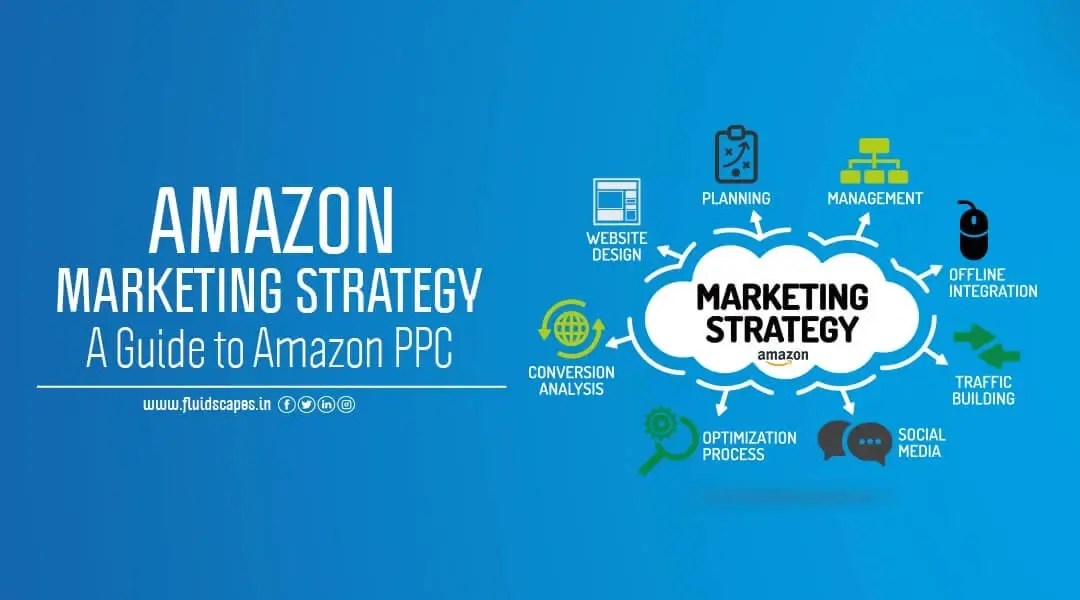
    E-commerce has done a paradigm change to retailing, and the chief architect of that is Amazon, undoubtedly. Everyone, from small retailers to large brands, is competing for a berth on Amazon, making it a crowded marketplace. You need to have a well-planned Amazon marketing strategy to make the most of it.

    Here are the most effective Amazon marketing strategies you can use to drive traffic to your listing and boost sales.

    #1. Optimized product listing for search engines

    Optimizing your product listing for Amazon SEO is needed to help your customers find you more easily. According to the Amazon marketing guide, well-described products always occupy the top positions in the suggested search results.

    Following are the best practices that optimize your product listings:

    • Keywords: Using appropriate keywords always improves the discovery ability of your product on the e-commerce behemoth. Amazon allows you to write a backend description up to 250 characters long, using the right keywords. This helps the search queries hit your product and display it on the search result. So, before you list your product on the eCommerce behemoth, conduct keyword research.
    • Titles: Right product title multiplies the chances of your product being explored. Put yourself in the shoes of your customers before writing product titles. Would you like simply the product name? Or would you prefer that additional product information, such as colour, dimensions, or packet size, be provided? Include in the title all important and descriptive information about the product. This will aid in increasing clickthrough rates and sales.
    • Product Descriptions: Write a product description that is informative and distinguishes your product from the competition. Conversions are increased when descriptions are well-written. You can use bullet points in your descriptions because they are easy to read and effectively outline the product’s key features.
    • Product Images: The product image is a must in e-commerce. Product image will help you attract customers more than a title or description will. Amazon has very specific guidelines regarding product images. They should be clear, appealing, informative, and simple to grasp.
    • Q&A:Though you may think this section is unnecessary, the Q&A section allows customers to obtain specific information about the product. With this section, you can answer all of the frequently asked questions about the product while also keeping your customers informed.

    #2. Amazon advertising

    Using Amazon advertising, you can showcase your products to customers who might not have found them otherwise. Here are some examples of advertisements you might consider:

    • Product display ads are the most common and popular type of advertisement on Amazon. They have the highest conversion rate, which is approximately 10%.
    • Advertising through display ads: Amazon provides its third-party sellers with PPC advertising through display ads. Using this service, sellers can create ads for their products and are charged every time a potential customer clicks on or views their ads. PPC (pay-per-click) ads are not limited to the Amazon website and app. You can also promote your products on websites and apps not owned by Amazon. You can also tailor display ads to your specific needs. S
    • ponsored Brand Ads: In sponsored ads, you can also include a headline, brand logo, and three products. They increase brand awareness by appearing on search results pages.

    #3. Third-Party Advertising

    You could be selling items on Amazon. However, this does not preclude you from selling and advertising elsewhere. Products can also be sold on other websites and apps. This also implies that you can advertise on third-party websites, which will aid in increasing clickthrough and conversion rates. You must, however, ensure that the ads are well-optimized. You can advertise your products on the following websites:

    • Google Ads: According to HubSpot, there are approximately 63,000 searches and queries on Google per second. This alone demonstrates that it is one of the most effective advertising platforms. Most marketers also use Google ads to promote their products online. You can also run ads on Google and take advantage of features such as email marketing and retargeting.
    • Facebook Ads: Facebook ads are also very popular among marketers, and they consume a significant portion of marketing budget. You can advertise your products on Facebook and reach a completely new audience through your Amazon store and website. You can also advertise on Instagram.

    #4. Affiliate Marketing

    You can use Amazon affiliate programmes to promote your website’s products on Amazon. The marketplace receives a commission when customers click on the link and purchase the product. This is a beneficial strategy because it allows you to direct traffic to your Amazon page and website, earning you new customers.

    #5. Customer Reviews And Testimonials

    Customer testimonials and reviews are one of Amazon’s most popular and important features. Before purchasing a product from Amazon, most customers read customer reviews; they play an important role in their purchasing decision. Customers read reviews after reading the product description to determine whether the product is worth purchasing. You should prioritize getting positive feedback in order to increase dependability, popularity, and sales.

    Amazon PPC strategy – an overview

    What is Amazon PPC? How does Amazon PPC work?

    Amazon Pay-per-Click (PPC) advertising is a component of Amazon’s internal ad system. Brands, agencies, and third-party sellers can use Amazon PPC to create advertisements for their products that appear in Amazon’s search results and competitor product listings.

    Advertisers pay Amazon against the number of clicks by the viewers, which in most likelihood leads to sales. So, the number of clicks is also considered as a metric for measuring the performance of advertisements on Amazon.

    There can be three main types of Amazon PPC ad campaign:

    • Sponsored Product ads,
    • Sponsored Brands ads, and
    • Product Display ads.

    The first of these, Sponsored Product ads, are the most common.

    Amazon PPC strategy 2022

    The following factors should be considered when building a solid Amazon PPC management strategy:

    • To determine which type of PPC ad campaign is best for your brand, experiment with automatic and manual keyword targeting.
    • Conduct in-depth keyword research, focusing on both related keywords and competitor products.
    • Set daily budgets and default bids that are 50-100% higher than what Amazon recommends when you first start out.
    • Allow at least two weeks for ad campaigns to run before running reports and making adjustments.
    • Find keywords for your manual campaigns by using ad reports from your automatic campaigns.
    • Make sure a keyword receives at least 10 clicks before adjusting or removing it from a manual campaign.
    • Continue to review your ad reports once a week, removing, adding, and adjusting keywords as necessary.

    We are in the digital age and going digital has become a basic requirement if you want to achieve fast growth. Hope, this blog will help you to get your Amazon marketing strategy 2022 right. Best wishes.

    Source- Fluidscapes
    We are one of the best digital marketing companies in India that provides online reputation management services to all types of organizations. We assist businesses to stay on top of the game by leveraging the latest technologies and breakthroughs in marketing strategies and business processes. Want to grow your business, even more, get in touch with us and we’ll tell you how.
  • YouTube Video Ads For Beginners: A Guide To Launch Your Video Campaign

    YouTube Video Ads For Beginners: A Guide To Launch Your Video Campaign

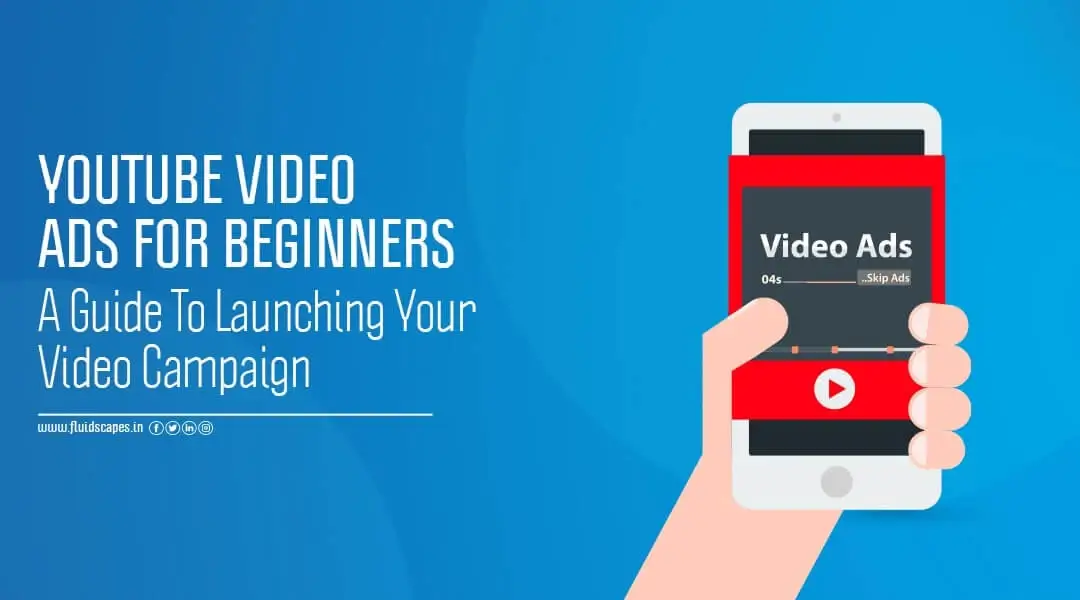
    Advertising boosts the prospects of a business, but the catch is that the ad must be impactful and viewed by the people for whom your product matters. YouTube Video Ads score highly on both counts and should top your priority chart if you want to speed up your growth.

    You have an advertising budget and you want to optimize your reach to the target customers. Running a series of YouTube ads may be your best bet to make sure a sizeable proportion of your target audience gets to see your content. As new formats and tracking capabilities emerge, you can also use these data to evaluate its ROI.

    There are more than 2 billion users of YouTube alone who view billions of hours of video every day.

    How to advertise on YouTube?

    Smart video content leaves an overarching effect on the minds of viewers. Through YouTube advertising, your video content can be advertised on YouTube or in search results to maximize your user reach. However, you should take measures to ensure that people view your ad content fully before they watch another video.

    YouTube ads for beginners

    Running a YouTube video ad for the first time and securing a high ROI requires you to learn about the different types of YouTube ads as described below:

    #1. Video discovery ads or In-feed video ads

    YouTube discovery ads or In-feed video ads are frequently visible on the platform’s primary pages, which include:

    • The home page
    • Page of search query results
    • As related videos, YouTube watch pages

    Because they appear on the video platform’s most prominent pages, these types of ads help a person/ brand to gain more visibility/ engagement/ traction.

    Benefits:

    • Increase brand awareness by displaying your ads when viewers watch related videos, scroll through the YouTube home feed in the app, or search for content.
    • Inform viewers who are actively consuming relevant content.
    • Increase the likelihood that viewers will subscribe, share, and watch additional videos from your brand.

    #2. TrueView In-stream skippable ads

    This type of YouTube advertisement is most commonly available, which requires advertisers to pay for TrueView ads if users watch them for at least 30 seconds or until the ad is finished.

    The viewer clicks on CTA in the ad, which takes them to the brand’s website.TrueView In-stream skippable ads must be between 12 and 360 seconds in length, according to YouTube.

    Benefits:

    When someone clicks on a video related to the search term for which the ads are running, these ads come to play before the video. As the name implies, viewers have the option to skip these ads, and you would only be required to pay if the viewers view this for more than 30 secs or the full length of the ad, as mentioned above.

    Advertisers can gain a lot of information about the performance of their ads by using TrueView in-stream skippable ads, which can help with testing and optimization.

    When you run ads through your Google Ads account, you will have access to data, such as:

    • The audience who completely or partially viewed your ad
    • Number of people who clicked on the CTA
    • Channel subscriptions as a result of the ad

    These parameters help advertisers decide where to spend and allocate their advertising budget in order to maximize their Return on Investment (ROI).

    #3. Non-skippable In-stream ads

    These ads can appear at any time during the video. The viewer will be unable to skip the ad when it plays, as the name implies. These advertisements last between 15 and 20 seconds.

    These types of ads will appear for videos that are at least 10 minutes long. In addition to that, viewers will receive a 5-second countdown notification before the non-skippable in-stream ad begins.

    These advertisements are Pay-Per-Click (PPC).

    #4. Bumper ads

    As the name implies, these ads simply interrupt the viewer’s video and last for a maximum of six seconds per ad. Bumper ads are the shortest type of YouTube ads available and cannot be skipped.

    Despite their short duration, bumper ads can be used effectively to promote a brand, service, or product.

    Benefits:

    • Unskippable ads – with a duration of just 6 secs or shorter
    • Uniquely effective at grabbing attention.
    • Ideal for viewers on mobile as people often watch videos on the go.
    • Cost effective

    #5. Overlay ads

    You should choose Overlay ads if you want to advertise on YouTube without being intrusive. Like an in-stream video ad, they just hover at the bottom of the video.

    An ad overlay is less intrusive than other larger pop-ups because it appears as a pop-up across the bottom 20% of the video window, whether it is text or image based. Users can view your advertisement while continuing to view the video they initially clicked on, and they can also always close it by clicking the “X” at the top-right corner.

    Benefits:

    • Improved user experience – because overlay advertisements are not disruptive.
    • Contextual targeting – the ads are pertinent to the products visible in the frame and help audience, advertisers and publishers (video owners).
    • Interactivity – overlay ads can also be used for other things like surveys, tests, tweets, backstories, exclusive deals, and more. Overlay advertisements can be used in inventive and creative ways to give users a less intrusive experience and give advertisers more
    • effective advertising options.

    With so many advertising options and over 2 billion active users per month, YouTube offers great benefits to the advertisers. Targeting audiences on the basis of behaviours, intentions further increases the chances of getting higher ROI.

    Source- Fluidscapes
    We are one of the best digital marketing companies in India that provides online reputation management services to all types of organizations. We assist businesses to stay on top of the game by leveraging the latest technologies and breakthroughs in marketing strategies and business processes. Want to grow your business, even more, get in touch with us and we’ll tell you how.