Author: admin

  • Work In Metaverse – How It Will Change The World?

    Work In Metaverse – How It Will Change The World?

    In the field of technology apples do not fall from the tree, rather old ideas are mined for new product gems. The next big sensation, Metaverse, which they say will revolutionize the way we live our lives and interact, also is the combined form of AR, VR, Blockchain,and the Internet.

    The metaverse became a major talking point for the first time when Zuckerberg announced his new company Meta in 2021, setting the direction of facebook towards developing its metaverse, which he thinks is the future of mobile Internet.

    But if we compile the comments of the industry heads and the amount of euphoria it has generated, it seems the metaverse is also the future of work place.

    The report says Meta is going full steam ahead for realizing its Metverse vision, pumping in tens of billions of dollars, hiring the brightest engineering minds from across the world. But Facebook is not alone or the first company to have recognized this technological transition – other giants like Microsoft, Nvidia, Roblox had already invested in building out applications along the same concept.

    So, what is the metaverse that is making all big companies crazy?

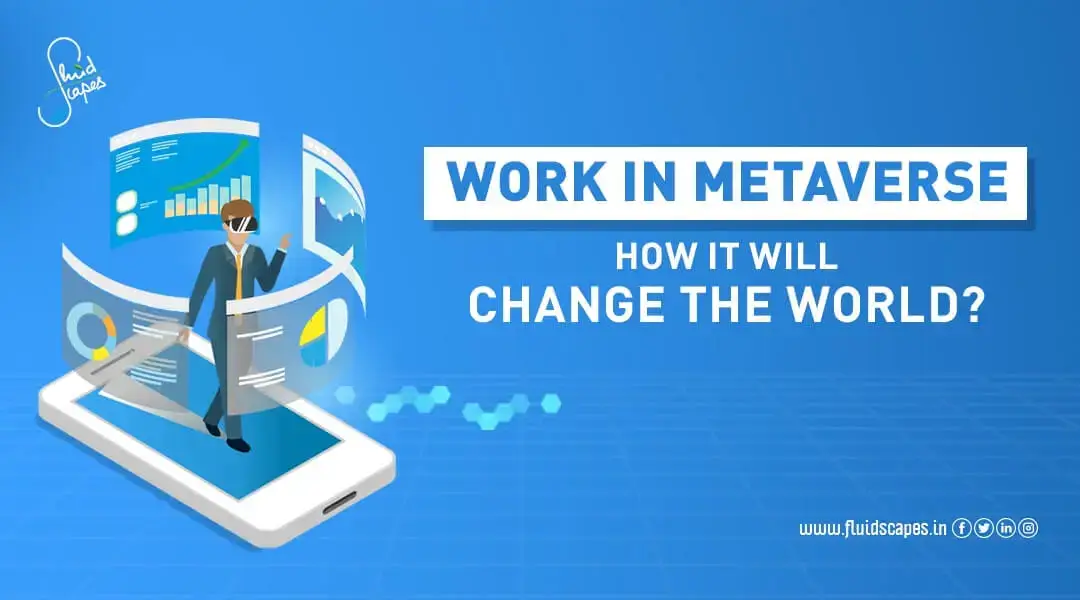
    Metaverse is the concept of a virtual universe that promises to take us through immersive experiences in terms of interaction, communication, and transactions that we currently use the Internet and social media for. When it comes to remote work solutions, the metaverse provides a 3D simulation of the office where the remote employee can do the official work and attend meetings through their representative avatars.

    However, this virtual world will be encased within the framework of actual reality, our brick and mortar world. That is why metaverse is called a mixed reality platform.

    You may envisage metaverse as a 3D internet, empowered by AR, VR, and Blockchain that will on one hand provide an immersive experience in all activities and at the same time provide an absolutely transparent and secured platform for transactions.

    “It will be like we’re right there with people no matter how far apart we actually are, we’ll be able to express ourselves in new joyful, completely immersive ways,” Zuckerberg outlined his vision of the metaverse.

    Another expert tried to capture the difference the metaverse would likely create, “Right now the internet is primarily something that is ‘push.’ You are pushed information, you receive an email, you receive a notification, you then pull up your device to access that.” The difference with the metaverse is that it’s an “embodied engine” you are “already within, rather than reaching out.”

    If you are still not clear about how the work through the metaverse is going to be, you are as good as anyone else. Because the product will take some time to be rolled out, until then we can only finetune our guess to get there.

    Again I find it’s best to quote Zuckerberg to capture the essence. This is what he explained through a presentation video, “the feeling of presence” is the “defining quality” of the metaverse. It is a place in which we, existing as 3D avatars, through the powers of augmented reality (AR) and virtual reality (VR), can move about freely, interacting with others, experiencing real-life scenarios but in a virtual world that can be quite parallel to our own, actual world. We will not engage in this metaverse in a basic 2D capacity, but in a way that gives the feeling of actually being there.”

    3D hologram avatars will be a special feature of working through the metaverse. Users will have to check in with their 3D avatars and enter the metaverse meeting room the way they do in their physical life. There’ll be 3D settings for the meeting room and other parts of the office just like you see in a 3D game. You need to wear VR goggles like Oculus, to obtain a full understanding of body language, expressions, and voice in order to appropriately experience metaverse meetings.

    But your stay in the metaverse will continue. Maybe after the meeting or work you would like to play some blockchain-based games for relaxation or spend some time on social media before looking at your investment portfolios both in money and cryptos, all without leaving the metaverse.

    Many companies are trying to develop their own virtual world or the metaverse, which will be eventually interconnected to each other. People will want to bring their belongings with them when they move between virtual worlds, such as Meta’s and Decentraland’s.

    The blockchain will confirm proof of ownership of your digital items in both virtual worlds if two virtual worlds are interoperable. Essentially, you will be able to access your crypto assets as long as you can access your crypto wallet within a virtual environment.

    Bill Gates is another seer who believes metaverse will revolutionize the work-from-remote experience. “Virtual meetings will no longer be held using 2D camera image grids, but rather through your 3D digital avatars attending metaverse meetings,” he said.

    In fact, Microsoft is competing neck to neck with Meta to release the first module of metaverse. Only days after the announcement of Meta, Microsoft announced another update of Mesh for Teams to allow users in different locations to have holographic experience during meetings.

    As per a Microsoft spokesperson, during the years of Covid people would have to attend too many virtual meetings, which led to meeting fatigue commonly in the organizations. This makes it difficult to concentrate and stay engaged after 30-40 minutes maximum. Mesh is expected to reduce the cognitive overload of having to be physically present through long hours of video calls.

    Metaverse blockchain

    Why is blockchain incorporated in the metaverse?

    As said earlier, the metaverse also promises to provide shopping, investment, and transaction facilities using digital currencies. This can be easily achieved by providing interfaces to one or more crypto blockchains, thus leading to the concept of metaverse crypto and pushing the already vibrant crypto market further up.

    Blockchains provide some fundamental strength to the metaverse in terms of:

    • Digital proof of ownership
    • Authenticity of the collectibles
    • Transfer of value
    • Accessibility
    • Interoperability
    • Governance

    Users can use their crypto wallets to purchase or sell digital assets like NFTs just like the actual world, through proper checking of authenticity, ownership and secured transactions and also enjoy full control on their assets when they shift from one virtual world to another.

    All crypto experts agree that metaverse will be the next big thing. They are extremely bullish about metaverse and advise investors to buy the metaverse crypto tokens and currencies when the market dips.

    The sphere of metaverse is so large that it’s difficult to capture its entirety in a single blog. The concept (virtual world) is still limited to gaming. But the fact that so huge investments are being made by so many companies into developing the metaverse for business definitely indicates that it’ll be the start of a new era of technology.

    Source- Fluidscapes
    We are one of the best digital marketing companies in India that provides online reputation management services to all types of organizations. We assist businesses to stay on top of the game by leveraging the latest technologies and breakthroughs in marketing strategies and business processes. Want to grow your business, even more, get in touch with us and we’ll tell you how.
  • Top 5 Steps To Optimize Your SEO Strategy This 2022

    Top 5 Steps To Optimize Your SEO Strategy This 2022

    Whether you are an online business or a traditional retailer, an aggregator of something or an agency of artisans, if you don’t tap or don’t know how to tap the enormous potential of online communities, you are sure to be crushed by the competition very soon.

    This is no exaggeration but a true reflection of the growing dominance of online communities in deciding the fate of a business. More so in 2022, because people have got used to being online for long hours and Google search has reached an all-time high, thanks to the 2-year long lockdown.

    If this makes you wonder what should be the best way to tap the right prospects in the ocean of online communities, the answer is search engine optimization or simply SEO. 2022 will see further enhancements in On-page and Off-page SEO techniques to help businesses generate more leads, pinpoint targets and stay ahead of the competition. Want to get to the top of your SEO and rank high on Google search consistently in 2022, focus on these top five SEO strategies:

    #1 Website optimization

    Your website is responsible for the result of your SEO strategies. The technical sides of website optimization includes improvement of page load speeds and structural improvements.

    Optimizing page load speed is extremely important because it determines the time taken for the web pages to open up on desktops as well as on mobiles. If loading is not fast enough visitors’ interest level will decline and they will move away to a competitor’s site. According to a study visitors stay-rate drops by an average of 4.42% for every extra second of page load time. Following are the suggestions for improving your page load time:

    • Remove any code or scripts that aren’t needed.
    • Use clean, web-optimized images to replace cumbersome and crowded styles.
    • Make your webpage scannable by using content formats.

    Website structure analysis is another vital step in optimizing your website, which entails improving the nature of your site in order to improve your rating. The number of site links, improved crawling, logical hierarchy, menu, and sitemap, to name a few, all contribute to a good website structure. It’s also important to ensure that the structure of your website is simple to navigate.

    #2 Use of seo keywords and phrases

    SEO keywords are the keywords and phrases used in your website content that play a vital role in getting your pages searched by the search engines. Therefore it is important to use seo keywords because they make your content easily searchable.

    For instance, a buyer looking for a restaurant could search “best restaurant” or “best budget restaurant” or “where is the best restaurant on a budget?” or “best budget restaurants in Mumbai.” So if you include the above seo keywords in your blog your chances of viewership will definitely increase.

    Therefore, do your keyword research to have your seo keywords list ready before writing your seo texts. Also, make sure that you understand your target audience, their needs, and how they should communicate their needs. Social media forums like Quora, Reddit, and the likes are ideal places where you can collect free seo keywords because these are the platforms where people exchange views on various topics through writing. If your product or service category happens to be among the topics, you may find a handful of highly probable keywords and phrases.

    #3 Create content that can hook your potential customers

    The most important factor in search engine rankings is content. Many visitors come to your website because the title grabs their interest, but the quality of your content is what keeps them coming back. The key components of good quality content are proper and relevant information, presented in a good format (easy to read), and written in proper perspectives and simple language.

    However, you should also be looking at using non-textual content as well. Research shows that judicious use of non-textual content on the website levels up your SEO game and elevates ranking. Here are some data and predictions made some years ago that can help understand the trend in 2022:

    • Voice and image searches will secure at least 50% of the total volume by 2020. (Vox | recode)
    • Tenor (now a sub-brand of Google) entertains a staggering 12 billion GIF searches per month. (TechCrunch)
    • Having a video on your website’s landing page will up your chances of showing on Google’s first page by 53%. (HubSpot)
    • 72% of the people owning voice-activated speakers use them in their daily routines. (Google)
    • Users will spend more time looking at images than the text if they find it relevant. (Nielsen Norman Group)
    • The average listener consumes 7 podcasts every week. (LinkedIn SlideShare)

    Therefore, a sensible adaptation of your website may be the need of the hour for you. Try to incorporate some or all from the following list of non-textual content into your website to ramp up your SEO optimisation:

    • Images.
    • GIFs.
    • Videos.
    • Audios.
    • Infographics.
    • Podcasts.

    Finally, some guidelines for an effective SEO content:strategy

    Be clear about the objective of your content – Determine your website or business’s goals first. Do you want to increase your website’s sales? Do you use advertisements to monetize your blog and just wish to improve traffic and return readers? What types of information you should concentrate on will be determined by your objectives.

    Know your audience – Surveys and analytics tools can assist you in gaining a better understanding of your typical visitor or client. Apply your experience or take help from others to assume the persona of your ideal site visitors and consumers. Then determine the right kind of content that would match the personas of your audiences.

    Build an editorial calendar – You can start creating an editorial calendar after you know who your audiences are. An editorial calendar is a schedule that specifies when new material will be published and what type of content will be published. This will help you stay to a regular schedule (creating new content on a regular basis is especially vital if you have a blog), as well as avoid you from fumbling at the last minute to come up with a theme for fresh content.

    Analyze your website content – Keep track of your site’s statistics through website content analysis for both on site content and linked content. Examine your SEO material on a regular basis with content audits and SEO audits (or even a full site audit) to identify what’s working and what isn’t. Page views, links, comments (on blog posts and other types of content), social shares (Facebook likes, tweets, etc.) and conversion rates are all good indicators of success and engagement.

    #4 Build more links and backlinks

    Links are connections between two or more web sites. A backlink is a link that connects another website to yours. But the other websites have to be authentic and of repute. The more such quality backlinks your website has the higher will be its Google ranking. Here are some simple steps to enrich your sites with quality backlinks:

    • Use a backlink checker to find out one or more top ranking sites on Google that are appropriate and relevant as backlink sources for your website.
    • Write high quality and information rich content and approach the editorial teams of those top ranking sites for creating backlinks to your page.
    • You should also generate internal links, which direct the viewers to other pages in your site that contain the details of relevant terms or phrases.

    There is also a word of caution – you should trace out and remove all the dead links from your site. Dead links are the inactive, invalid links that return error messages when the viewers click on them. This lowers the user experience quotient and reputation of your site.

    #5 Try more content syndication

    Content syndication is a technique that improves the efficacy of content marketing. Content marketing is a proven seo strategy for driving organic traffic to your website, but its effectiveness is highly dependent on where you place your content. To put it another way, having outstanding content isn’t enough; you also need to put it on a strong platform for maximum exposure.

    #6 Invest in Social Media Marketing

    Although the numbers of social media shares, likes and followings can be manipulated, and Google also doesn’t consider them as valid pointers for search engine ranking, still the concept of Social media SEO is gaining popularity because of its contributions to SEO results.

    Yes, Social Media and SEO might be two different concepts but observers agree that they help each other, albeit indirectly. The number of visits to your Twitter, Facebook, or Instagram pages, the links shared by you, the mentions of you in the discussions within the communities, etc. boosts your brand popularity and influences your SEO results in terms of the number of organic traffic to your website.

    The reason being simple, people remain online for longer periods, switch from one channel to another. And when they find mention of a brand across channels their confidence on the brand elevates. This reflects on the brand’s SEO performance. You will find that many websites with top-ranking positions in Google searches have strong social media presences. If you, as a marketer, invest in a social media marketing strategy, you are, in essence, also enhancing your search engine optimization capabilities.

    Source- Fluidscapes
    We are one of the best digital marketing companies in India that provides online reputation management services to all types of organizations. We assist businesses to stay on top of the game by leveraging the latest technologies and breakthroughs in marketing strategies and business processes. Want to grow your business, even more, get in touch with us and we’ll tell you how.
  • The Ultimate Guide To Stop Email Spoofing!

    The Ultimate Guide To Stop Email Spoofing!

    As email evolved to be the primary communication method in the office and personal space bringing the world closer to us, it also gave fraudsters leverage to devise new ways to deceive and swindle.

    You, I, and numerous others have faced or become victims of such apparently helping or beneficial but actually malicious emails and ended up remitting large sums of money, bank account details or other valuable information to imposters.

    There is a growing affliction of such menace called email spoofing, which not only robs people but businesses and institutions as well. According to a recent study, since March 2020, 81 percent of firms all around the world have seen an upsurge in email spoofing assaults that makes up at least 25% of all data breaches. That elevates email spoofing from a nuisance to a real threat and brings up the requirement to understand and prevent this threat.

    What is email spoofing?

    Spoofing is a technique used by hackers to fool people (email users) into thinking a message came from someone or some place they know or can trust. The sender forges email headers so that the received mail contains a source id which is almost the same as one you are familiar with and believe at face value.

    Users will not notice the counterfeit sender in a message until they examine the header more attentively. They are more likely to trust a name they are familiar with. As a result, they’ll click harmful links, open virus attachments, send sensitive information, and even wire money to the company.

    Lookalike domains and domain spoofing are frequently used in these crimes, but two-third of all email spoofing attacks employ display name spoofing. This technique is so widely used because most people access mails on mobile these days. Mobile devices have much smaller screens, which can’t show the sender’s email ID. Instead it shows a name (a friend or boss) and/or a photo that triggers an urgency to follow the instruction.

    Another term frequently used in the context of email spoofing is phishing. Phishing is also a harmful email that uses the spoofing technique to defraud the users, but its modus operandi is different. It uses embedded links, malwares, or social engineering to steal critical information, login credentials, etc.

    How email spoofing works?

    Impersonation is the main theme in email spoofing, which is performed by a fraudster by setting up or compromising an SMTP server. This makes it possible for them to change the ‘From,’ ‘Reply-To,’ and ‘Return-Path’ email addresses so that their phishing emails appear to be genuine messages from the person or company they’re impersonating.

    Email spoofing example

    A most common type of email spoofing attack involves an email seemingly sent from PayTM or any other online wallet company that you are using. The notification says that if you do not click a link, authenticate on the site, and change their password, your account will be suspended. If you react as directed, which is very natural, by entering the credentials, the attacker gets access to your PayTM account and transfers money to their account.

    Another real-life example of email spoofing is known as Business Email Compromise or CEO fraud. In this, a company executive might receive a mail purportedly from his/her boss or a higher executive asking to share some information or make some payment. It might look as simple as this – the deal is through. Send x amount of money to this link within the banking hours today.

    The message carries a sense of urgency, and the unsuspecting employee merely follows instructions without checking the sender’s id minutely.

    How to stop email spoofing?

    While it’s important to have spoofing reporting tools and awareness training among the staff to detect both inbound and outbound impersonation attempts, they will not be sufficient on their own.

    So, how can you better defend yourself from phishing emails that are sent to your employees? How can you keep your own brand and personnel from being impersonated in email assaults against your customers, organisations, and individuals?

    Protect from incoming spoofing attacks.

    The best defense will be to prevent the attacks from ever reaching employees.

    Email security protection: Use of cloud based email systems that also incorporate traditional email security tools detect and block a great majority of incoming emails containing dangerous links or attachments.

    Identity based protections: These solutions automatically detect and eliminate more complex email attacks, phishing schemes, and BEC scams, regardless of their source, including those launched from cloud platforms or compromised accounts.

    Training and reporting: Fraudsters are always busy inventing new ways to puncture your defense. The best strategy to keep imposters at bay is to train your employees and preach them to become aware and alert, so that they remain watchful and can identify spoofed emails.

    Protect your mails from getting impersonated

    Protecting your mail id from getting spoofed is equally important as it might be used to defraud your customers, suppliers, associates and friends. Following are the standard email authentication systems that can safeguard your business mail ids from getting spoofed.

    SPF: SPF (Sender Policy Framework) helps organizations to designate the IP addresses that can be used to send emails on their behalf. Receiving servers scan the DNS records connected with your sending domain to see if the IP address used to send the email is specified in the SPF record during an SPF check. The email will fail authentication if it isn’t.

    DKIM: DKIM (DomainKeys Identified Mail) ensures all outgoing mails to have an encrypted signature in their headers, which are decrypted by the email servers at the receiving end to prevent tampering of the original message.

    DMARC: DMARC (Domain-based Message Authentication, Reporting, and Conformance) is an email authentication standard that works in tandem with SPF and DKIM to allow only legitimate/trustworthy emails and prevent the spoofed emails from reaching your inbox.

    Source- Fluidscapes
    We are one of the best digital marketing companies in India that provides online reputation management services to all types of organizations. We assist businesses to stay on top of the game by leveraging the latest technologies and breakthroughs in marketing strategies and business processes. Want to grow your business, even more, get in touch with us and we’ll tell you how.
  • Anchor Text Vs Hyperlink Know The Difference

    Anchor Text Vs Hyperlink Know The Difference

    The Internet is a web of content, but with the passage of time this web has expanded its reach to include social media, e-mail, YouTube, podcasts, and other digital platforms as well to provide users seamless access to a variety of content and applications.

    And how these diverse platforms are connected together to form a web? It’s the Hyperlinks. Hyperlinks make it possible for visitors to traverse the web at ease, across platforms or within, to access relevant and information rich content.

    From the users’ perspective this is definitely a very convenient method of acquiring information. While reading through an article you can link out to other websites or platforms to learn more about a critical word, term, event, etc., and come back to the main article. Therefore, links help make an article comprehensive and create a high level of user experience.

    Google recognises the power of hyperlinks. On the Web, everything is about content and the links to find them.According to Google, links (read hyperlinks) and quality content are two of the three most important factors that boost ranking on the SERP.

    What is a Hyperlink?

    While a link is an address or URL, which when written on the address bar redirects you to the corresponding webpage, a hyperlink is a tool that uses the same link or address or url but in a different, smart and user-friendly way. For example, https://www.fluidscapes.in/ is a link that takes you to Fluidscapes.in home page when you type it in the address bar. But if you want to visit the same site directly from within an article, you can do that by using the same link (https://www.fluidscapes.in/) in the article itself. In that case it’ll be called a hyperlink.

    Hyperlinks are embedded in the article or at the trailing end of an article. You must have clicked on some of those blue colored links or words while reading a web article and switched to a different web page containing information you wanted.

    Hyperlinks are the core concept behind the development of the World Wide Web that makes navigation between domains easy and smooth. Just like external linking, hyperlinks are also used for internal linking, connecting two web pages of the same site or even for toggling between two portions of a lengthy web page.

    There are four types of Hyperlinks, used in the www. They are:

    • Text hyperlinks that use words or phrases to switch visitors to another domain or page.
    • Image hyperlinks that use an image to switch visitors to another page, file or document.
    • Bookmark hyperlinks that use text or an image to switch visitors to another part of a web page.
    • E-mail hyperlinks that allow visitors to send an e-mail message to the displayed e-mail address.

    In a Text hyperlink, readers click on certain hyperlinked words or phrases and switch to a relevant page for more information. The words or phrases, highlighted in blue, actually represent a part of the hyperlink, which is called Anchor Text.

    What is Anchor Text?

    The Anchor Text is the visible, clickable text in an html hyperlink.

    For example, while creating an article if you want to give your reader more information about how digital marketing started in India, you may insert the phrase “history of digital marketing in India” and hyperlink the same. While the text “history of digital marketing in India” will be visible and clickable, actual hyperlink in the html will look like

    In the above example, the anchor text in html code is the only part that is visible and clickable, which comes in between > and i.e. history of digital marketing in India. As a rule the anchor texts are underlined and colored in blue until it is not clicked and changed to purple once it is clicked.What are the different types of Anchor Text?

    What are the different types of Anchor Text?

    There are seven types of anchor texts, that include:

    Exact Match : Exact match anchor text technique is used when it is required to rank a webpage using a targeted keyword. For example, a digital marketing company such as Fluidscapes.in may use the keyword “SEO Marketing” as the exact match anchor text for higher ranking on the SERP.

    Partial Match : Partial match anchor text technique is used when you combine your target keyword with other keywords. When optimizing for “SEO Marketing,” for example, use “organic traffic” as your anchor text.

    Phrase Match : Phrase match anchor text technique involves employing the phrase you want to rank for alongside other keywords that are connected to it. “Small Business Growth Strategies Using SEO Marketing” is an example of this.

    Branded : Branded anchor text simply includes your company’s name or brand name in the anchor tag, like “Fluidscapes SEO Platform,” for example.

    Naked : A naked anchor text uses url as the anchor text. For example, a naked anchor text could be “www.fluidscapes.in” This is a less popular method of using anchor text because it appears clumsy in the middle of a paragraph.

    Generic : Generic anchor texts are purpose driven call to action (CTA), often used in articles, messages.The examples are “Click here” or “learn more,” etc.

    Image : An image anchor is like a CTA. You’ll use an image as an anchor. But you must include a description for your image in the html to let the search engine redirect the users properly when they click on that image.

    While hyperlinks are the basis for the very concept of world wide web, Anchor texts are the smart applications of hyperlinks that meet two objectives of a web page – user experience and SEO ranking.

    Source- Fluidscapes
    We are one of the best digital marketing companies in India that provides online reputation management services to all types of organizations. We assist businesses to stay on top of the game by leveraging the latest technologies and breakthroughs in marketing strategies and business processes. Want to grow your business, even more, get in touch with us and we’ll tell you how.
  • What Is Omnichannel Marketing? What Are Its Benefits?

    What Is Omnichannel Marketing? What Are Its Benefits?

    Retail business is getting new life using technologies to find new customers. While creating new markets and learning more about consumers are becoming easier for the retailers, consumers are able to obtain substantial information about the products and businesses without much headache.

    It’s a bidirectional communication. Consumers move across several social networking sites, websites, and communication channels on a normal day and gather valuable information about products and businesses. And retailers take this opportunity to popularize their brands by having presences at every touch-point of a consumer’s journey.

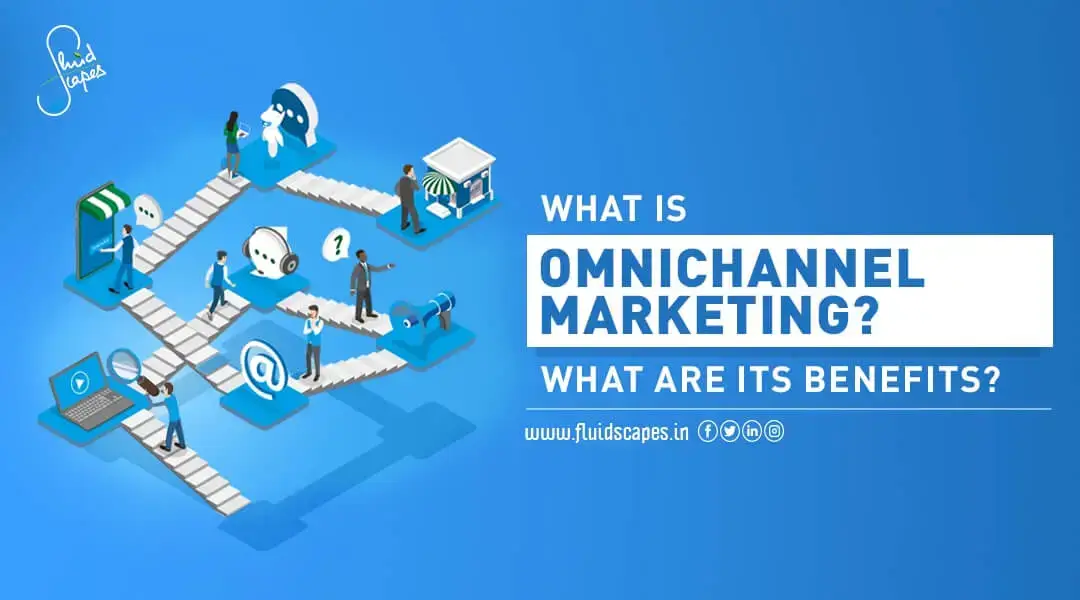
    But is it good enough to just display your brand on different platforms? No, it’s not. It’ll not give you the desired result unless it’s a concerted campaign that provides a seamless brand experience and shopping experience for consumers, no matter what platform they are on. Here comes the concept of Omnichannel marketing, which is among the fastest-growing trends for both retailers and consumers.

    What is Omnichannel marketing?

    Omnichannel Marketing is about creating a unified brand experience for the consumers across all offline and online channels, platforms and brick-and-mortar outlets. The main idea of omnichannel marketing is to

    • Provide customers with a uniform brand message on whichever platform they are now or will visit,
    • Meaningfully engage with customers at any time and through any device or channel they are using,
    • Build a cohesive and satisfying experience that drives customers to take action, whether they are using a mobile device, desktop computer, or at a brick-and-mortar shop. Add a call-to-action to each message and ad

    Customers’ journey to purchase no longer follows a straight line. A desire to purchase triggered by a social media post most likely takes the path of laptop/desktop Internet research before ending up on a tablet or in a physical store.

    Omnichannel vs. Multichannel marketing

    Both omnichannel and multichannel marketing belong to the same genre in the sense that both types aim to tap customers across the channels and platforms. Nonetheless, there are two major differences between them – in nature and in approach. Let’s take a closer look at both.

    Multichannel marketing

    This is a brandcentric approach that puts the brand at the heart of different campaigns across the channels. Its goal is to reach clients over two or more channels, offering them the option of interacting with the company via a website, social media, or phone. A clothing company, for example, may operate various marketing campaigns simultaneously across multiple channels, such as in-store-only discounts, a social media flash sale, an email promotion, a paid search engine advertising, etc. The effort is to drive sales separately on individual channels. This may result in different content and messaging being delivered to different channels to achieve individual sales goals. But the problem is that the consumers are likely to receive incoherent messages across channels.

    Omnichannel marketing –

    This is a customer centric approach that puts consumers at the center of its activities and strives to improve the customer’s cross-channel experience. Despite the fact that various channels are employed, the goal is to create a uniform experience across all of them.

    For instance, the customers of an entertainment park can buy tickets online (from a PC, tablet, or mobile device), use their app to locate attractions or monitor wait times, and utilize a smart wristband as a FastPass or hotel room key. Look at the integrated services that can be made available across different devices and channels.

    By providing a consistent message across numerous platforms, omnichannel marketing strives to increase brand familiarity and make purchasing easier. Omnichannel marketing boosts the potential for high customer retention and sales by focusing on the consumer but is a more complicated and costlier solution than multichannel marketing.

    Benefits of omnichannel marketing

    #1. Increase the lifetime value of your customers

    An omnichannel experience puts customers on the top, and it’s no surprise that customers will love to do business with companies that give them priority. It’s also not surprising that retail executives place a premium on long-term objectives. According to surveys, boosting lifetime customer value is a motivation for pursuing an omnichannel strategy for 53% of major European retailers.

    #2 Utilization of marketing analytics and cross-channel insights

    While in multichannel marketing the analytics from each channel are held in silos with little interaction or influence with data from other channels, data from each channel is treated as a whole in omnichannel marketing. 67 percent of all retail clients start their shopping on one gadget and end it on another, or even in the store.

    Omnichannel analytics makes it easy to connect with customer data and see which channels are most effective in driving sales; this can lead to a more transparent marketing approach and, in turn, lower marketing expenditures. Companies may better meet consumer requests and estimate inventories by having a comprehensive view of channel data.

    #3. Boost your sales

    For retailers in need of a revenue boost, increased sales is a significant benefit. According to a Harvard Business Review research, omnichannel clients spend 10% more online than single-channel customers. However, many retailers aren’t aware of this fact. As a retailer if you prioritize long-term growth, you should view omnichannel marketing as strategic and structural.

    #4. Self-Service for Customers

    Self-service is an important element of the omnichannel experience, with 67 percent of customers preferring it to conversing with a company employee. A digital assistant or chat allows you to maintain an open line of communication with your customers and obtain feedback on their experience.

    #5 Better inventory turnover

    The days of retailers losing money because of out-of-stock items may be coming to an end. Businesses benefit from an omnichannel strategy because it gives them a better picture of their inventory and the ability to fulfill orders from anywhere. Businesses can use an omnichannel strategy to optimise stock levels and build smarter replenishment methods.

    #6. Reach out to new customer groups

    Retailers profit from an omnichannel approach because it allows them to access new client segments. This benefit is virtually equal for both major businesses and others, but both figures should be higher because reaching new customers is critical for growth.

    Source- Fluidscapes
    We are one of the best digital marketing companies in India that provides online reputation management services to all types of organizations. We assist businesses to stay on top of the game by leveraging the latest technologies and breakthroughs in marketing strategies and business processes. Want to grow your business, even more, get in touch with us and we’ll tell you how.
  • 5 Effective Paid Marketing Practices For A Successful Business

    5 Effective Paid Marketing Practices For A Successful Business

    There was no such category as paid marketing before the advent of digital marketing, because the concept of free marketing never existed. But the competition between the channels to increase subscribers and also to monetise the increased subscriber base, led to the development of two distinctive marketing strategies – organic or free marketing and paid marketing.

    While both types have unique advantages and are actually used in combinations to achieve the business goals, each has a different set of strategies. In this article, we’ll take a closer look at paid marketing and the various strategies that revolve around it.

    What is Paid Marketing?

    Paid marketing is buying privilege for faster and more effective marketing results. There are millions of subscribers of a digital marketing channel, but you want to target one or a few specific demographic groups that are most likely to have maximum appeal for your product. So, it’ll be better for you to go for a paid marketing strategy to ensure that your product ad comes to the sight of your target audience.

    Paid marketing campaigns are largely based on advertisements that can grab the attention easily, and are targeted at potential customers who qualify certain criteria, such as income, age, sex, etc. and those who have earlier interacted with the brand or shown interests, intent.

    However, paid marketing can also take the form of sponsored social posts and guest blogs in addition to the display advertisements you’ve most likely seen in SERPs and web pages. And paid campaigns can use a variety of digital channels, including as search engine results pages (SERPs), social media platforms, and websites.

    How Paid Marketing works

    Paid marketing is most commonly seen on search engine results pages (SERPs) and social media platforms. When developing paid marketing advertising, you first choose a channel, such as Google Ads or Facebook, and then define your target customer using data such as geography, search keywords, interests, demographics, prior purchases, and other pages visited.

    Both of these paid marketing methods are pay-per-click, which means you only pay when someone clicks on your ad. Typically, you select a package for 1/6/12 months offered by a channel where you set a maximum budget, and the ad plays until the budget is used up.

    Paid marketing provides one of the highest returns on investment (ROI). According to the Google Economic Impact Report, businesses in the United States earn an average of $2 in income for every $1 spent on Google Ads.

    Local businesses, in particular, receive a strong return on investment from location-specific queries, with top-ranking websites seeing the biggest rise in click-through rate. Businesses who take to paid marketing can maintain a huge strategic advantage and exposure to new clients because 76 percent of marketers do not use behavior data and granular characteristics for online targeting.

    Paid Marketing strategies

    If you are a beginner in online marketing and are struggling to rank well through organic means, paid marketing can provide you with a shot in the arm. You may quickly see results by creating a paid campaign that targets the right demographic groups. Here are the five paid marketing strategies that you may consider adopting for your campaign:

    Social Media Advertising

    Because of the prevalence of social media, social media ads have emerged as a highly effective and viable advertising strategy. Detailed demographic information can be used to customize your social media ads and to provide relevant ad content to your targeted buyers.

    For example, Facebook Audience Insights gives you information on people who are linked to your Page and on Facebook, allowing you to create content that resonates and simply locate new people who are similar to those currently in your audience.

    Consumers love to respond to social media marketing, with 57% of Millennials saying they’ve noticed an increase in social media ads that speak to them.

    Banner advertising

    One of the most tried-and-true marketing solutions adopted by many businesses is banner advertising. This technique has been used for decades and is still a highly effective marketing strategy. Following are the different formats in which Banner ads normally appear:

    • Static
    • Animated
    • Interactive
    • Video
    • Expanding ads

    Banner advertisements are square or rectangular in general and come in a variety of sizes. They are displayed in specific spots on a website, usually at the top of the page or in the sidebar, and are compatible with PCs, smartphones, and tablets.

    Do you want to get the most bang for your buck with this paid marketing strategy? Make sure your ads are visually appealing, clear to understand, promote a certain product or service, and that they are displayed on websites with similar content.

    Pay-per-click advertising

    Pay-per-click advertising, like banner ads, has been around for decades. It’s an approach that’s proven to work. PPC advertising has a high rate of success because people who click on them generally end up buying the product.

    PPC advertising converts leads better than organic traffic when used as a paid search approach. Studies reveal that PPC advertising, on average, receives 65 percent click-throughs compared to 35 percent for organic visitors. You can also tailor your campaigns to match your budget.

    Retargeting

    Ad retargeting is a relatively new paid advertising tactic that converts website traffic extremely well. Many times customers interact organically with your company but leave your site without making a purchase. Paid marketing can be used to display personalized messages to these customers.

    The usage of cookies, which track old visitors’ activity, is the key to retargeting’s efficacy. Cookies collect important personal data that helps to ensure that old visitors only see advertisements that are relevant to them. This method, however, is most effective for sites with at least 5,000 monthly visitors.

    Influencer Marketing

    Paid marketing has a weak point, consumers may block your ad, which makes it more difficult to connect your target audience with paid ads. Influencer marketing is one approach to get around this.

    Influencers are people who have a lot of clout with your target audience. High-profile industry gurus, celebrities, or social media rock stars are among them. Influencers typically have large followings and the capacity to persuade others to make purchases.

    You should discover and cultivate relationships with the influencers in your market. Influencers are paid by companies for promoting their brands, products, or services to their followers. For a lot of product categories, an influencer’s glowing recommendations might result in constant flow of orders and income. But remember that influencers are frequently compensated by companies.

    Every paid marketing strategy serves a different purpose depending on where the buyer is in the buying process. Although not all brands need to go for all types of paid promotion strategies, it is considered best practice to use a variety of them. This ensures that your communications are seen by users across several channels.

    Source- Fluidscapes
    We are one of the best digital marketing companies in India that provides online reputation management services to all types of organizations. We assist businesses to stay on top of the game by leveraging the latest technologies and breakthroughs in marketing strategies and business processes. Want to grow your business, even more, get in touch with us and we’ll tell you how.
  • Put Your Feet Up With The Automation Communication Process

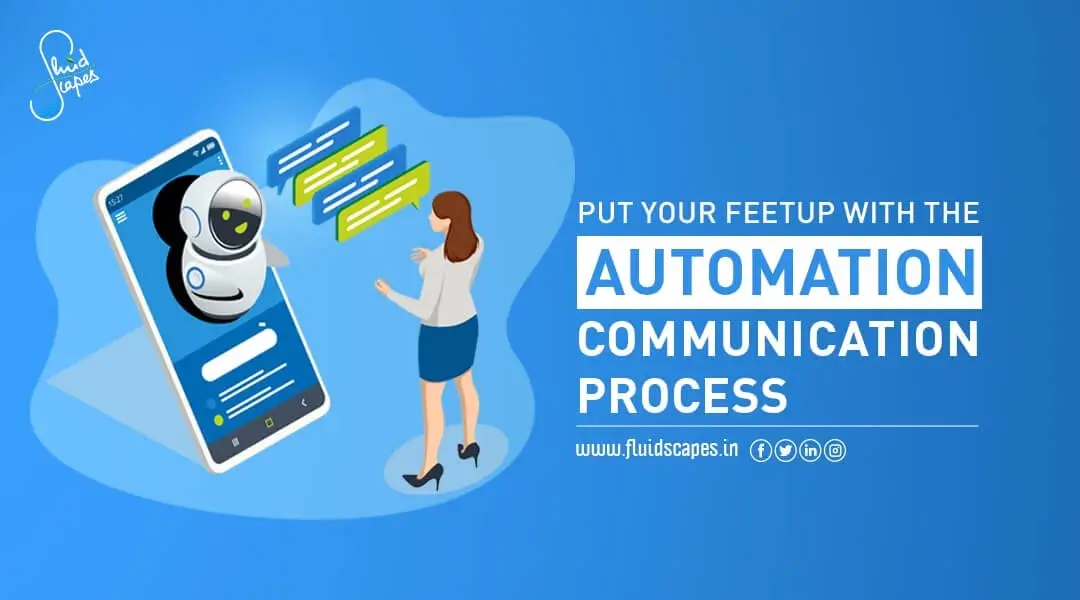
    Put Your Feet Up With The Automation Communication Process

    In humans as well as business, lack of communication always leads to misery. While a human relationship can still be improved by reinforcing engagement, in business you hardly get a chance to repair the damage, because by the time you become aware the opportunity would have landed your competitor.

    If this is the example of how external communication can affect a business, there can be plenty of instances of how poor, improper, or missing internal communication can cost a business dearly. While in a budding business the effects of communication problems become easily visible, in a large company they erode the bottomline slowly and not become visible before late.

    If you want to look into the problem you’ll find out that most of the communication problems are due to human factors. Besides errors and careless mistakes there are limitations in human communications. But on the other side you have human intelligence. Your communication must be meaningful even for random questions.

    The recent advances in automated communication use artificial intelligence to compete with human intelligence in getting the nods of the marketers and business heads. Everyone agrees that AI can make up for HI to a large extent. And there is cloud technology that is disseminating the latest AI based solutions to the end devices of the enterprises.

    This is an awesome combination of technology and cheap access that is set to revolutionize business communications and especially presents unique solutions to the new-age startups, many of whom operate from virtual offices.

    Whatever may be the type and size of your business, employing automated communication gives you a competitive edge while cutting down your operational cost. Following are some of the leading examples of how AI and cloud technology are changing the face of business communications.

    Chatbots

    AI-powered Chatbots have grown in popularity in the digital marketing field because of their human-like intelligence, 24-hour availability, ability to recall a customer’s whole purchasing history, rapid response capacity, and extreme patience (friendly and cordial at any stage).

    But the unique feature that has made Chatbots as a trendsetter in marketing is tailored discussion. People demand individualised discussions with prompt, caring, and result-oriented responses, and brands are simply responding by investing in more complex Chatbots.

    According to surveys, by 2022, 80 percent of firms will have an AI-powered Chatbot on their websites. If that aim is not fulfilled owing to covid, 2023 will undoubtedly exceed it. These AI virtual assistants will significantly boost client happiness by learning and meeting their needs.

    Intelligent call centre

    Cloud communication options, such as virtual call centres, are becoming increasingly popular as more firms begin to modernise their communication infrastructure. Virtual contact centres use voice over internet protocol (VoIP) technology to provide a wireless customer support experience that connects with social media and CRM systems to handle high volumes of inbound and outbound calls at a fraction of the cost of on-premise setups.

    Virtual call centres collect and retain massive volumes of data, making them ideal for AI integration. This is a plus because a huge volume of data is required for most AI applications. This is why many organisations have begun to integrate artificial intelligence into their call centre technology, allowing them to quickly examine all of the data generated by their tools.

    The ability of AI to quickly evaluate data has enabled sophisticated operations such as sentiment analysis on live customer calls, in which an A.I. bot learns to grasp the caller’s emotional state. The bot might then take action based on that information, such as contacting a manager to assist with the call or doing anything else the bot believes is most likely to improve the situation. These capabilities enable firms to provide individualised customer care at scale and in ways that were previously inconceivable.

    Intelligent campaigns

    Companies are already utilising artificial intelligence to alter how they engage with their clients through advertising. Artificial intelligence algorithms are already in use on internet advertising platforms such as Google Ads, Facebook Ads, and Instagram Ads.

    These platforms employ machine learning algorithms to predict the cost per click of each ad based on its copy and targeting data, as well as the cost per customer acquisition.

    AI can even be used by online advertising platforms to build hyper-targeted audiences for each ad based on data from customers who responded to similar ads. The audiences it generates are groupings of clients that the algorithm believes are most likely to interact with and eventually convert from the ad. These smart advertising efforts have produced billions of dollars and, for better or worse, have enabled firms to target specific groups of customers like never before.

    Intelligent email reply

    According to studies, employees spend an average of two and a half hours each day replying to emails. That scary statistic is precisely what makes Google’s smart reply feature so crucial. Google’s smart responses feature, which is accessible in Gmail and several of its other messaging products, uses NLP to analyse all of the messages written and received by you and millions of other Gmail users.

    The algorithm then uses that information to swiftly propose an acceptable response to the message you received, saving you a significant amount of time that you would have otherwise spent manually creating each reply.

    The particular figures on how much time smart answers save users on average are still unavailable. From personal experience, it has reduced my reaction time to roughly one second for many of the communications I receive. With Google’s smart reply already accounting for up to 10% of total emails received, that figure is only anticipated to rise as the algorithm improves at proposing relevant responses.

    Email filtering

    Spam emails are a menace and costs businesses billions every year in terms of lost productivity and technological overhead.

    Fortunately, email platforms are stronger than ever at determining whether an email contains spam or promotional information. Gmail, for example, divides inbound emails before they reach your inbox without your intervention. Google accomplishes this through the use of advanced text filtering, client filtering, interaction, and a variety of other machine learning-based criteria.

    Text filtering uses natural language processing (NLP) to identify word and phrase combinations typically present in spam emails. Client filtering employs machine learning to assess the trustworthiness of email senders based on their properties. Gmail also uses collaborative data, such as the number of users that tagged emails from a specific email address or domain as spam.

    Of course, the effectiveness of these new spam filters necessitates greater vigilance on the part of businesses in ensuring that their email marketing campaigns offer high-quality material to interested parties.

    Source- Fluidscapes
    We are one of the best digital marketing companies in India that provides online reputation management services to all types of organizations. We assist businesses to stay on top of the game by leveraging the latest technologies and breakthroughs in marketing strategies and business processes. Want to grow your business, even more, get in touch with us and we’ll tell you how.
  • The Brand Management And Building Guide 2022

    The Brand Management And Building Guide 2022

    Small businesses can no longer be content with the status quo. The mounting competition from e-commerce is pushing small businesses to explore beyond their local boundaries and export their business to online marketplaces.

    This is evident, as numerous small businesses are running their branding campaigns on the digital media. Again, this is breaking a myth that branding is meant for large companies only. Branding in fact can work for any size of business.

    Gone are the days when a local business would count on a sizable local customers. The digital era has turned the game upside down. Now customers prefer to order materials online, not caring much about the location of the business.

    What influences their preference largely is the brand of the product or service. They want to be doubly sure that they will get the best value for their money and the product is worth their trust and confidence.

    This explains why so many small businesses are taking to brand building activities to win customers and why there is a need to have more clarity on the subject to convince others who are not yet in the fray.

    What is Branding?

    Branding is all the activities that make the name, term, logo, design, or any other feature of a product, service, or a business easily identifiable and remembered at the time of purchase. Now that there are so many channels and outlets to advertise a product, branding should be a synergistic process that speaks in the same voice across all touchpoints.

    In the face of steep competition in the market, branding makes a product or a company stand out in the crowd and create expectations for the customers.

    What is Brand Management?

    How the customers perceive your brand is what determines the strength of your brand. Building and maintaining a strong brand identity that’ll drive customers to choose your product over competitors’ is a difficult task unless you have something unique.

    But you can still achieve a consistent brand image through maintaining a clear brand vision and discipline in departments and employees that helps to deliver a value-driven response and a positive experience to customers at all touchpoints.

    Here are some essential steps in the brand building guide for the small businesses.

    #1. Set a realistic business goal for a time period

    Setting a goal is the most critical step toward accomplishing it. Without a proper business aim, your company may become unnoticed. To design and establish a successful brand identity, you must first determine what you want to achieve and then define your aims and objectives.

    It’s also important to set a time period to reach the goal. This puts you in a mission mode to achieve the target.

    #2. Identify the right band of audience

    To be successful in marketing and promoting your business, you must first find the right group of customers.

    You can identify the most prospective audiences for your business from the most appropriate platforms available, and you can evaluate where your business has the best chance of being noticed and where you have the best chance of gaining the greatest returns and revenues.

    In today’s world, the majority of businesses find their potential audience on various social networking sites.

    #3. Develop strategies to connect your audience

    Don’t waste your money and energy trying to reach everyone across the spectrum; rather focus on the strategies to hook your potential audience groups across regions.

    Devise a variety of techniques to reach the widest possible audience. Remember that branding generates awareness, recognition, trust, and money.

    #4. Watch competitors and their brands

    If you have identified your niche and are preparing to thrive, you must first check to identify who your possible competitors are.

    Only by identifying your future competitors will you be able to keep ahead of the competition. In this day and age, there is fierce rivalry in the industry, and it is critical that you recognise who your company’s biggest competitors are.

    When you have a close eye on the market, you will be able to identify and rectify your flaws and prosper.

    #5. Make your brand distinguishable

    Determine what will make your brand distinct and identifiable. It could be a feature, price, or a unique business plan. Find a means to stand out from the crowd.

    For example, if you offer lower prices to your customers than your competitors, you might emphasise that in your branding.

    Choose something sleeker, more cutting-edge, and with a younger feel. Attempt to find something more down-to-earth.

    #6. Personify your brand

    Do not make the mistake of projecting your brand as a foreign identity, or a corporate brick-and-mortar presence. In reality, a brand’s external reputation is similar to that of a person.

    When you brainstorm to define your brand for the external world, give it a feel of a person you could sit down with, go out to lunch with, or have babysit your children! Your brand is more than a logo or a tag phrase. The world should expect it to act or respond like a human.

    #7. Develop a brand personality

    Personality of a brand is important in marketing as it helps in building a large following.

    Ask yourself questions, such as what colours should be associated with your brand, what your logo might look like, and how your voice will be conveyed in your content and other promotional materials.

    Develop your brand personality by imagining your brand as yourself interacting with specific members of your target audience.

    #8. Develop a brand voice

    For any successful communicator it’s important to establish a certain tone and style of communication. Same applies to your brand as well.

    Your brand voice can be authoritative, playful, intellectual, friendly, or entertaining as long as it seems true to your brand values and persona and enjoyable enough to create chats with your target audience.

    Source- Fluidscapes
    We are one of the best digital marketing companies in India that provides online reputation management services to all types of organizations. We assist businesses to stay on top of the game by leveraging the latest technologies and breakthroughs in marketing strategies and business processes. Want to grow your business, even more, get in touch with us and we’ll tell you how.
  • Know The Difference Between Web Development & Web Design!

    Know The Difference Between Web Development & Web Design!

    With the rapid fire development of India’s digital ecosystem making online purchase a de facto standard, there has been a surge in web presence by all types and sizes of business.

    According to the eCommerce foundation, around 88 percent of buyers perform product research before making any online purchase. This explains the significance of a website to a business in the modern era.

    Whether you want to double your chances through the local business queries or want to open an online storefront for the customers beyond your geographic area, a website is the most basic and most important requirement for your online business.

    But many business heads don’t have a clear idea of how a website can be customized for their specific type of business; for them, the purpose of a website is nothing more than a digital business card.

    This lack of awareness often leads to low quality and ineffective websites that actually hold back their companies from performing in the fiercely competitive market of today. So it’ll be highly helpful for them to have a clear idea of what a business website can do for them and also gather some valuable insight into developing a website.

    A smart and informative business website can return ten times the money you invest into developing it. It not only acts as a hub for your digital marketing activities to boost sales of your products and services, but also plays a significant role in branding.

    Find the right web development company to design and develop your website into a valuable business asset for disseminating information, establishing reputation, and standing out in crowded markets.

    When it comes to finding the right web company through Google search, you’ll come across two highly used key phrases – Web Design Company and Web Development Company.

    Although they look very similar and used interchangeably, the truth is that they are two different but critical aspects of the website building process, and therefore require you to understand the difference between the two and how they can be worked out to produce an effective website for you.

    Web Design vs. Web Development

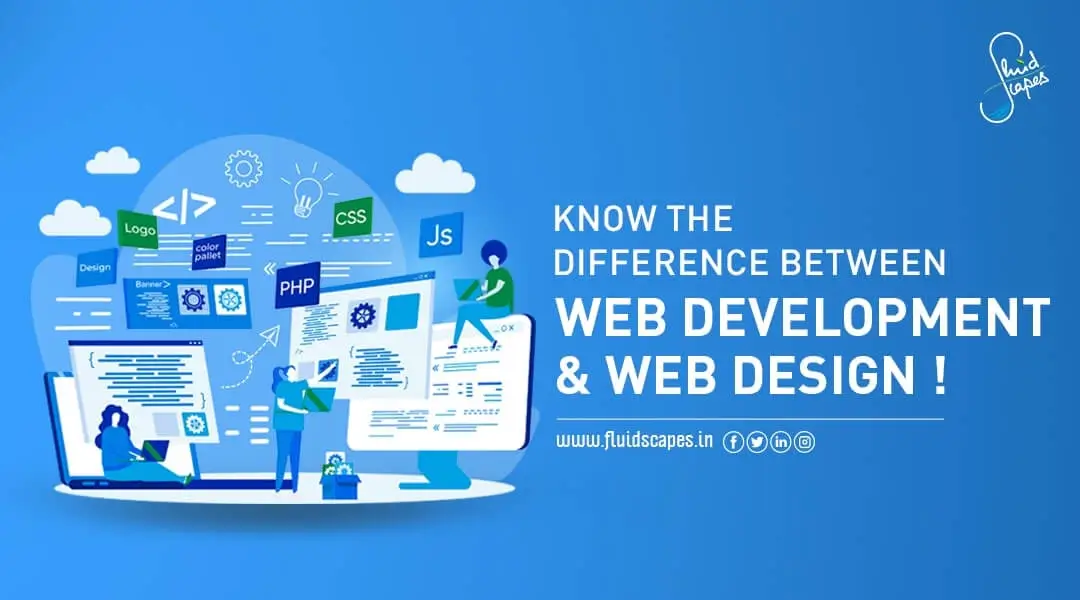
    They are essentially two different skill sets that complement each other in a website. Web design takes care of the look, feel, and features of the website, while web development takes care of the functionality. If web development means pillars, beams, columns and walls of a building, web design is the painting, lighting, and other aspects that make that building habitable.

    Web development is further divided into two parts – front end development and back end development, because a website has a front end and a back end.

    We can only see the front end of a website, created in a browser using web design and front end development.

    Design specifies a website’s colours, layout, typography, and images, everything that contributes to a website’s branding and usability and necessitates the use of programmes such as Photoshop, Illustrator, Fireworks, and Sketch.

    Front-end development is the process of implementing a design using coding languages such as HTML, CSS, and Javascript. Users can interact with buttons, photos, text, contact forms, and navigation menus using these languages. They are also essential to responsive and adaptive design.

    The back end of a website that we cannot see, actually resides in a server and developed using the back-end development programming.

    A website requires a back end to store and manage the data received from the front end. When we purchase anything or fill out a form, we enter data into an application on the front-end of the website, and that data is saved in a database contained in the back-end that is hosted on a server.

    The front and back ends of a website are virtually connected and always talking to each other. A back-end developer is like the conductor of an opera who ensures that applications, databases, and servers function in tandem by employing languages such as Ruby, PHP,.Net, and Python, as well as frameworks such as Ruby on Rails and Code

    Conclusion

    Small- and medium-sized businesses seeking a website or a re-design of their existing website need to have a working idea of the terms “Web Design” and “Web Development.” This will help them in getting a nice, informative, and fully functional website to take their business to the next level.

    Source- Fluidscapes
    We are one of the best digital marketing companies in India that provides online reputation management services to all types of organizations. We assist businesses to stay on top of the game by leveraging the latest technologies and breakthroughs in marketing strategies and business processes. Want to grow your business, even more, get in touch with us and we’ll tell you how.

  • Video Marketing For Lead Generation? How Does It Works?

    Video Marketing For Lead Generation? How Does It Works?

    Videos are just another form of content that has given content marketing an extra dimension and made branding affordable to even small business startups.

    Videos are an automatic attention grabber, and now powered by smart formatting and advanced controls, they have become the central point of customer engagement. Of course, the rapid improvement in smartphone technology and massive growth in its use are the other factors that made videos so phenomenally popular today.

    Why videos are so effective

    Unlike text or images, videos offer multiple learning channels to the viewers, such as tone, expressions, texts, body language, and other visual signals. Together, they make the most powerful appeal to the human brain. Science says the human brain processes videos 60,000 times faster than text.

    Google search bots give more preference to video-rich content because videos ensure a higher level of audience engagement. According to Forrester, websites with videos are around 54 times more likely to rank better on Google SERPs. And according to Brightcove, videos enhance organic traffic by 157 percent.

    Social media platforms are the ideal place to feel the trend, where videos have become the most productive component of the promotional artillery. A study reveals social videos attract 1200% more shares than text and images. Even Instagram reported over 25% of its ads are single video ads.

    These statistics are very encouraging for marketers. However, if you’ve been using video content as part of your marketing tactics but aren’t seeing the intended results, it’s possible that you’re not applying the lead generation tactics in your video marketing.

    If you’re a beginner and wondering what lead generation is in digital marketing, here is a quick lead for you – Lead generation is identifying, enticing, and converting online users into potential customers for a firm in digital marketing. The strategy may employ many methods and channels, but here we’ll discuss the ambit of video marketing for lead generation.

    Lead generation in video marketing typically involves three steps:

    • Content strategy- coming up with content that addresses the people’s needs.
    • Promotion of video – using different platforms to attract large numbers of visitors
    • Acquisition – converting a sizable portion of these visitors into leads.

    Content strategy

    Your video content strategy should take the cues from your text content strategy, where the purpose of the content is most important. There can be multiple types of videos to address different purposes. Following are some popular types of video marketing:

    • VLOG – Also known as a video blog that shares the feelings, thoughts of an influencer about a product or a topic.
    • Unboxing – It’s a product review type of video that captures the initial reaction with a description of the product as it gets unboxed for the first time.
    • How To/Tutorial – Teaches viewers to solve a problem or to make something through instruction and examples.
    • Favorite/Best of – Shares the favorite product/service or experience of the YouTuber within a specific category.
    • Q&A – Answering questions from the viewers.

    Apart from making the video interesting and informative to the viewers, try to make it adequately SEO friendly. YouTube is currently the 2nd largest search engine online. Here are some simple steps to make your videos easily searchable on YouTube.

    • Give a title that is brief and informative – Titles are the most effective technique for capturing people’s attention. On YouTube videos, the first 60 characters or less will be displayed. Also use appropriate keywords. Use the SE Ranking keyword recommendation tool or the YouTube keyword tool.
    • Write a crisp video description – This is to help users understand the topic of your video at a glance. Keep it to a maximum of 70 ch., use keywords, and add a link to your website.
    • Use tags with various keyword variations – Consider all the many things that people who watch your video might look for.
    • Apply link-building – The more the number of links lead to your video from other sites, the higher will be your ranking in search.
    • Create high-quality, catchy, colorful Thumbnails – Thumbnails are extremely important as they hook your viewers’ attention and drive them to watch your video.
    • Optimize your video for mobile viewing – Mobiles or smartphones are the primary devices to watch videos these days. Do everything to provide a smooth watching experience for your smartphone viewers.
    • Create a site-map for your video – A site-map helps your video rank high as it provides the details about your video content to the search engines.

    Promotion of the video

    Promotion of the video is the second step in the lead generation process. Your promotion strategies should be chosen based on your content and digital marketing strategy. A viral video, for example, requires a social media marketing strategy. An infomercial, on the other hand, would work effectively as a sponsored advertisement or through influencers.

    Also, you must think about your marketing budget. Is there enough money in your organization’s budget to execute a PPC or social media campaign? Organic marketing initiatives are resource intensive and time-consuming to execute, but they may be less expensive than a PPC campaign.

    Furthermore, certain programmes (such as viral marketing) cause marketers investing their entire projected budget upfront, but others (such as PPC) cause a consistent expenditure. Such aspects may need to be considered while deciding on a strategy.

    So, how do you go about selecting the best promotional materials for your company? Aside from the content type, marketers may consider a few other strategies.

    For instance, you don’t have to limit your video content to your website or landing pages; you can also share your video on different social media platforms. On social media, videos produce 12 times the number of shares as text and photos combined.

    You may also use Video Testimonials. Testimonials are an excellent type of word-of-mouth advertising. They are positive and convincing statements from prospects who have used your product or service.

    Lead acquisition and conversions

    This entails the techniques employed to generate/capture leads and convert them into sales. After all, that is the main aim of the whole exercise. There are some smart processes to generate leads, such as:

    Gating your video content – This can help you get the details of the viewers of your video and contact them through other channels to generate leads. Gating figuratively means a gate where the visitors have to produce their identity details in order to access your video.

    Webinars and industry research reports are the two examples of video content that are known to make good use of gating since viewers have a pressing desire to access content that cannot be available elsewhere. Companies demand visitors to provide their credentials in order to access the video. Currently, near about 80% B2B videos are gated.

    End Cards/ Annotation

    YouTube End Cards (YT replaced Annotations with End Cards) are quite handy if you want to generate leads by encouraging your viewers to do anything, such as subscribe, watch another video, or visit a related website, etc. This way the businesses can direct their viewers to external websites from within their YouTube videos.

    Shopify, for example, included an end-card in their YouTube channel to direct users to a landing page where they can input their email address to sign up for a free trial or download an eBook.

    However, keep in mind that you have to be a member of the YouTube Partner programme to be able to link out. You may also use the YouTube description section to direct viewers to lead magnets or your free trial page, where they can convert into leads.

    Source- Fluidscapes
    We are one of the best digital marketing companies in India that provides online reputation management services to all types of organizations. We assist businesses to stay on top of the game by leveraging the latest technologies and breakthroughs in marketing strategies and business processes. Want to grow your business, even more, get in touch with us and we’ll tell you how.